Trying to rely on your health insurance from back home while living abroad is a massive gamble, and the stakes are just too high. These domestic plans are built for a life lived in one country, which means they often become completely useless the second you step on a plane. For a digital nomad, this isn’t a minor hiccup—it’s a serious financial and personal risk that only a dedicated expat medical insurance plan can solve.
Why Your Home Health Insurance Is a Liability Abroad
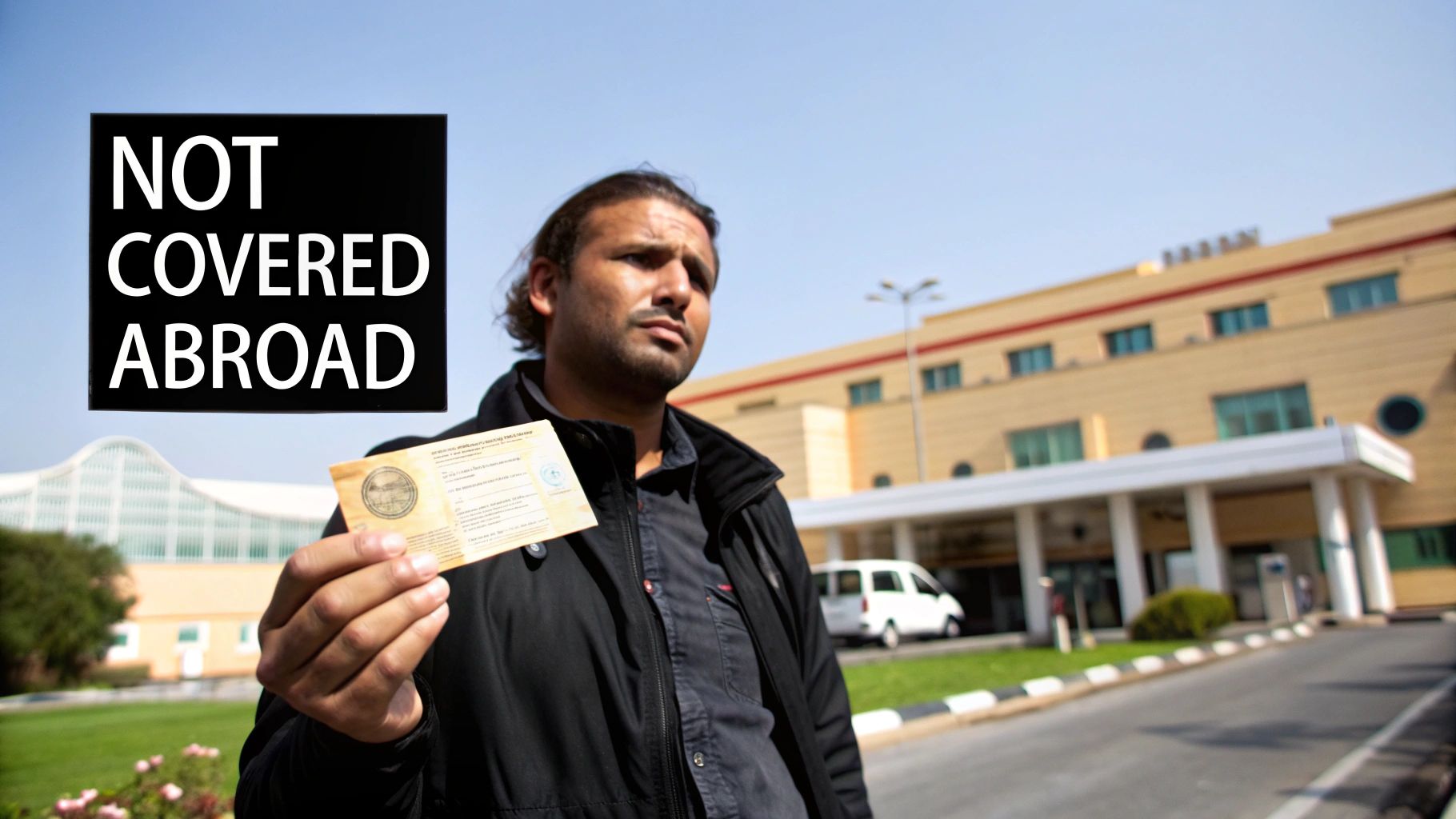
Think of your domestic health insurance policy as a key that only fits one door. It works perfectly for your local network of doctors and hospitals. But when you’re thousands of miles away in a different country, that key is just a piece of metal. You’re left locked out during a medical emergency with no way to get the care you need.
This is the core issue: domestic plans are geographically fenced in. They simply aren’t designed to deal with the messy realities of international healthcare, from different billing systems and languages to varying standards of care. Most U.S. health insurance plans, for instance, provide zero coverage outside the country. At best, you might get a tiny bit of coverage for an extreme, life-or-death emergency, but that’s it.
The Myth of “Out-of-Network” Coverage
You might think, “No problem, I’ll just be considered ‘out-of-network.'” Unfortunately, it’s rarely that simple. For most domestic policies, foreign hospitals and clinics aren’t just out-of-network; they are completely off the map. This means you could be on the hook for 100% of the costs, paid upfront.
A simple scooter accident in Thailand or a nasty stomach bug in Mexico can quickly turn into bills topping tens of thousands of dollars. Without proper expat medical insurance, you’re forced to pay out-of-pocket, which could wipe out your savings or bury you in debt.
The problem isn’t just about money; it’s about getting treated at all. In many countries, hospitals will demand proof of payment or a guarantee from an insurer before they even admit you. Your insurance card from home won’t mean a thing to them.
The Critical Gaps Only Expat Medical Insurance Can Fill
Beyond basic care, your home insurance plan almost certainly lacks the essential protections a digital nomad actually needs. These aren’t just nice-to-haves; they’re critical for a safe and sustainable global lifestyle.
Here are the key coverages you’ll likely be missing:
- Medical Evacuation: If you have a serious accident in a remote location, this covers the cost of transporting you to a top-tier medical facility. This service alone can easily cost over $100,000.
- Direct Billing: International health insurance plans often set up direct payment agreements with hospitals all over the world. This way, you don’t have to front huge sums of cash and then fight for reimbursement later.
- Repatriation: In a worst-case scenario, this covers the costs of returning your remains to your home country.
This is exactly why expat medical insurance isn’t just another option—it’s the only responsible choice for someone living a borderless life. It completely reframes the question from, “Is my old plan good enough?” to “How do I get the right global protection?”
Understanding Expat Medical Insurance for Nomads
As you start living and working around the globe, you’ll quickly run into two kinds of coverage: travel insurance and expat medical insurance. They might sound like they do the same thing, but they are built for fundamentally different purposes. Confusing the two is probably the single most common—and costly—mistake a new digital nomad can make.
Let’s break it down with an analogy. Travel insurance is like a first-aid kit. It’s perfect for short-term trips—think a two-week vacation in Italy—and focuses on travel hiccups like lost bags, canceled flights, or a sudden, unexpected medical emergency. It’s a temporary patch for problems that pop up while you’re on the move.
Expat medical insurance, on the other hand, is your personal doctor on retainer, available anywhere in the world. This is a real, long-term health plan designed for a life lived abroad. This is the kind of digital nomad health insurance that covers the full picture of your well-being, from a catastrophic accident to your annual physical.
Travel Insurance: The Tourist’s First-Aid Kit
Travel insurance is fantastic, but it’s for tourists. Its main job is to get you stabilized in a crisis and, if it’s serious, get you back home where your regular health insurance can take over. It’s all about handling emergencies, not managing your day-to-day health.
Here’s what a typical travel plan is good for:
- Trip Interruptions: Getting your money back if you have to cut your trip short.
- Lost or Stolen Items: Covering the cost of your luggage and personal belongings.
- Emergency Medical Care: Patching you up after a sudden accident or illness.
The medical side, however, is where it falls short for a nomad. It almost never touches routine check-ups, preventative care, managing chronic conditions, or mental health support. If you’re actually living somewhere instead of just visiting, this leaves a huge, risky gap in your protection.
Expat Medical Insurance: Your Global Healthcare System
For anyone serious about building a sustainable digital nomad lifestyle, expat medical insurance is the only real choice. Why? Because it acts like a proper health plan. It gives you the kind of solid, ongoing medical support you’d get from a plan back home, just with a global network.
This specialized coverage is the bedrock of a secure and successful life abroad. It moves beyond just emergency fixes and provides a foundation for maintaining your long-term health, no matter where you set up your laptop.
This is exactly why the market for this insurance is exploding. The niche was valued at $2.88 billion in 2024 and is projected to hit a staggering $12 billion by 2035. That growth isn’t just hype; it’s fueled by the real needs of nomads facing unique health risks—everything from tropical diseases in Southeast Asia to altitude sickness in the Andes—where local healthcare bills can wipe out your savings without the right plan. You can discover more insights about this growing market and its key drivers.
A strong expat medical plan covers all the essentials that travel insurance skips:
- Inpatient and Outpatient Care: Covers everything from hospital stays to simple doctor’s visits.
- Chronic Condition Management: Provides ongoing support for conditions like diabetes or asthma.
- Preventative Services: Includes wellness checks, cancer screenings, and vaccinations.
- Mental Health Support: Gives you access to therapy and counseling no matter where you are.
At the end of the day, choosing the right plan isn’t about saving a few bucks on a premium. It’s about matching your coverage to your lifestyle. A short-term solution can’t support a long-term life, which is why a comprehensive expat plan is non-negotiable for anyone serious about thriving as a digital nomad.
When you’re piecing together a health plan for life on the road, it’s easy to get bogged down in confusing jargon. Let’s cut through the noise. We’re going to focus on building a rock-solid expat medical insurance plan with features that are absolutely non-negotiable for a digital nomad.
Think of it as assembling the ultimate toolkit for your health and safety abroad. Each piece has a critical job, making sure you’re ready for anything from a routine check-up in Chiang Mai to a life-altering emergency in the Andes.
The Foundation: Worldwide Coverage
First things first: worldwide coverage. This isn’t just another line item on a policy; it’s the entire point. A proper expat medical plan has to work seamlessly whether you’re setting up shop in Lisbon, Bali, or Buenos Aires.
But here’s the most important decision you’ll make: whether to include or exclude coverage in the United States. The U.S. has the most expensive healthcare on the planet, and adding it to your policy can easily double your premium. If you don’t plan on spending much time there, excluding the U.S. is the single biggest money-saver you can find while keeping top-tier protection everywhere else.
A truly global plan gives you incredible peace of mind, but customizing your coverage area is what makes it affordable. For most nomads, worldwide coverage excluding the USA hits that perfect sweet spot between security and value.
The rise of the digital nomad is completely reshaping the insurance market. This shift is fueling explosive growth, with the market currently valued at $5.1 billion and projected to hit $18.6 billion by 2033. This boom is driven by providers who finally get the needs of a mobile workforce. Since 1992, Expat Global Medical has been at the forefront, partnering with giants like Lloyd’s of London and IMG to craft plans that cover everything from wellness visits to million-dollar medical evacuations—the kind of stuff that’s essential when you’re thousands of miles from home.
The Lifeline: Emergency Medical Evacuation
Let’s talk about the one benefit you hope you never, ever have to use but absolutely cannot be without: emergency medical evacuation. Picture this: you’re in a scooter accident while exploring a remote village in Vietnam. The local clinic is in no way equipped to handle your injuries. This is the moment medical evacuation becomes the best investment you’ve ever made.
This coverage pays to transport you—often by a private air ambulance—to the nearest hospital that can give you the high-level care you need. Without it, you could be staring at a bill for over $100,000 just for the flight. A solid expat medical plan will include at least $1 million in evacuation benefits, a number that reflects just how serious these costs can get. It’s a financial and logistical lifeline in a worst-case scenario. To really understand why this is so critical, check out our deep dive into what medical evacuation insurance covers.
The Firewall: High Policy Limits
Catastrophic events are rare, but they happen. A severe illness or a major accident can rack up medical bills that spiral into the hundreds of thousands, or even millions, of dollars. This is exactly why a high policy limit is non-negotiable in an expat medical plan.
A cheap, flimsy travel insurance plan might cap out at $50,000. That’s not nearly enough. A real expat medical insurance plan should offer a maximum benefit of at least $1 million or more. This high ceiling acts as a financial firewall, protecting your life’s savings from getting completely wiped out by a single medical crisis. It’s the ultimate safety net that lets you explore the world with genuine confidence.
The Essentials: Covering the Whole You
A truly great expat medical plan doesn’t just show up for emergencies; it supports your total well-being. Modern digital nomad health insurance understands that your health is more than just physical.
Don’t overlook these vital components:
- Mental Health Support: The nomad lifestyle can be isolating at times. Having access to therapy and counseling, especially through telehealth, is crucial for staying mentally well on the road.
- Pre-Existing Condition Coverage: If you have an ongoing health issue, finding a plan that covers it is paramount. This often requires a deeper look into your medical history (underwriting), but getting full coverage is possible and absolutely necessary for managing your health long-term.
- Dental and Vision: These are often optional add-ons, but routine dental cleanings or a new pair of glasses can be surprisingly expensive abroad. Including this coverage in your expat plan can save you a ton in out-of-pocket costs and encourages you to keep up with preventative care.
Building your plan is all about layering these protections. It starts with a worldwide foundation, adds an emergency lifeline, secures it with high limits, and completes the picture with benefits that support your total health—mind and body.
How to Choose the Right Expat Medical Plan
Okay, now that you’ve got a solid handle on what makes a great expat medical plan, let’s get down to the brass tacks: finding the perfect policy for you. This isn’t about grabbing the priciest plan or the cheapest one you can find. It’s about being smart and matching the coverage to your travel habits, health needs, and budget. When you get this right, you’re not just buying insurance; you’re investing in your own peace of mind.
The first move is to take a look in the mirror. Your lifestyle is the single biggest factor in determining your insurance needs, so be brutally honest about how you travel and live. A slow nomad spending six months in one country has a completely different risk profile than someone hopping to a new city every few weeks.
Aligning Your Plan with Your Nomad Style
Think of your itinerary as the blueprint for your insurance policy. The countries you’re hitting up have a massive impact on both your coverage needs and the final price tag. It’s no surprise that healthcare in Western Europe or the USA costs a whole lot more than in Southeast Asia, and your expat medical plan will reflect that.
Next, consider your pace. If you’re constantly bouncing between different healthcare systems, you need a plan with a rock-solid, easy-to-access global network. Your personal health is the other big piece of the puzzle. If you have a chronic condition or just need regular check-ups, you’ll naturally need a more robust plan than a 25-year-old who feels indestructible.
Think of your deductible as the cover charge for a concert. You have to pay that initial amount yourself before the main event—your insurance coverage—kicks in to handle the rest of the bill.
Getting your head around this concept is vital for balancing your monthly premium against what you might pay out-of-pocket. A higher deductible usually gets you a lower monthly payment, but you’ll have to cough up more cash upfront if you need care. On the flip side, a lower deductible means your benefits kick in faster, but your premium will be higher. It’s a classic trade-off you need to weigh for yourself.
Decoding Insurance Terms and Asking the Right Questions
Trying to read an insurance policy can feel like you’re learning a new language. Beyond the deductible, you’ll bump into terms like co-insurance. This is simply the percentage of a medical bill you’re on the hook for after you’ve paid your deductible. An 80/20 co-insurance split means the insurer pays 80%, and you pay the remaining 20%.
To avoid any nasty surprises down the road, you absolutely have to ask some sharp questions before signing on the dotted line. This is you taking control, making sure the plan you choose actually works for you when you need it most.
Here are the non-negotiables to ask any potential provider:
- Provider Network: How big is your network of hospitals and clinics in the countries I’m heading to? More importantly, how easily can I find an in-network, English-speaking doctor?
- Direct Billing: Do you have direct billing agreements with hospitals? Or am I going to have to pay upfront for major procedures and then chase you for reimbursement? In many places, clinics demand cash, so knowing your plan’s reimbursement process is a big deal.
- Claims Process: What does filing a claim actually look like? Is it a quick online form, or am I going to be wrestling with international paperwork? A fast, simple reimbursement process is worth its weight in gold.
- Customer Support: What happens when things go wrong at 3 AM? Is there a 24/7 multilingual helpline I can call from any time zone during a medical emergency?
This flowchart breaks down the core pillars of a quality expat medical plan into a simple decision tree.
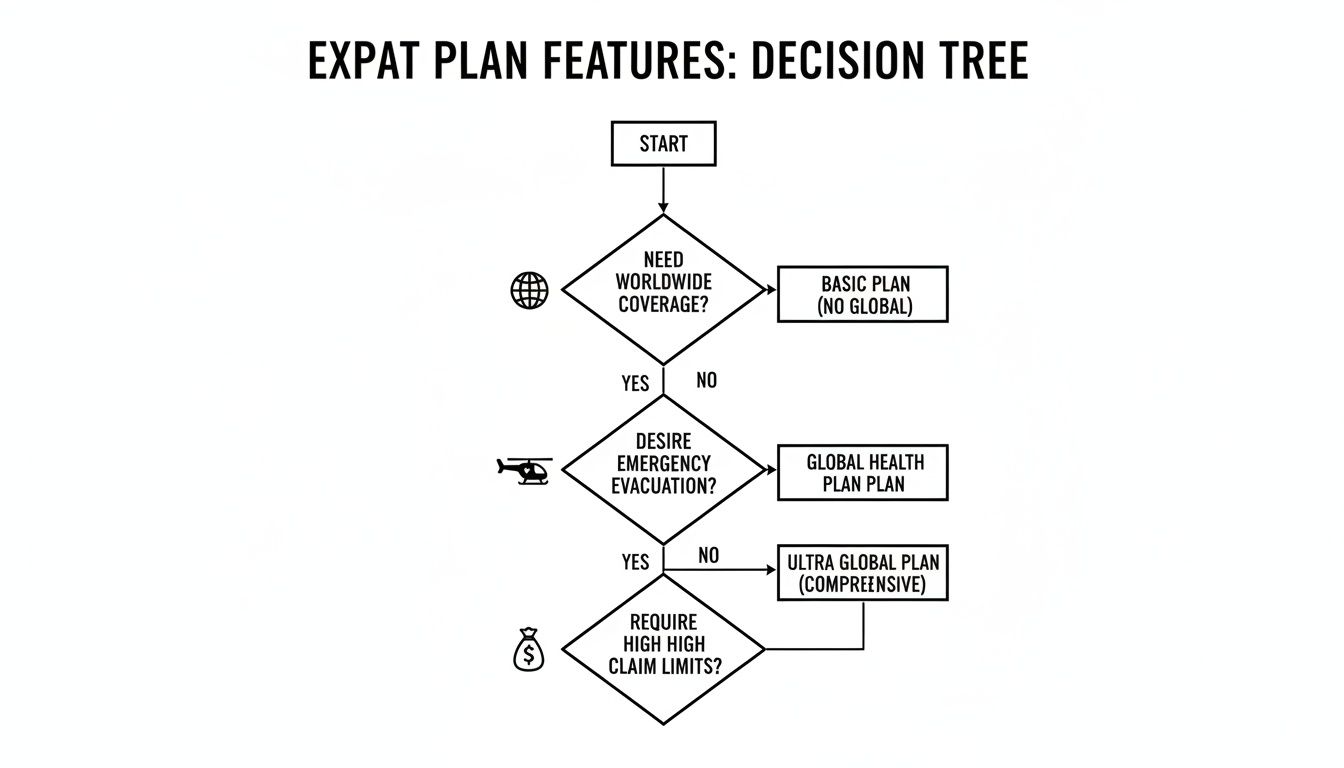
As you can see, it all comes back to three foundational elements: worldwide coverage, strong evacuation benefits, and high policy limits. By thinking carefully about your travel plans, health, and budget, you can confidently build a policy around these must-haves. That’s how you create a safety net that lets you explore the world without holding your breath.
Navigating Costs and Avoiding Common Mistakes

Let’s get straight to the point: money matters. Figuring out the real cost of your expat medical insurance is the key to making a smart, sustainable investment in your global lifestyle. That price tag isn’t just some random number; it’s a direct reflection of your personal profile and the level of protection you decide you need.
Think of your premium like a recipe. The final cost is a blend of different ingredients, like your age, current health, and the destinations on your itinerary. Getting this balance right means you won’t overpay for coverage you don’t need or, far worse, find yourself underinsured when a crisis hits.
What Drives Your Insurance Premium
The single biggest factor that will move the needle on your cost is your coverage area. The big question here is whether you include or exclude the United States from your plan. Thanks to its sky-high healthcare costs, adding U.S. coverage can easily double your premium.
If you’re primarily exploring Europe, Asia, or Latin America, choosing a “Worldwide excluding USA” plan is the single most effective way to lock in top-tier global protection at a price that makes sense.
Another key lever you can pull is your deductible. This is simply the amount you agree to pay out-of-pocket before your insurance policy starts paying the bills. If you’re healthy and want to save on fixed monthly costs, opting for a higher deductible will lower your premium. On the flip side, a lower deductible means a higher premium, but you’ll face less of a financial shock if you do need medical care. You can get a much deeper look by exploring our breakdown of how expat health insurance costs are calculated.
The goal is to find that sweet spot between comprehensive protection and a budget-friendly premium. Your insurance should feel like a safety net, not a financial burden.
The demand for this kind of flexible, globe-spanning coverage is surging. The digital nomad health insurance market is growing up fast, with a projected growth rate of 15.4% every year, and it’s expected to hit $6.3 billion by 2033. This boom is fueled by nomads who understand they need real, robust plans that go way beyond basic emergencies.
In fact, nomads in popular hubs like Spain, Greece, and Mexico often find they can save 50-70% on premiums compared to U.S. rates, all while accessing fantastic English-speaking medical networks. You can discover more insights about this evolving market on Dataintelo.
Avoiding Expensive Pitfalls
The world of international insurance can be tricky, and a few common missteps can end up being incredibly costly. Sidestepping these pitfalls is just as crucial as picking the right features for your expat medical plan.
Here are a few of the big ones to watch out for:
- Chasing the cheapest plan: One of the most common mistakes is just grabbing the cheapest policy you can find without reading the fine print. These budget plans are almost always loaded with hidden exclusions. For example, many nomads are drawn to adventure sports like scuba diving, rock climbing, or skiing. A bare-bones plan will almost certainly exclude these activities, leaving you completely exposed if an accident happens.
- Letting coverage lapse between countries: It’s tempting to think you can just cancel one policy and start another when you land in your next destination. But this creates dangerous gaps in your protection. It can also make it much harder to get coverage for any pre-existing conditions down the road. Continuous, uninterrupted coverage is non-negotiable for a real expat plan.
- Ignoring portability: Your plan needs to move with you, effortlessly. You shouldn’t have to re-apply or jump through hoops every time you cross a border. A true expat medical insurance plan is built for a borderless life, ensuring your safety net follows you wherever your journey leads.
Finding Your Global Peace of Mind
Alright, we’ve covered a lot of ground. You now understand why your home country’s insurance policy won’t cut it abroad, what makes a solid expat medical plan, and how to find one that actually fits your life.
This is where the journey to a secure, sustainable nomad life really begins. The final step is moving from learning about it to actually doing it. Think of great expat medical insurance not as just another bill to pay, but as the foundation that gives you the freedom to explore, work, and live anywhere with total confidence. Your adventure is waiting—let’s make sure you’re ready for it.
Taking the Next Step
So, what’s next? The path forward is pretty clear. Your number one priority should be getting a personalized quote for an expat medical plan that reflects your unique travel style, health needs, and budget. This isn’t a one-size-fits-all purchase, and honestly, speaking with an expert who gets the nomad lifestyle is invaluable.
They can help you sort through the fine print, making sure you have robust coverage for medical emergencies, routine check-ups, and everything in between. This kind of personalized guidance removes all the guesswork and lets you make a choice you feel good about.
The right expat medical insurance is the ultimate travel hack. It unlocks a level of freedom and security that allows you to fully immerse yourself in your global adventure without looking over your shoulder.
Beyond getting your insurance sorted, many nomads build their knowledge by tapping into the community. For more resources and a bit of inspiration, it’s always a good idea to check out what experienced travelers are sharing on the 10 Best Travel Blogs.
Don’t let uncertainty or a fear of the “what ifs” hold you back from the life you want. Take that proactive step today to lock in your global peace of mind, and get ready to embrace your next chapter with the protection you deserve.
Frequently Asked Questions
When you’re figuring out expat medical insurance, a lot of questions pop up. Getting straight answers is the only way to feel confident about the plan you choose. Here are some of the most common things we get asked by nomads just like you.
Can I Get Coverage for Pre-Existing Conditions?
Yes, it’s definitely possible, but it’s not a given with every plan. Most solid expat medical insurance plans can cover pre-existing conditions, though it usually involves a process called medical underwriting. This is where the insurer takes a look at your health history to figure out the details.
Some carriers might add a waiting period before your condition is covered, or they might adjust your premium. The most important thing is to be 100% honest on your application—it’s the best way to make sure your claims don’t get denied down the road. A good broker can point you toward providers like Cigna or GeoBlue that are known for working with people who have specific health needs.
What if I Need an Emergency Evacuation?
This is where a real expat medical plan shows its true value. Emergency medical evacuation coverage is designed to get you from a place with subpar medical care to the nearest top-notch hospital that can handle your situation.
In a worst-case scenario, this could even mean a medical flight back to your home country for treatment. This one benefit alone can save you from bills that easily top $100,000. If you plan on living or working anywhere even slightly remote, it’s an absolute must-have in your expat medical policy.
Think of evacuation coverage as your ultimate safety net. It ensures that no matter where you are, you can get to a world-class medical facility when it matters most, without bankrupting yourself in the process.
How Do I Actually Use My Insurance Abroad?
The best modern insurers have made this part incredibly simple. Forget about confusing paperwork and long waits. Top expat medical plans make accessing care seamless.
- For Minor Visits: You’ll usually pay the doctor’s office upfront, snap a picture of the receipt, and upload it through a mobile app or online portal. Reimbursement is typically quick.
- For Major Procedures: This is where “direct billing” is a lifesaver. The best plans have networks of hospitals around the world where the insurer pays the hospital directly. You won’t have to front a massive bill and wait to get your money back.
- 24/7 Assistance: A plan with a multilingual, 24/7 helpline is non-negotiable. This is your lifeline in an emergency, helping you find a doctor, understand the local system, and arrange for payment.
Am I Covered if I Visit My Home Country?
Great question, and it’s a critical detail to look into. Many comprehensive expat health plans include a feature called “incidental home country coverage.”
This benefit allows you to take short trips home—often for up to 30 or even 60 days a year—without losing your global coverage. It’s perfect for visiting family for the holidays without the hassle of buying a separate, temporary policy. The rules vary a lot between insurers, so always double-check the exact duration and any limitations in your policy.
Ready to find the digital nomad health insurance that gives you genuine peace of mind? The team at Expat Global Medical has been helping nomads and expats secure their lifestyles abroad since 1992. Get your free, no-obligation quote today and talk to an expert who actually understands the journey you’re on.