
When you start your overseas health insurance comparison, one truth becomes painfully clear: your domestic health insurance is almost certainly not going to cut it for a life abroad. Trying to stretch a plan designed for your home country is a gamble most expats can’t afford to take, often leading to huge out-of-pocket bills and scary gaps in your care.
Why Your Domestic Health Plan Fails Expats Abroad

It’s a dangerous assumption for any expat to think the health plan they have now will protect them while living in another country. Domestic policies are built for a single, specific healthcare system. Their provider networks and billing methods simply don’t translate across borders.
Let’s paint a picture. An American expat in Spain gets a nasty, persistent cough and heads to a local clinic. That clinic isn’t in their U.S. insurance network, so the insurer won’t pay the doctor directly. The expat is stuck paying the entire bill upfront, then has to wrestle with a complicated—and often useless—claims process to maybe get some money back.
Critical Coverage Gaps for Expats
This scenario isn’t just a one-off problem; it points to a fundamental flaw in using domestic plans overseas. Plans from the U.S., in particular, create huge risks for anyone living long-term in another country because of how they’re structured.
As an expat, you’ll run into a few key limitations:
- Restrictive Provider Networks: Most domestic plans are built around a tight network of approved doctors and hospitals. Step outside that network—which you are, pretty much everywhere else in the world—and your coverage drops to minimal or zero.
- Lack of Direct Billing: International hospitals don’t have billing arrangements with domestic insurers. This means you’re on the hook to pay for everything out-of-pocket and then chase down a reimbursement.
- No Medical Evacuation: If you have a serious medical emergency in a place without adequate care, your home plan won’t cover the cost to get you to a better hospital. That can easily top $50,000.
A domestic health plan’s job is to work within one country’s system. It was never designed to be a primary health solution for long-term global living, which is why specialized expat medical insurance is so essential.
This table really drives home the difference for an expat.
| Feature | Typical Domestic Plan | Expat Medical Insurance |
|---|---|---|
| Global Provider Access | Highly limited or emergency-only | Extensive global network |
| Direct Billing Overseas | Almost never available | Standard in-network feature |
| Medical Evacuation | Not typically covered | Core benefit of most plans |
| Routine Care Abroad | Generally excluded | Comprehensive coverage |
These gaps leave expats exposed to potentially catastrophic financial risk. For a deeper dive, read more about why U.S. health insurance doesn’t work abroad and see the specific limitations that make it a poor fit for an international lifestyle. Choosing the right expat medical insurance isn’t a luxury; it’s a non-negotiable part of building a secure life in a new country.
Getting to Grips with Expat Medical Insurance Lingo
To compare expat medical insurance plans intelligently, you first have to know what you’re actually comparing. Policy documents are notoriously full of jargon that defines your coverage, and getting a term wrong can lead to some seriously expensive surprises down the road. Let’s cut through the marketing fluff and break down the real building blocks of any solid expat medical plan.
Think of this as your foundation. Once you understand these core concepts, you can see past the glossy brochures and figure out what a plan will actually deliver when you need it most.
Inpatient vs. Outpatient Care
The most basic split in any expat health plan is between inpatient and outpatient care. It’s pretty simple: inpatient means you’re admitted and staying overnight in a hospital, while outpatient means you’re visiting a clinic or doctor’s office and heading home the same day.
- Inpatient Coverage: This is your safety net for the big stuff—serious medical events that require a hospital stay. It covers your room, surgery, anesthesia, nursing care, and other services while you’re admitted. It’s for major illnesses or accidents.
- Outpatient Coverage: This is for everything else. It handles routine doctor visits, specialist appointments, diagnostic tests like X-rays or blood work, and prescription drugs.
For instance, a retiree in Mexico who suffers a heart attack would lean on their inpatient benefits for the hospital stay and surgery. But an expat family in Portugal taking their kid to the pediatrician for a fever? That’s an outpatient visit. A lot of bare-bones plans only cover inpatient care, so you have to confirm outpatient coverage is included if you want help with day-to-day health management as an expat.
Essential Add-Ons: Dental, Vision, and Maternity
While your core plan takes care of major medical issues, it usually won’t cover routine dental check-ups, new glasses, or having a baby. These are typically offered as optional add-ons, which lets you customize a plan that fits where you are in your expat life.
Choosing the right add-ons is all about looking ahead. A young professional might just want good dental and vision coverage. But a couple planning to start a family abroad absolutely needs to lock in a strong maternity benefit well in advance, since most come with long waiting periods.
A digital nomad bouncing around Thailand might add a dental plan for regular cleanings and the peace of mind that an unexpected root canal won’t drain their savings. Meanwhile, a family moving to the UAE would make a maternity plan a top priority, as prenatal care, delivery, and postnatal follow-ups can be incredibly expensive without it.
Mental Health and Chronic Condition Management
Thankfully, modern expat insurance is finally catching up to the importance of ongoing wellness. Two critical—and often overlooked—components are mental health support and chronic condition management. Life as an expat can be isolating and stressful, making access to therapy or counseling an invaluable lifeline.
Likewise, if you’re an expat managing a pre-existing condition like diabetes or asthma, you need a plan that does more than just cover emergencies. It has to support your long-term health with coverage for regular check-ups, ongoing prescriptions, and specialist visits. Figuring out how a potential plan handles these needs is a huge part of any meaningful overseas health insurance comparison.
The global insurance market is definitely shifting to meet these needs. In fact, trends show the health segment is poised for the most dynamic growth, with projections of a 6.7% annual increase over the next decade. This growth highlights the rising need for protection for a mobile global population, making solid international plans a must-have for expats. You can dive deeper into these trends in this report by Allianz.
Your ability to actually use these benefits often comes down to the insurer’s provider network. These are the collections of hospitals and clinics where the insurer has direct billing agreements set up. To get a better handle on how they work, check out our guide explaining PPO vs HMO networks for expats. This knowledge is key to making sure you can get the care you need without having to pay the full cost out-of-pocket first.
A Practical Comparison of Leading Expat Health Plans
Let’s be honest: choosing the right expat medical insurance plan can feel like you’re trying to solve a puzzle in the dark. With a sea of carriers and coverage options, a direct comparison is the only real way to figure out what’s what. But a simple checklist of features won’t get you very far.
The best plan isn’t about having the most bells and whistles. It’s about finding the one that truly fits your life abroad.
To make this tangible, we’ll look at leading international health insurance plans through the eyes of three common expat profiles. By digging into their specific needs, you’ll see how one policy feature can be a deal-breaker for one person and completely irrelevant to another. This is about moving past generic lists and into real-world decision-making.
First, it helps to understand how these plans are built. Think of them in three layers.
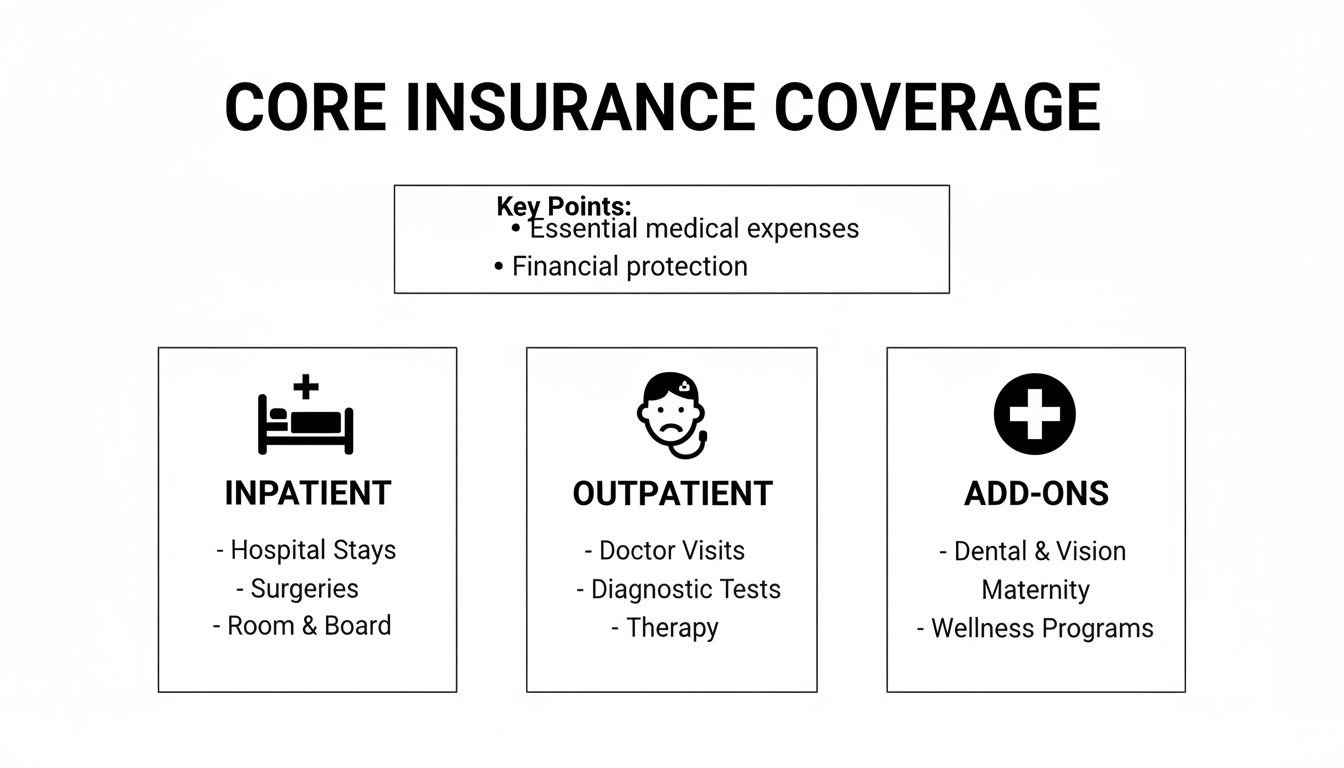
Essentially, every plan starts with a foundation of inpatient (hospitalization) coverage. From there, you can add outpatient (day-to-day care) and other specialized benefits on top.
Scenario 1: The Solo Digital Nomad
The digital nomad life is all about freedom and flexibility. Imagine a solo entrepreneur bouncing between Lisbon, Bali, and Mexico City with just a laptop. Their priorities for health insurance are going to be very different from an expat settling down long-term.
Their main concern? Catastrophic coverage for a major accident or illness, combined with the ability to get care in multiple countries without jumping through hoops. This is where a provider like IMG or SafetyWing often shines. Their plans are usually more budget-friendly because they zero in on essential, high-cost events.
- Key Feature Focus: High annual limits for inpatient care and solid medical evacuation services are non-negotiable. Don’t underestimate medical evacuation—it can easily cost upwards of $50,000 to be airlifted to a better hospital if you get hurt in a remote area.
- Network Needs: A wide, global network with strong direct-billing is a lifesaver. The last thing a nomad wants is to be stuck paying a massive hospital bill upfront in a foreign currency and then chasing a reimbursement for weeks.
- Cost-Saving Strategy: They’ll likely opt for a higher deductible to keep their monthly premiums down, since they know their day-to-day medical expenses are low. They might also skip add-ons like maternity or full-blown dental coverage to keep their plan lean.
For a digital nomad, portability is everything. A plan that makes you notify the insurer every time you cross a border is a non-starter. The ideal policy offers seamless, worldwide coverage that just moves with you, often excluding the U.S. to bring the cost down.
Scenario 2: The Expat Family
Now picture an expat family moving to a single country—like Germany or Singapore—for a multi-year work assignment. Their needs are a world away from the solo nomad. Their focus shifts from “just in case” coverage to a comprehensive, everyday healthcare solution for multiple people of different ages.
This is the sweet spot for providers like Cigna Global or Bupa Global, who offer robust, family-focused plans. These policies are designed to act as your primary healthcare, covering everything from your kids’ check-ups to specialist visits.
- Key Feature Focus: Strong outpatient benefits are an absolute must. This means coverage for routine doctor visits, vaccinations, prescription drugs, and those inevitable specialist appointments for the children.
- Critical Add-Ons: Maternity coverage is vital for families planning to grow, but be aware it almost always comes with a 10-12 month waiting period, so you have to plan ahead. Comprehensive dental and vision are also incredibly valuable for routine family care.
- Network Needs: The family needs a deep, reliable network of providers in their new home city. They’ll want easy access to English-speaking pediatricians, dentists, and clinics that can direct-bill the insurer to make life simpler.
The growing demand for this kind of comprehensive coverage is clear. The expat health insurance market is expanding at a projected CAGR of 6.5% from 2025 to 2032. This shows just how many families and global employers are realizing that their old plans just don’t cut it anymore.
Scenario 3: The Retiree Abroad
Expat retirees settling down in places like Costa Rica, Portugal, or Thailand are looking for something else entirely: stability, predictability, and excellent care for age-related health issues. Their main goal is to lock in a plan that gives them total peace of mind and manages their ongoing health without any surprises.
For this group, insurers like GeoBlue (for U.S. citizens) or Allianz Care are often the top contenders, known for their outstanding service and coverage for chronic conditions.
- Key Feature Focus: Coverage for pre-existing and chronic conditions is the single most important factor. Retirees absolutely need to know that conditions like hypertension, diabetes, or arthritis will be covered without crazy waiting periods or outright exclusions.
- Benefit Structure: A plan with a lower deductible and lower out-of-pocket maximums is usually the way to go, even if it means paying a higher monthly premium. This makes healthcare costs predictable, which is crucial when you’re living on a fixed income.
- Service and Support: Access to 24/7 multilingual customer support and a strong case management team is priceless. When a medical event happens, having a dedicated professional to coordinate care and talk to doctors for you can make all the difference in the world.
To help visualize how these plans stack up, here’s a quick comparison tailored to our expat profiles.
Expat Insurance Plan Comparison by Scenario
This table breaks down the key features of different plan types, helping you see which one aligns best with your specific lifestyle and needs as an expat.
| Feature | Digital Nomad Plan (e.g., IMG) | Expat Family Plan (e.g., Cigna Global) | Expat Retiree Plan (e.g., GeoBlue Xplorer) |
|---|---|---|---|
| Primary Goal | Emergency & catastrophic coverage | Comprehensive, day-to-day family healthcare | Stable, long-term chronic condition management |
| Coverage Area | Worldwide (often excluding the U.S.) | Focused on one country + travel | Worldwide, with strong home country options |
| Outpatient Care | Limited or optional add-on | Essential & comprehensive | Comprehensive, focused on regular care |
| Pre-existing Conditions | Often excluded or limited to acute onset | Covered after underwriting | Must be fully covered |
| Deductible | Typically high to lower premium | Moderate, balanced for family use | Typically low for predictable costs |
| Key Add-ons | Medical Evacuation | Maternity, Dental, Vision | N/A (Core benefits are key) |
| Ideal User | Mobile, healthy, budget-conscious individual | Family relocating for several years | Retiree needing reliable, predictable care |
As you can see, there’s no single “best” plan—only the best plan for you.
Ultimately, choosing the right expat medical insurance is a deeply personal decision. It demands an honest look at your lifestyle, your health, and what level of risk you’re comfortable with. For a closer look at specific policies, check out our list of the top 10 international health insurance plans for expats in 2025. A targeted comparison like this is the only way to ensure you’re investing in a plan that will genuinely protect you on your journey abroad.
Evaluating Insurers on What Really Matters to Expats
A glossy brochure with huge coverage limits looks impressive, but it’s worthless if the insurer lets you down during a real medical crisis. When you’re doing an overseas health insurance comparison, you have to look past the policy details and size up the operational strengths that define a truly reliable partner for an expat. A great plan on paper means nothing without excellent service to back it up.

The real test of an insurer isn’t what they promise, but what they deliver when you’re vulnerable in a foreign country. This means digging into the practical, real-world services that make an expat’s life easier and safer.
The Power of a Direct-Billing Network
One of the most critical factors for any expat is the insurer’s direct-billing network. This is the web of hospitals and clinics where your insurer pays the provider directly, saving you from footing a massive bill out-of-pocket and then chasing reimbursement.
Imagine you need unexpected surgery in Thailand. With a solid direct-billing network, you just present your insurance card, the hospital confirms your coverage, and the insurer handles the payment. Without it, you could be on the hook for $10,000 or more upfront before you even get treated, creating an incredible amount of financial and emotional stress.
A vast and reliable direct-billing network is more than a convenience—it’s a fundamental part of your financial security as an expat. It transforms your insurance from a reimbursement promise into a real-time healthcare solution.
When comparing plans, don’t just check if a network exists. Investigate its depth in your specific country of residence. A plan with thousands of providers in Europe is useless if it only has a handful in your city in Mexico.
Emergency Medical Evacuation Done Right
Medical evacuation is another core benefit that varies wildly in quality. It’s designed to get you to a place with proper medical care if you suffer a serious illness or injury where local facilities can’t handle it. This service can easily cost over $50,000, so having coverage is non-negotiable for expats.
But not all evacuation services are created equal. The best insurers have in-house medical teams and global logistics experts who manage the entire process from start to finish.
Case Study: A Hiker’s Crisis in Peru
An expat hiking in a remote part of Peru suffers a severe leg fracture. Their insurer’s 24/7 assistance team immediately coordinates with local responders, arranges for a medically-equipped helicopter to transport them to Lima, and has a case manager communicating with their family the entire time. This seamless, expert handling is what you pay for.
A lesser insurer might just outsource this to a third party, leading to delays and confusion during a life-or-death situation. Always ask about an insurer’s evacuation process and their track record.
Other Critical Operational Factors for Expats
Beyond these two pillars, several other service-related elements separate the top-tier providers from the rest. Your overseas health insurance comparison should weigh these heavily.
- Policy Portability: Life as an expat is dynamic. If you move from Spain to Singapore, will your policy come with you seamlessly, or will you have to re-apply and go through medical underwriting all over again? True global insurers offer policies that are portable across countries.
- 24/7 Multilingual Support: A medical issue can strike at any time. You need access to a responsive, multilingual support team that can help you find a doctor, understand your benefits, or authorize a procedure, no matter the time zone.
- Claims Processing Record: For any out-of-network care you pay for yourself, how quickly and fairly does the insurer process reimbursements? Look for companies known for straightforward and timely claims handling. A reputation for delaying or unfairly denying claims is a major red flag.
Ultimately, choosing an expat medical insurance provider is about trust. You are picking a partner to rely on during your most difficult moments abroad. By evaluating these operational strengths, you ensure your choice is based not just on coverage, but on a proven ability to deliver when it matters most.
How We Simplify Your Search for the Right Expat Plan
Trying to make sense of global medical insurance can feel like a full-time job. With countless carriers, confusing jargon, and pages of fine print, it’s no wonder so many expats get bogged down trying to compare overseas health insurance plans. That’s where an independent, specialized broker like Expat Global Medical comes in.
We’ve built our entire process around one simple idea: making this decision easier for you. We’re not here to just throw a list of plans your way. Think of us as your dedicated advisors, committed to finding coverage that genuinely protects you and your finances while you’re living abroad. It all starts with us getting to know you.
A Strategy Centered on You
First, we listen. We learn about where you’re going, your lifestyle, what your family needs, and what your budget looks like. This groundwork allows us to handpick plans from a curated list of elite, financially sound carriers.
Our recommendations are always built around a proven three-stage protection strategy with one main goal: to limit your out-of-pocket costs if a catastrophic illness or accident ever happens.
This is a huge deal, especially when you consider how wildly healthcare costs can vary from one country to the next. Imagine you’re settling into an exciting new life in Asia or Europe when a medical emergency strikes. Did you know that the same treatment in the United States can cost 4 to 5 times more than in many other countries?
For expats, retirees, and digital nomads—the people we’ve been helping since 1992—this means we focus on plans from trusted names like Cigna, IMG, or GeoBlue. These carriers understand the importance of limiting your financial exposure. You can learn more about the trends in the expat insurance landscape and its projections.
Your Advocate from Application to Claim
Our job doesn’t end once you’ve found a plan. We stick with you, acting as your advocate for the entire life of your policy.
- A Smoother Application: We’ll walk you through the application to make sure everything is accurate and avoid any frustrating delays.
- Navigating Underwriting: Medical underwriting can be tricky, especially with pre-existing conditions. We help you manage that process.
- Always Here to Help: Long after your policy is active, we’re still your go-to resource for claims questions, renewals, or any other issues that pop up.
Working with us turns a complicated, stressful task into a confident choice. Our expertise means you won’t just understand your options—you’ll end up with a plan that delivers when you need it most, backed by real people who are here to help every step of the way.
Answering Your Top Expat Insurance Questions
Choosing the right overseas health insurance plan usually comes down to getting a few final questions answered. The world of expat medical coverage can feel complicated, but once you get past the jargon, the core ideas are pretty straightforward. Getting clear, practical answers is the final step to moving forward with total confidence.
This section tackles the real-world concerns and common myths we hear from expats every day. We’ll give you direct answers to the most frequent questions, helping you lock in your understanding and make a choice that genuinely protects you abroad.
Can I Use My Domestic Health Insurance Plan While Living Abroad?
While your home country’s plan might offer some bare-bones coverage for emergencies on a short vacation, it’s almost never a real solution for long-term living abroad as an expat. Most domestic plans are built around strict local provider networks that simply don’t exist overseas. This means they won’t cover routine care and you won’t get direct billing with international hospitals.
Trying to rely on a domestic plan is a recipe for massive out-of-pocket bills and frustrating claim denials. A dedicated expat medical insurance plan is built from the ground up for a global lifestyle, giving you worldwide coverage and benefits designed for an expat’s unique needs.
How Are Pre-Existing Conditions Handled for Expats?
This is a big one, as the way pre-existing conditions are handled varies wildly between insurers, making it a crucial part of any overseas health insurance comparison. Some carriers might offer full coverage after a waiting period, while others might add a surcharge (known as a premium loading) to your monthly cost. In some situations, a specific condition might be excluded from coverage altogether.
Being upfront is your best strategy. It’s absolutely critical to disclose your entire medical history during the application process. An experienced broker can be a huge help here, guiding you toward carriers known for fair underwriting of specific conditions to ensure you get the most comprehensive coverage possible.
What Is the Difference Between Travel and Expat Insurance?
Understanding this distinction is one of the most important things you can do as an expat. Travel insurance is for short-term trips, usually less than 90 days. It’s designed to handle travel-related problems like cancelled flights, lost bags, and sudden medical crises, with the main goal of getting you stable enough to fly home.
Expat health insurance, on the other hand, is a comprehensive, long-term medical plan that acts as your primary healthcare solution while you’re living in another country. It covers the full spectrum of your medical needs—from regular doctor visits and wellness checks to major surgery, hospital stays, and managing chronic conditions.
How Do I Choose the Right Deductible and Coverage Limits?
Picking the right deductible and coverage limit is all about striking a balance between what you pay each month and how much financial risk you’re willing to take on.
- Deductible: A higher deductible will lower your monthly premium, but you’ll pay more out-of-pocket before your insurance kicks in. This choice should come down to your personal comfort with risk, your current health, and what healthcare typically costs in your new country of residence.
- Coverage Limit: We almost always recommend choosing a high annual maximum, like $1 million or more. This is your safeguard against a worst-case-scenario medical event. The difference in premium for that extra protection is often surprisingly small, offering incredible value and peace of mind.
Of course, beyond the policy itself, the practical side of managing your life abroad is just as important. For instance, knowing how to get internet access while traveling abroad is key for managing your healthcare, staying in touch with your insurer, and using telehealth services from anywhere. Getting these details sorted lets you focus on what really matters—your health and your adventure.
Sorting through the fine print of global medical insurance doesn’t have to be overwhelming. The expert advisors at Expat Global Medical offer personalized guidance, helping you compare plans from top-tier carriers to find the perfect match for your destination, lifestyle, and health needs. We make the complex simple, turning a tough decision into a confident one. Get your free quote today and secure the peace of mind you deserve.