Moving abroad is an adventure, but sorting out your health coverage shouldn’t be a source of stress. Think of expat medical insurance as your personal healthcare safety net, specifically designed for people and families living outside their home country for the long haul. It’s there to make sure you have access to quality medical care, no matter where your journey takes you.
Securing Your Health While Living Abroad
Starting a new chapter overseas—whether you’re a digital nomad, a retiree, or on a corporate assignment—is incredibly exciting. But one of the biggest mistakes people make is assuming their health plan from back home will tag along. The hard truth is, most domestic policies offer little to no coverage abroad, leaving you dangerously exposed to massive medical bills if something goes wrong.
It’s also a common misconception that basic travel insurance will do the trick. It won’t. Travel insurance is for short-term emergencies, not long-term living. It typically skips over the essentials like routine check-ups, pre-existing conditions, and any kind of ongoing care you might need.
Why Your Old Plan Just Won’t Cut It
Proper expat medical insurance isn’t just another bill to pay; it’s a cornerstone of a successful life abroad. It’s built from the ground up to handle the unique challenges of international living, giving you continuous, comprehensive medical protection that moves right along with you.
This growing need is easy to see in the market numbers. The international health insurance space hit $29.04 billion in 2024 and is expected to climb to $31.68 billion in 2025—that’s a huge 9.1% growth rate. This boom is fueled by more and more people chasing global opportunities and finally realizing that solid coverage isn’t optional.
A smart protection strategy does more than just react to problems; it anticipates the unique healthcare hurdles of living abroad. It offers genuine peace of mind, knowing you’re covered for everything from a sudden flu to a major medical event, without putting your finances at risk.
Of course, your health is just one piece of the puzzle. Getting a handle on the legal and financial side of things is also crucial for a smooth transition. For a great overview of other key factors, check out Remoteweek’s guide on Working Remotely Abroad: A Practical Guide to Visas and Taxes. It will help you map out your new lifestyle and make sure all your bases are covered.
Decoding Your Global Medical Insurance Options
Figuring out the right health coverage for your life abroad can feel a lot like trying to pick a mobile phone plan in a new country—overwhelming, confusing, and full of fine print. To cut through the noise, let’s simplify it. When it comes to expat medical insurance, you have three main paths to consider: local insurance, international health insurance, and travel insurance.
Each one is built for a totally different kind of life abroad. Getting a handle on what they’re designed for is the first real step toward making a smart choice. The best option for you boils down to your lifestyle, how long you’re staying put, and how much you plan to travel.
Let’s break them down.
Local Health Insurance Plans
A local health insurance plan is pretty much what it sounds like: medical coverage you buy in your new host country that only works within that country’s borders. This is a solid choice for expats who are truly settling down in one spot for the long haul, without plans for frequent international trips or flying back home for care.
These plans are usually connected to the country’s public or private healthcare system. In some places, like Germany or Dubai, you’re actually required to have a local plan to get your residence permit. They can be affordable and give you great access to local doctors and hospitals, but they have one huge catch: they aren’t portable. The second you cross the border, your coverage vanishes.
International Medical Insurance: The True Global Solution
For the modern expat, international medical insurance is the gold standard. This is the only type of plan specifically designed for people living and working outside their home country. Think of it as your global health passport—it gives you comprehensive coverage across multiple countries, including where you live now and, often, back home.
These plans offer the kind of flexibility that fits a global lifestyle, making them perfect for:
- Digital Nomads: If you’re constantly hopping between countries, you need coverage that moves with you. For a deeper dive, check out our guide to digital nomad health insurance.
- Corporate Assignees: People who might get relocated to different international posts know that their medical coverage needs to follow them.
- Retirees: Anyone who wants the freedom to travel extensively or split their time between different homes needs a plan without borders.
International plans almost always come with higher coverage limits, access to a wider network of private hospitals, and critical benefits you can’t go without, like medical evacuation.
Travel Insurance: A Temporary Safety Net
Finally, we have travel insurance. It is absolutely critical to understand that travel insurance is not health insurance. It’s a short-term product meant to cover things that go wrong on a trip—a lost passport, a cancelled flight, or a sudden accident that lands you in the emergency room.
Travel insurance is for trip-related mishaps and urgent medical crises, not for routine check-ups, managing pre-existing conditions, or any form of ongoing healthcare. Relying on it for long-term living is a significant and costly risk.
It’s an essential purchase for a two-week vacation, but it’s completely the wrong tool for someone living abroad for months or years.
Expat Medical Coverage At A Glance
To help you see the differences clearly, here’s a quick side-by-side comparison. This should make it obvious which path is right for your situation.
| Coverage Type | Best For | Geographic Scope | Typical Coverage | Key Limitation |
|---|---|---|---|---|
| Local Insurance | Long-term settlers in one country | Single country only | Routine care, local emergencies | No coverage when traveling internationally |
| International Insurance | Expats, digital nomads, global families | Worldwide or specified regions | Comprehensive medical care, evacuation, wellness | Higher premium than local-only plans |
| Travel Insurance | Short-term tourists and vacationers | Per-trip destination(s) | Trip cancellation, urgent emergencies | Excludes routine and pre-existing conditions |
At the end of the day, picking the right expat medical insurance is all about matching your plan to your life. For anyone truly embracing a global lifestyle, an international plan is the only option that provides the robust, borderless protection needed for real peace of mind.
Digging Into the Core Features of Your Medical Plan
Beyond the monthly premium, the real worth of an insurance plan is hidden in the fine print. To pick the right expat medical insurance, you have to look past the price tag and get a feel for the core features that will actually have your back when you need it most. It’s about turning confusing insurance jargon into real-world benefits.
Think of it like buying a car. Two models might have the same sticker price, but one is loaded with advanced safety features like emergency braking and side-curtain airbags, while the other is bare-bones. On a sunny day, you won’t notice the difference. But in a crisis, those features are everything. It’s the same with your medical plan; things like provider networks, emergency evacuation, and pre-existing condition coverage are your financial—and literal—lifesavers.
This chart breaks down the three main paths for expat health coverage, from quick travel fixes to comprehensive international plans.
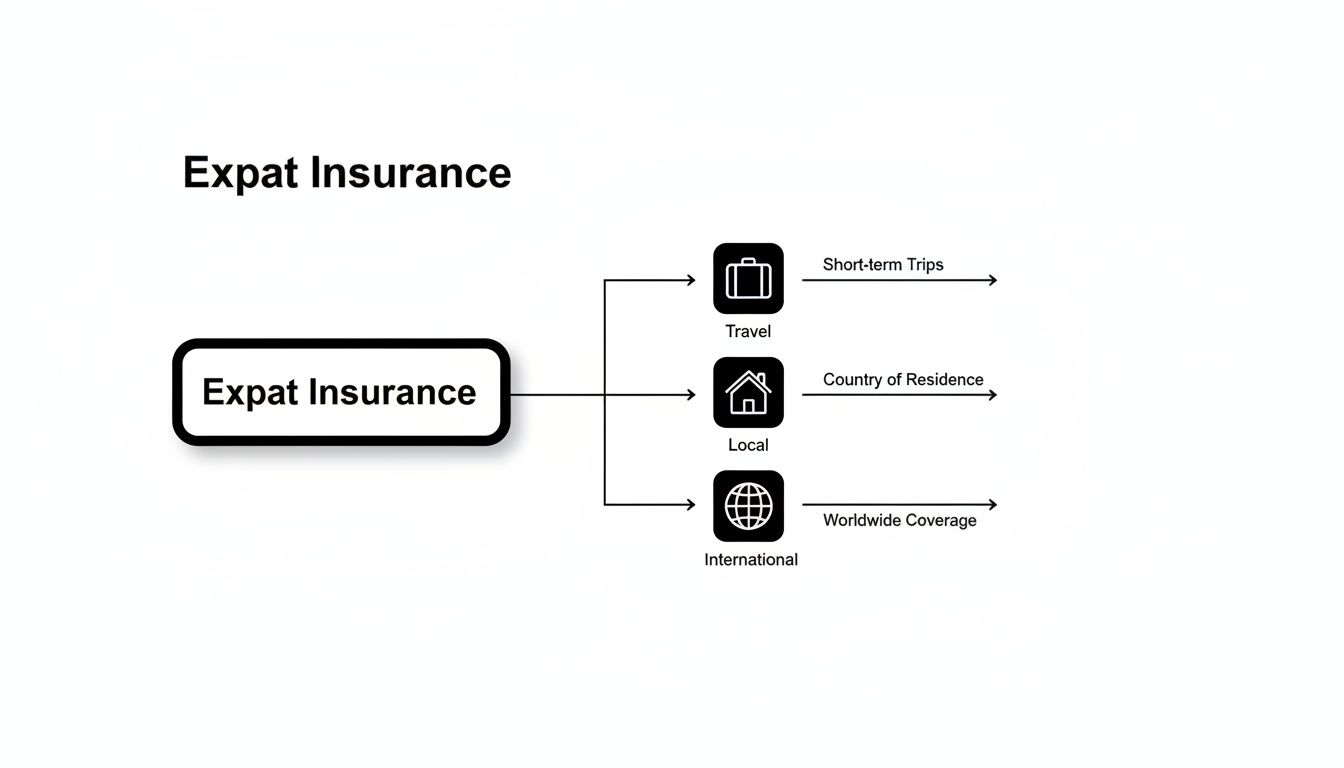
As you can see, while travel and local plans have their place for specific situations, only a true international plan offers the borderless protection a global life demands.
The Network: Your Lifeline to Care
The first thing to investigate is the provider network. This is simply the list of hospitals, clinics, and doctors your insurer has a partnership with. When you stay “in-network,” you get pre-negotiated rates and usually just pay a small copay. The insurer handles the rest directly with the hospital. Easy.
But if you go “out-of-network,” you could be stuck paying the full, often shocking, cost upfront and then chasing your insurer for reimbursement later. Before you sign anything, check the network in your new country. Is there a quality, English-speaking hospital nearby? Can you get to a specialist without a hassle? A great plan with a terrible local network is basically worthless.
A policy’s real strength is measured by its network. It determines not just what you pay, but your actual access to good care. Make sure the network is strong where you live, not just where the insurance company is headquartered.
Pre-Existing Conditions: What’s Actually Covered?
A pre-existing condition is any health issue you had before your new insurance kicked in—think asthma, diabetes, or even an old sports injury. How a plan handles these is a make-or-break detail.
Some policies will flat-out refuse to cover them. Others might make you wait a certain period before coverage begins. The best international plans will often provide full coverage from day one, though it might mean a higher premium.
One thing is non-negotiable: be honest on your application. Hiding a pre-existing condition is a fast track to getting your claims denied or your entire policy canceled.
Emergency Medical Evacuation: The Ultimate Safety Net
Picture this: you’re living on a gorgeous, remote island when you have a serious accident. The local clinic is not equipped to handle it. This is where emergency medical evacuation coverage becomes your hero.
This feature covers the mind-boggling cost of transporting you to the nearest top-tier medical facility that can give you the care you need. Without it, an air ambulance can easily cost up to $100,000 or more. That’s a bill that can wipe out a lifetime of savings. For any expat living in a place with developing or limited healthcare, this isn’t a luxury—it’s essential. To really get why this matters so much, it’s worth digging into the details of how medical evacuation insurance works as a critical piece of your global safety plan.
Decoding the Dollars: Deductibles and Out-of-Pocket Maximums
Finally, you need to get comfortable with the financial side of your plan. These are the terms that spell out exactly how much you’ll pay yourself before the insurance company really steps in.
- Deductible: This is the amount you have to pay for your medical care each year before your insurance starts paying its share. If you have a $1,000 deductible, you pay the first $1,000 of your medical bills.
- Coinsurance/Copay: After your deductible is met, you might still share some costs. A copay is a flat fee you pay for a service (like $25 for a doctor’s visit). Coinsurance is a percentage (you pay 20%, the insurer pays 80%).
- Out-of-Pocket Maximum: This is the absolute most you will have to pay for covered medical care in one year. It’s your financial firewall. Once you hit this limit, your insurance company pays 100% of all covered costs for the rest of the year, protecting you from truly catastrophic medical bills.
By really digging into these core features, you move beyond just comparing prices. You start to understand the true protective power of an expat medical insurance policy, making sure the plan you choose is one you can actually count on, wherever you are in the world.
Understanding the Cost of Expat Medical Insurance
Figuring out the price of expat medical insurance can feel like trying to nail down a moving target. It’s not just one number—it’s a blend of different factors that come together to shape your final premium. What you pay can be wildly different from what another expat pays, even if you’re living in the same city.
Think of it like buying a car. The final sticker price depends on the model, the engine size, and all the extras you add on. Expat medical insurance works the same way. The cost isn’t random; it’s a careful calculation based on who you are, where you’re going, and what level of protection you need. Once you get a handle on these key pieces, you’re in a much better position to find a plan that fits your budget without skimping on the important stuff.
The Major Cost Drivers Explained
Your premium really boils down to three core elements: your personal profile, your destination, and how comprehensive you want your plan to be. Each one can dial your costs up or down significantly.
- Your Age and Health: This is the big one. Insurers see younger, healthier people as a lower statistical risk for needing major medical care, which translates to lower premiums. As we get older, the likelihood of health issues naturally goes up, and premiums reflect that.
- Your Destination: Where you choose to live is a massive factor. Healthcare costs are all over the map, globally speaking. A plan that includes coverage in the United States, for instance, will always be the most expensive because U.S. medical care is the priciest in the world. On the flip side, a plan for Southeast Asia will cost a fraction of one for Western Europe.
- Your Coverage Level: This is all about the benefits you choose. A bare-bones plan that only covers hospital stays and major emergencies will be pretty affordable. But if you want a premium plan that includes regular doctor visits, dental, vision, and wellness checks, the price will naturally be higher.
The real trick is finding that sweet spot. You don’t want to pay a fortune for benefits you’ll never touch, but you absolutely don’t want to be caught underinsured when a real medical crisis hits. It’s a strategic decision that goes beyond just the monthly cost.
How Different Expat Profiles Affect Premiums
To put this all into perspective, let’s look at how these factors play out for a few common expat scenarios. You’ll see pretty quickly how unique circumstances lead to very different insurance costs.
Profile 1: The Young Freelancer
Picture a 28-year-old digital nomad setting up shop in Thailand. They’re likely looking at one of the most affordable premiums out there. Their young age, good health, and choice of a low-cost healthcare country all work in their favor. They might even opt for a plan with a higher deductible to keep those monthly payments super low, focusing their coverage on major medical events rather than day-to-day care.
Profile 2: The Family Abroad
Now, consider a family of four—two 40-year-old parents and two young kids—moving to Spain. Their costs will be higher for a few reasons. First, the policy has to cover four people. Second, the parents are in a higher age bracket. And with kids, they’ll almost certainly want a more robust plan that covers outpatient visits for check-ups and the inevitable childhood illnesses, which adds to the price.
Profile 3: The Retiree in Mexico
Finally, let’s look at a 65-year-old retiree enjoying life in Mexico. Of these three profiles, they will have the highest premium. Age is the primary driver here. They’ll need a truly comprehensive plan that can manage potential chronic conditions and has a low deductible for more predictable medical expenses. That kind of security comes at a higher price, but it provides absolutely essential peace of mind.
As these examples show, there’s no such thing as a one-size-fits-all price for expat medical insurance. Your costs are a direct reflection of your life. For a deeper dive and some tools to help you estimate your own expenses, our guide on international health insurance costs is a great resource to help you budget with confidence.
How Your Destination Shapes Your Medical Insurance Needs

Here’s something you need to understand right away: choosing expat medical insurance isn’t like picking a plan off a generic menu. Where you’re headed is the single most important factor. A plan that’s perfect for living in Thailand would be dangerously inadequate in Switzerland, and vice versa.
Every country has its own unique healthcare system, with different rules, costs, and quality. If your insurance doesn’t line up with those local realities, you could be facing denied visas, massive unexpected bills, or a real struggle to get proper medical care when you need it most.
Regions with Mandatory Insurance Laws
Let’s get the big one out of the way first. Many countries, especially in Europe, have made health insurance a legal requirement for anyone living there. If you’re moving to one of these spots, it’s not a choice—you must have a compliant policy to get your visa or residence permit.
Take Germany, for example, a top destination for expats looking for world-class healthcare. The moment you register your address, the clock starts ticking to get covered. While their system keeps wait times short and facilities modern, a major hospital stay without the right insurance could easily cost over €10,000. We have more details on how countries like Germany manage their healthcare systems and what it means for you.
Other popular expat hubs with similar rules include:
- Dubai (UAE): Health insurance is mandatory for all residents. In fact, employers are required to provide it.
- France: All residents have to be covered, either through the public system or a private plan.
- Japan: If you’re staying longer than three months, you must enroll in the national health insurance system.
High-Cost Countries vs. Developing Nations
Beyond the legal stuff, the quality and cost of local healthcare will completely shape your insurance strategy. Your new home will generally fall into one of two buckets, and each requires a different game plan.
Think of your insurance plan as a bridge. In a country with world-class but expensive private care, you need a strong bridge built to handle heavy financial tolls. In a country with limited local care, you need a bridge that can extend to the nearest center of excellence, even if it’s a country away.
1. Nations with Excellent but Expensive Private Care
Places like the United States, Singapore, and Switzerland boast some of the best medical facilities on the planet. But that quality comes with a hefty price tag. In these locations, a comprehensive international medical plan with a high coverage limit isn’t just a good idea—it’s essential. A simple accident or unexpected illness could quickly rack up bills in the tens or even hundreds of thousands of dollars if you’re not protected.
2. Destinations with Developing Healthcare Infrastructure
On the flip side, if you’re moving to a more remote or developing region, your main worry isn’t cost, but access. The local clinic might not be equipped to handle a serious medical emergency. In these situations, a plan with strong medical evacuation benefits becomes absolutely critical. This ensures you can be flown to the nearest top-tier medical facility, even if that means crossing a border. A basic local plan simply won’t offer this crucial lifeline.
At the end of the day, tailoring your expat medical insurance to your destination isn’t just a smart financial decision; it’s a fundamental part of protecting your health and well-being abroad.
A Step-By-Step Guide to Choosing Your Policy
Choosing the right expat medical insurance can feel like the last, most complicated piece of the puzzle before you move. But it doesn’t have to be. By breaking it down into a few common-sense steps, you can turn a mountain of paperwork into a clear, manageable checklist.
This is the roadmap I use with clients every day. It’s designed to walk you from figuring out what you need to confidently signing on the dotted line, making sure you end up with a policy that actually has your back abroad. Let’s go through the five key steps to securing that all-important peace of mind.
Step 1: Assess What You and Your Family Actually Need
Before you even glance at a single policy, you need to know what you’re shopping for. Think of it as creating a personal health profile for yourself and anyone else you need to cover.
Start with the basics. What’s your current health like? Are you managing any chronic conditions? Do you rely on regular prescription medications? For families, this is where you’d factor in things like pediatrics, orthodontia, or potential maternity care.
This initial reality check is your foundation. It gives you a non-negotiable list of “must-have” benefits, so you don’t end up paying for frills you’ll never use or—even worse—realizing your plan has a massive hole in its coverage when you need it most.
Step 2: Research Your Destination’s Rules
As we’ve covered, your new home country gets a big say in your insurance requirements. Your next mission is to dig into the specific visa and healthcare laws where you’re headed. Some countries, for example, require every resident (expats included) to sign up for a local insurance plan.
Getting this wrong can lead to a rejected visa application or other headaches down the road. The best sources are official government immigration websites or trusted expat forums for your destination. This crucial step ensures that whatever policy you choose is 100% compliant from the day you land.
Step 3: Compare Quotes from Reputable Carriers
With your needs checklist and legal requirements sorted, it’s time to start gathering quotes. Stick to established, global insurance carriers known for solid service and big international networks. This is where working with a specialist broker like Expat Global Medical really helps, as we can pull multiple quotes from top-tier providers for you in one go.
When you get those quotes, look past the monthly price tag. The real story is in the financial details:
- Deductible: How much you have to pay out-of-pocket before the insurance company starts paying.
- Coverage Limits: The absolute maximum the policy will pay out for your care.
- Out-of-Pocket Maximum: The most you’ll ever have to spend on medical costs in a given year.
Comparing these numbers side-by-side shows you the true value of a policy, not just its sticker price.
Step 4: Scrutinize the Policy for Exclusions
Every single insurance policy has fine print detailing what it won’t cover. Reading this section is non-negotiable. Common exclusions often include things like cosmetic surgery, experimental treatments, or injuries from high-risk hobbies like skydiving.
Pay extremely close attention to the wording around pre-existing conditions and any waiting periods. Honestly, understanding what isn’t covered is just as important as knowing what is. It’s the single best way to avoid a financially devastating surprise.
If you read something and it’s not crystal clear, ask for clarification. Never just assume a specific treatment is covered—always get it confirmed.
Step 5: Finalize Your Application with Confidence
Once you’ve zeroed in on a policy that ticks all your boxes, you’re ready to apply. The application process will dive deep into your personal and medical history. Be 100% truthful and thorough. An innocent mistake or a small omission can be grounds for a denied claim or even having your policy cancelled just when you need it most.
After you submit the application and get your approval, give the final policy documents one last review. Save a digital and a hard copy, and make sure you know exactly how the claims process works. Nailing this final step means you can start your global adventure knowing your health and finances are secure.
Got Questions About Expat Medical Insurance? We’ve Got Answers.
When you’re sorting out life in a new country, the little details of your medical plan can bring up some big questions. Let’s tackle some of the most common ones that pop up for expats.
Am I Covered When I Visit My Home Country?
This is a huge one, and the short answer is: it completely depends on your policy. It’s one of the key differences between a true international plan and a simple local one.
Many premium international medical insurance plans offer what’s called “home country coverage” for temporary visits. But “temporary” is the key word here. There are usually strings attached, like limiting coverage to 30 or 60 days per year. If you plan on making frequent trips back, you absolutely need to check this detail before signing up. A basic local plan you buy in your new country will almost never cover you back home.
How Does Making a Claim Work from Another Country?
Thankfully, this has gotten so much easier over the years. Insurers who specialize in expat plans know you could be anywhere, so they’ve built their systems for it. Most have slick online portals or mobile apps that make filing a claim straightforward.
Here’s how it usually plays out:
- Pay & Claim: For routine stuff like a doctor’s visit, you’ll likely pay the clinic upfront. Just get a detailed receipt, snap a picture, and upload it through the insurer’s app or website.
- Direct Billing: This is the goal for anything major. For hospital stays or significant procedures at an in-network facility, the hospital will bill your insurance company directly. This keeps you from having to float a massive medical bill on your credit card.
A good rule of thumb: keep digital copies of every single piece of medical paperwork until you see the money back in your account.
Are Dental and Vision Usually Included?
Typically, no. Most standard expat medical insurance is laser-focused on core medical care—think accidents, illnesses, and emergencies. Dental and vision are almost always considered optional add-ons.
Think of it like a cable TV package. Your main plan gives you all the essential channels. If you want the premium movie and sports channels (like dental and vision), you add them on for an extra fee.
If regular dental cleanings, new glasses, or potential root canals are on your radar, make sure you choose a plan that lets you bolt on those extra benefits.
Can One Policy Cover My Family Across Different Countries?
Yes, and honestly, this is where a real international medical plan shines. These policies are designed for global families.
They can seamlessly cover everyone under a single plan, even if you’re not all in the same place. It’s perfect for situations where one parent is working in Dubai while a child is at university in the UK. Everyone stays protected under the same family policy, which simplifies life immensely.
Finding the right protection for your life abroad is what we live and breathe. At Expat Global Medical, we partner with the world’s top carriers to find a plan that fits your destination, your family, and your budget.
Ready to get started? Visit us at for a free quote and some expert advice.