Expat medical insurance is your lifeline for healthcare while you’re living outside your home country. It’s built specifically to cover everything from routine doctor visits to unexpected illnesses and accidents—so you aren’t left facing catastrophic bills thousands of miles from home.
It’s crucial to know this is not the same thing as the standard travel insurance you buy for a two-week vacation, which is usually more focused on trip cancellations and lost luggage. Expat insurance is comprehensive health coverage for your life abroad.
Why Expats Need a Global Medical Safety Net
Moving abroad is a life-changing adventure, but it also means playing by a completely new set of healthcare rules. That trusty domestic health plan you rely on back home? It often becomes nearly useless the moment you cross international borders. This is exactly where overseas medical insurance for expats steps in, acting as your universal key to unlock quality medical care, no matter where you are in the world.
Think of it this way: your U.S. health plan is like a local library card. It works perfectly within your town, but it won’t get you into a library in Paris or Tokyo. An expat medical plan, on the other hand, is designed for global citizens, giving you vital protection precisely where your domestic coverage falls short. We dive deeper into these coverage gaps in our article explaining why U.S. health insurance doesn’t work abroad.
Distinguishing Between Your Insurance Options
It’s easy to get these different insurance types mixed up, but for an expat, understanding the difference is absolutely critical.
Standard travel insurance is for short-term vacationers. Its main job is to cover travel hiccups like a canceled flight or a lost suitcase, and it usually only offers minimal emergency medical benefits. The primary goal is often just to get you stable enough to fly back home.
Expat medical insurance is built for the realities of actually living abroad long-term. Its purpose is to function as your primary health plan, covering routine care, wellness, and major medical events. That distinction could save you a fortune.
Comparing Your Insurance Options At a Glance
Navigating the world of insurance can feel overwhelming. To simplify things, here’s a quick breakdown of how these plans stack up against each other. This table should help you see, in an instant, which type of coverage fits your situation as an expat.
| Insurance Type | Primary Focus | Best For | Typical Coverage Gap |
|---|---|---|---|
| Expat Medical Insurance | Comprehensive health coverage abroad | Expats, retirees, digital nomads, long-term residents | Trip cancellation, lost luggage |
| Travel Medical Insurance | Trip protection and emergencies | Short-term travelers (under 90 days) | Routine care, chronic conditions, long-term needs |
| Domestic Health Insurance | In-network care within your home country | Living and working in your home country | Almost all medical care outside your home country |
As you can see, each plan serves a very different purpose. For anyone living abroad, relying on anything other than a dedicated expat medical plan is a serious gamble.
The growing awareness of just how high overseas medical costs can be is fueling a massive surge in demand for this type of specialized insurance. The global market is projected to nearly double from USD 5.24 billion to USD 10.21 billion by 2034.
Why the boom? Because expats are realizing that a single hospital stay in a developed nation can easily top $50,000. That number alone highlights the absolute necessity of having robust coverage.
This trend underscores a critical truth for anyone living abroad: winging it is not a strategy. Without a dedicated medical plan, a sudden illness or a serious accident can spiral into financial ruin. Securing the right expat medical insurance isn’t just a smart move—it’s a foundational pillar for a secure and successful life as an expat.

Understanding Your Core Coverage
When you strip away all the policy jargon, you’ll find that any solid expat medical insurance plan is built on three pillars of protection. Think of them as the legs of a stool—if one is missing, the whole thing gets wobbly. These core benefits are comprehensive medical care, medical evacuation, and repatriation. They’re designed to work in concert, protecting you from the biggest financial and health risks of living abroad.
Getting a handle on how each one works is the first real step to appreciating the value of a global safety net. Each pillar addresses a different stage of a medical crisis, making sure you’re covered from the moment something goes wrong until you’re either recovered or safely back home.
The First Line of Defense: Comprehensive Medical Care
This is the most critical part of an expat plan. It’s the coverage that pays for everything from routine check-ups to hospital bills when unexpected illnesses or injuries strike. This benefit is all about providing seamless healthcare, similar to what you’d expect from a plan back home.
Good comprehensive medical care coverage should always include:
- Inpatient and Outpatient Care: This covers hospital stays as well as doctor visits, specialist consultations, and diagnostic tests.
- Surgeries and Procedures: From setting a broken arm to far more complex operations, this handles the surgeon’s fees and operating room costs.
- Wellness and Preventative Care: This includes annual physicals, screenings, and vaccinations to keep you healthy.
- Prescription Medications: Covers necessary drugs prescribed for both acute and chronic conditions.
Without this, a single night in a foreign hospital could set you back thousands of dollars. We’ve seen how travel medical insurance saves travelers thousands on hospital bills abroad, and the costs are even higher for long-term care. A 2023 study found that the average cost for just a three-day hospital stay was nearly $30,000—a figure that would financially ruin most unprepared expats.

When Local Care Isn’t Enough: Medical Evacuation
Let’s paint a picture. Imagine you’re living in a beautiful but remote coastal town in Southeast Asia. You have a serious accident, but the local clinic, while fine for basic care, just doesn’t have the specialists or equipment to save your life. This is precisely when medical evacuation becomes the most important benefit you have.
Medical evacuation isn’t about flying you home for comfort; it’s about getting you to the right medical facility, fast. It’s the coordinated transport from a place with inadequate care to the nearest hospital that can provide the life-saving treatment you need.
Think about the expat who fell while trekking in a rural part of South America. The local hospital couldn’t handle his severe head trauma. His insurance provider’s 24/7 assistance team jumped into action, coordinating an emergency flight to a major city hospital hundreds of miles away. The cost for that one flight? Over $75,000, every penny of which was covered by his policy. This isn’t some luxury add-on; for many expats, it’s an absolute lifeline.
The Final Step: Repatriation of Remains
No one ever wants to think about this, but it’s an incredibly important—and compassionate—part of any comprehensive expat plan. In the tragic event of a death abroad, repatriation of remains coverage handles the immense logistical and financial headache of returning the deceased to their home country.
The process is tangled in red tape, involving legal paperwork, international regulations, and specialized transportation that can easily run from $10,000 to $20,000 or more. This benefit spares a grieving family from having to navigate a bureaucratic nightmare during an already devastating time, letting them focus on what truly matters.
These three pillars work together to form a complete shield. Comprehensive care manages your health, evacuation gets you to the right hospital when it counts, and repatriation provides a compassionate final service. If your plan is missing any one of them, you have a critical gap in your coverage.
How to Read the Fine Print Like a Pro
Let’s be honest—the details of an expat medical insurance policy can feel like they’re written in another language. The pages are dense with terms that seem intentionally confusing.
But learning to master this “fine print” is the single most important thing you can do to make sure you’re actually protected. Think of it like learning the rules of a game before you start playing; it saves you from expensive surprises when you can least afford them.
Decoding Your Financial Responsibilities
Before your insurance company ever pays a dime, you’ll have a few costs of your own to cover. Three key terms define exactly how much you’ll pay out-of-pocket. Getting a handle on these is non-negotiable for managing your budget as an expat.
- Deductible: This is a fixed amount you have to pay for medical care before your insurance starts contributing. If your policy has a $500 deductible and you end up with a $3,000 hospital bill, you pay the first $500. Your insurer handles the rest. Generally, a higher deductible means a lower monthly premium, but you’ll pay more upfront if you need to make a claim.
- Co-insurance: Once your deductible is paid, co-insurance kicks in. This is the percentage of the bill you split with your insurer. A very common split is 80/20, which means the insurance company pays 80% of covered costs, and you’re on the hook for the other 20%.
- Out-of-Pocket Maximum: This is your ultimate financial safety net. It’s the absolute most you will have to pay for covered medical care in a policy year. After you’ve paid enough in deductibles and co-insurance to hit this number, your insurer pays 100% of all covered costs for the rest of that year.
Reading the fine print isn’t just about dodging bullets; it’s about taking control. Understanding these terms gives you the power to compare plans intelligently and pick one that truly fits your budget and comfort level with risk.
Uncovering Common Policy Exclusions
What your policy doesn’t cover is just as critical as what it does. Exclusions are the specific situations and activities your insurance won’t pay for, and being blind to them can lead to a denied claim right when you need help the most.
Here are some of the most common exclusions you need to look out for:
- Pre-Existing Conditions: This is a big one. Many plans won’t cover medical conditions you had before the policy began, or they might enforce a waiting period before coverage starts. Being completely honest on your application is essential.
- High-Risk Hobbies: Planning to go scuba diving, rock climbing, or even just rent a scooter? You need to check the policy. Many standard plans exclude activities they deem “hazardous,” which means you’ll need to buy an extra rider to be covered.
- Medical Tourism: If the whole point of your trip is to get a medical procedure done, that treatment—and any complications from it—is almost always excluded.
- Specific Geographic Areas: Some policies will refuse to cover you in countries that have high-risk travel advisories from government bodies. Always check if your destination is on an excluded list.
Medical evacuation is a great example of a core benefit with tricky fine print. To really grasp the details, it helps to review a guide on what medical evacuation insurance really is and the specific triggers required for coverage. Knowing these limitations ahead of time lets you choose a plan that genuinely aligns with where you’re going and what you’ll be doing.
Choosing the Right Plan for Your Expat Journey
Your life abroad isn’t a one-size-fits-all experience, and neither is your insurance. A generic policy might look good on paper, but you only discover its true value when it clicks perfectly with your lifestyle, your family’s needs, and where you’ve chosen to plant your flag.
To find the right expat plan, you have to look past the marketing brochures and build a clear profile of your life overseas. This approach helps you zero in on the features that offer real protection, ensuring you’re covered for what actually matters. To get a better handle on this, you can find great advice on how to choose the right travel insurance for your adventure, as many principles apply to expat plans.
The Expat Family in Europe
Picture an American family with two young kids moving to Germany for a three-year work assignment. Their needs are worlds away from a solo backpacker’s. For them, a solid insurance plan isn’t just a safety net; it’s a foundational part of building a stable life and accessing top-notch healthcare.
Their checklist should be all about supporting a growing family:
- Routine and Wellness Care: This is about more than just emergencies. They need coverage for regular check-ups, vaccinations, and all the usual pediatric visits that keep kids healthy.
- Maternity and Newborn Coverage: If they’re thinking about expanding their family, this is non-negotiable. It should cover everything from prenatal appointments to delivery and postnatal care.
- Dental and Vision: Often sold as add-ons, these are crucial for family well-being, handling everything from routine cleanings to braces.
- Low Deductibles: Kids mean frequent minor illnesses and scraped knees. A plan with a low deductible stops them from paying out-of-pocket every time they need to see a doctor.
The Retiree in Costa Rica
Now, think about a couple in their late 60s retiring to Costa Rica, lured by the promise of a relaxed “pura vida” lifestyle. Their primary concern is managing their health as they age, especially with pre-existing conditions in the mix.
Their ideal policy looks completely different from the family’s:
- Strong Pre-Existing Condition Coverage: This is priority number one. They need a plan that covers their known health issues without making them wait months or years for it to kick in.
- Chronic Condition Management: Coverage for ongoing treatments, prescriptions, and specialist visits is absolutely vital for maintaining their quality of life.
- High Medical Maximums: As the risk of a serious health event goes up with age, a high overall coverage limit provides a critical financial backstop.
- Robust Emergency Evacuation: While Costa Rica has good healthcare, a major cardiac event or stroke might demand a flight to a more advanced facility in the U.S. or Mexico. This coverage is essential.
The Digital Nomad in Southeast Asia
Finally, let’s look at a solo digital nomad in their late 20s, hopping between Thailand, Vietnam, and Bali. They’re young, healthy, and always chasing the next adventure. They don’t need comprehensive wellness care; they need a bulletproof safety net for when things go seriously wrong.
For a digital nomad, flexibility and emergency response are everything. Their insurance needs to be as mobile as they are, acting as a shield against the unpredictable—whether it’s a scooter accident in Chiang Mai or a sudden, severe illness on a remote island.
This expat’s wish list is lean but powerful:
- High-Limit Emergency Medical Evacuation: This is their most important benefit. If they have a bad accident far from a major city, this is what gets them to a world-class hospital.
- Adventure Sports Rider: From scuba diving in the Philippines to trekking in Nepal, their policy must explicitly cover their high-risk hobbies.
- Global Coverage with Minimal Exclusions: Their plan has to work across multiple countries seamlessly, without forcing them to buy a new policy every time they cross a border.
- 24/7 Assistance Services: When you’re dealing with a crisis in a foreign language, a reliable, multilingual support team is an absolute lifeline.
Plan Feature Checklist for Global Lifestyles
Every expat journey is unique, which means the “perfect” insurance plan is different for everyone. A feature that’s a lifeline for a retiree might be an unnecessary expense for a digital nomad. The key is to match your coverage to your lifestyle, not the other way around.
This table breaks down the essential features for different types of expats, helping you see what really matters for your specific situation.
| Feature | Expat Family | Digital Nomad | Retiree | Global Employer |
|---|---|---|---|---|
| Comprehensive Medical | Essential | Low Priority | Essential | Essential |
| Maternity & Newborn Care | Must-Have | Not Needed | Not Needed | Optional Benefit |
| Dental & Vision | High Priority | Low Priority | High Priority | Optional Benefit |
| Pre-Existing Conditions | Important | Low Priority | Must-Have | Essential |
| Emergency Evacuation | Essential | Must-Have | Essential | Essential |
| Adventure Sports Rider | Optional | High Priority | Not Needed | Optional Benefit |
| Global Network Access | High Priority | Essential | High Priority | Must-Have |
| 24/7 Assistance | Essential | Essential | Essential | Essential |
Choosing the right features isn’t just about ticking boxes; it’s about building a plan that gives you genuine peace of mind, no matter where you are. A well-chosen policy feels less like an expense and more like an investment in your health and security abroad.
It’s no surprise that medical expense coverage dominates the travel insurance market, holding a 41.0% share. This just goes to show that expats and travelers alike are most concerned about protecting themselves from unexpected illnesses and accidents. When an appendectomy in Europe can set you back over $30,000, it’s easy to see why. By carefully matching your policy to your personal profile, you make sure your insurance is ready to handle the challenges that you’re most likely to face.
What to Do When You Need Medical Help Abroad
A medical issue abroad can feel chaotic and overwhelming. But with the right expat plan, that chaos quickly turns into a clear, managed process. Think of your overseas medical insurance policy not just as a piece of paper, but as your direct line to a team of experts ready to take control when you need it most. Knowing the steps before you go is the key.
The second something goes wrong, your only job is to get to a safe place and find immediate medical help. Once you’re out of harm’s way, your next move is to call your insurance provider’s 24/7 assistance line. That number is your lifeline.
Your First Call Is the Most Important One
Making that one phone call sets an entire support system in motion. The assistance team is built to handle crises, often in multiple languages. They can immediately find the nearest reputable hospital, arrange for payment guarantees so you aren’t stuck paying thousands out of pocket, and even monitor the care you’re receiving.
To make that call as smooth as possible, try to have this information handy:
- Your policy number and personal ID.
- A quick, clear explanation of what happened.
- Your precise location, including the hospital or clinic’s name and address.
- A phone number where they can reach you directly.
This single call triggers everything your policy is designed to do. We’ve seen firsthand how a good policy can save expats tens of thousands on hospital bills, and it almost always starts with that one crucial phone call.
Getting the right plan from the start is just as important. It’s a simple, three-step process.
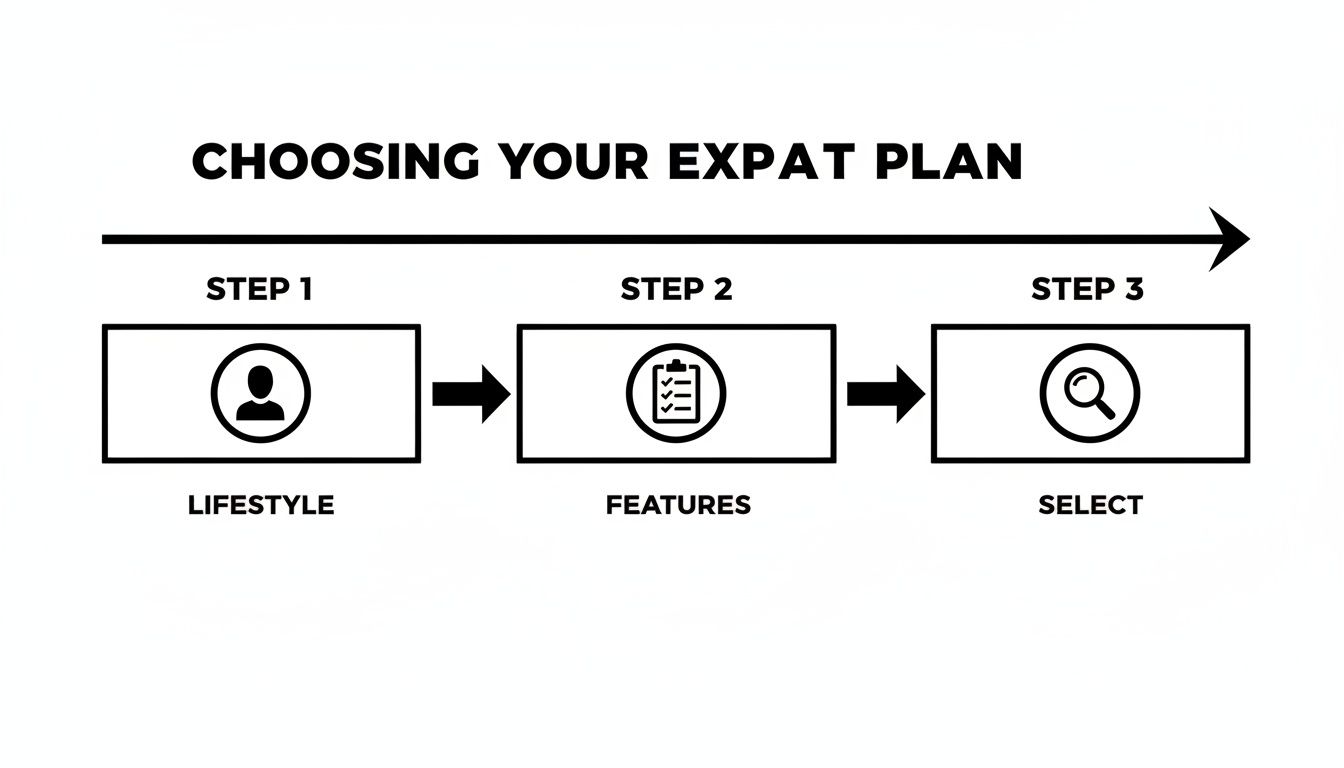
As you can see, a solid plan begins with looking at your lifestyle, figuring out the features you actually need, and then choosing a policy that fits.
An Expat Story From a Remote Village
Let’s look at a real-world example. An expat working in a remote village in Central America suffered a serious injury. The local clinic just wasn’t equipped to handle it. He made one call to his insurer’s emergency line, and the assistance team took over completely.
They spoke with the local doctor, confirmed he needed a higher level of care, and dispatched a private air ambulance. Within hours, he was airlifted to a modern, well-equipped hospital in a nearby capital city. The entire evacuation cost over $60,000—all of it managed and paid for by his insurance provider. His only job was to recover.
This is a perfect illustration of the value of having an experienced team coordinating things behind the scenes. It turns a terrifying, life-threatening ordeal into a structured, supported, and life-saving response.
Document Everything for a Smooth Claim
While the emergency team is coordinating your care, you or a companion should start gathering paperwork. Keep meticulous records of everything: hospital admission forms, doctor’s notes, medical receipts, pharmacy bills—you name it.
Once you’re stable, you’ll need to file a formal claim. Your provider will send you the right forms and walk you through the process. Having all your documents organized and ready to go will make a huge difference in how quickly you get reimbursed for any costs you had to cover upfront. This careful record-keeping is the final step to making sure your policy works for you, from start to finish.
Your Peace of Mind is the Ultimate Goal
Think of expat medical insurance as more than just a document. It’s the very foundation that lets you build a confident, secure life abroad. Real peace of mind isn’t about avoiding risks—it’s about knowing you’re ready for them, freeing you up to dive headfirst into your adventure.
Your journey to a protected life overseas really comes down to a few key pillars. It starts with understanding what you absolutely need for medical care and evacuations. Then, it’s about getting comfortable with the policy’s fine print. Finally, it’s about picking a plan that truly fits your specific journey. It’s all about arming yourself with the right knowledge to build a powerful safety net.
Turning What You’ve Learned Into Action
When you have the right protection, you can stop living with that nagging “what if” voice in the back of your head. And you’re not alone in seeking this security. The single-trip travel medical insurance market, for example, is already worth over USD 16.5 billion. On top of that, the dedicated medical travel market is projected to skyrocket to USD 63.98 billion by 2030. These numbers tell a clear story: people living and working abroad recognize the need for solid medical protection.
Of course, true peace of mind goes beyond just medical care. As an expat, you’ll want to think about other essentials, like finding the right home insurance specifically designed for expats in the Netherlands. Every piece of the puzzle contributes to your overall sense of security.
Now it’s time to turn this understanding into action. A well-chosen insurance plan is the bridge between planning your expat life and truly living it without fear of financial ruin.
Every expat’s story is unique. You might be a family putting down new roots or a digital nomad bouncing between continents. Because your needs are so personal, a generic, one-size-fits-all plan just won’t cut it. A quick chat with an insurance expert can shine a light on the specific options that make sense for your lifestyle, destination, and health profile.
Taking this final step ensures the policy you choose isn’t just “good enough”—it’s the perfect fit. It’s a small investment in your well-being that unlocks a genuinely worry-free experience abroad. Don’t leave your security to chance; take control and find the protection that lets you thrive.
Frequently Asked Questions About Expat Insurance
Let’s be honest, navigating the world of overseas medical insurance can feel like learning a new language. You’ve got questions, and you need straight answers to protect your health and finances while living abroad. This section cuts through the noise to tackle the most common questions we hear from expats just like you.
Travel Medical vs. International Health Insurance
This is a big one, and a frequent point of confusion. People hear “medical” and “insurance” and assume it’s all the same. But these two types of plans are built for completely different jobs.
Think of travel medical insurance as your emergency first-response team. It’s designed for the unexpected—a sudden illness or a serious accident during a specific trip. If you break your arm skiing in the Alps or get a nasty bout of dengue fever in Thailand, this is the policy that shields you from catastrophic hospital bills. It’s for the short-term “what ifs.”
An international health insurance plan (or expat medical insurance) is your entire healthcare system in a single package, available worldwide. It’s built for long-term expats who need more than just emergency coverage. We’re talking about routine check-ups, specialist visits, managing chronic conditions, and preventative care. It’s for your day-to-day and long-term well-being.
So, one is your trauma surgeon, the other is your family doctor. As an expat, you need the family doctor.
Who Decides on a Medical Evacuation?
The decision to launch a medical evacuation is one of the most critical moments in an insurance claim, and it’s never made on a whim. This isn’t about getting a more comfortable room; it’s a serious medical judgment call.
The decision is a professional collaboration between two groups: the local doctor treating you on the ground and your insurance provider’s own medical team.
It all boils down to one fundamental question: can you get the necessary and adequate medical care right where you are?
If the local physician determines their facility just doesn’t have the right equipment, specialists, or capacity to handle your condition, they’ll recommend a transfer. Your insurer’s medical experts then review that assessment. Once they agree, they immediately kickstart the incredibly complex process of getting you to the nearest, most appropriate hospital that can give you the care you need.
Covering Pre-Existing Conditions
This is easily the most important and nuanced question for many expats. The short answer is: coverage for pre-existing conditions—any health issue you had before your policy kicked in—is not a given. You have to pay close attention to the fine print.
Some travel medical plans will cover the acute onset of a pre-existing condition. This means if a stable, controlled condition suddenly and unexpectedly flares up into a medical emergency, they’ll cover it. But they won’t cover the routine management or prescriptions for that same condition.
It is absolutely critical to be 100% transparent about your medical history when you apply. Hiding a condition to get a lower premium is a recipe for disaster. It can lead to a denied claim right when you’re most vulnerable, leaving you on the hook for the entire medical bill.
More robust, long-term international health plans, designed for expats, often do cover pre-existing conditions, but usually after a waiting period. This could be anywhere from a few months to a couple of years before that specific condition is eligible for coverage.
Because this is such a tricky area, this is where working with a specialist really pays off. An expert broker can help you read between the lines and find a plan that actually fits your health history, so you don’t have any dangerous gaps in your coverage.
Ready to find the expat medical insurance that fits your life abroad? The team at Expat Global Medical has been helping expats secure their peace of mind since 1992. Get a free quote today and let our experts build a protection plan that’s right for you.