
Moving abroad is one of the most exciting chapters in a person’s life, but figuring out healthcare in a totally new country? That can feel overwhelming. For anyone living and working outside their home country, specialized expat medical insurance isn’t just a nice-to-have safety net—it’s a critical tool for protecting both your health and your finances. This isn’t your standard travel or domestic plan; it’s coverage built from the ground up for a global lifestyle.
Securing Your Health as a Global Citizen
Living abroad calls for a whole new way of thinking about healthcare. Unlike a short-term travel insurance policy that’s really only there for emergencies, expat medical insurance offers robust, ongoing access to quality medical care anywhere in the world. Think of it as your primary health plan, just with a global passport.
This distinction is everything. Imagine needing a routine check-up, seeing a specialist, or getting ongoing treatment for a chronic condition while you’re overseas. A basic travel policy would almost certainly leave you paying huge out-of-pocket costs. A dedicated expat plan, however, ensures you’re covered for both the unexpected emergencies and your day-to-day health needs.
The Growing Need for Global Coverage
As more and more people embrace life abroad, the demand for this kind of specialized insurance has exploded. The global market for expatriate health insurance hit a massive USD 17.6 billion in 2024, fueled by a worldwide community of 66 million expats. This community includes millions of digital nomads and retirees who can’t function without reliable, borderless healthcare.
It’s not just a smart choice, either. Many popular expat hubs, like Thailand and the UAE, now require proof of health coverage before they’ll issue a long-term residency visa, making it a legal must-have. You can dig into more data on this trend by reviewing the latest health insurance market research.
Getting the right insurance is about more than just checking a box on a visa application. It’s about genuine peace of mind, knowing that no matter where you are, a sudden illness or accident won’t completely derail your life or your savings.
This guide will be your roadmap. We’ll walk through why expat insurance is such a vital investment and how to pick a plan that truly safeguards your health, wherever your journey takes you. If you’re specifically planning a move, be sure to check out our detailed guide on health insurance options for non-USA residents coming to the USA.
Comparing Your International Insurance Options
Figuring out your health insurance when you’re living abroad can feel like a maze, but it’s simpler than it looks. It really comes down to a few key types of plans, each built for a different kind of life overseas. Getting this right from the start is crucial.
Think of it like choosing a vehicle for a trip. You wouldn’t take a sports car on a rugged, cross-country trek, and you wouldn’t use a moving truck for a quick trip to the store. The right expat medical insurance works the same way—it has to match your journey. Your options generally fall into four buckets: long-term expat plans, short-term travel policies, student insurance, and employer-sponsored group coverage.
What Each Plan Is Actually For
International expat medical insurance is your most solid, all-around choice if you’re planning to live abroad for a year or more. This is your primary health plan, designed for real life. It covers the day-to-day stuff like doctor check-ups and specialist visits, but it’s also there for the big things like surgeries and hospital stays.
Travel medical insurance, on the other hand, is purely for emergencies. It’s the perfect safety net for short vacations and business trips, covering unexpected accidents or sudden illnesses. Just don’t expect it to pay for routine or preventive care. Student plans are tailored specifically to meet university and visa rules, while employer plans are exactly what they sound like—coverage you get through your job. To get a better handle on how these plans are managed, looking into guides on international benefits administration can be a huge help.
The biggest mistake people make is thinking a short-term travel policy can replace a real, long-term expat plan. If you rely on travel insurance for your primary healthcare while living overseas, you’re setting yourself up for massive coverage gaps and potentially crippling out-of-pocket costs for anything that isn’t a true emergency.
This is all about moving from a place of necessity to a place of genuine security and peace of mind.
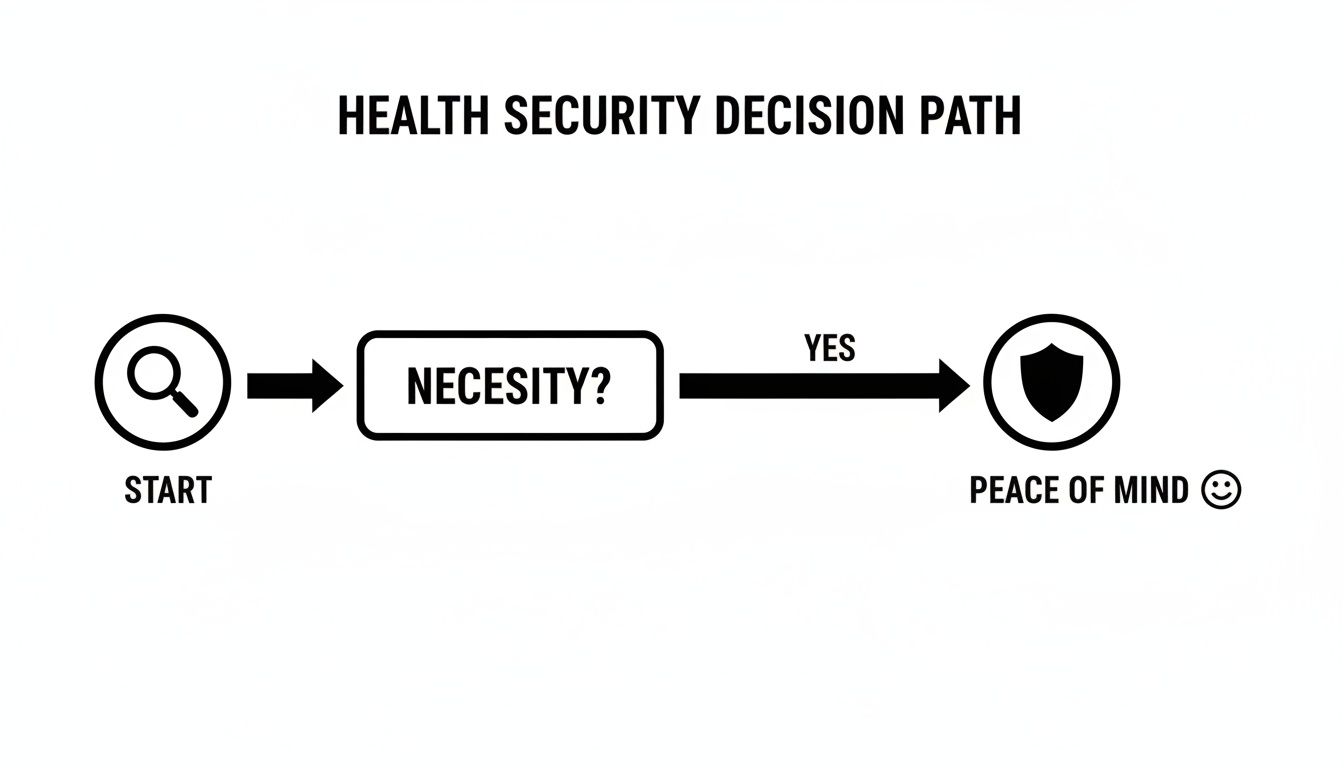
As the flowchart shows, just recognizing that you need coverage is the first step. The real goal is securing your well-being so you can actually enjoy your life abroad without worry.
To give you a clearer picture, here’s a quick breakdown of how these plans stack up against each other.
Comparing Health Insurance Options for Expats
| Insurance Type | Best For | Coverage Focus | Typical Duration |
|---|---|---|---|
| Expat Medical Insurance | Long-term residents, retirees, digital nomads living abroad for 1+ years. | Comprehensive medical care (inpatient, outpatient, wellness, emergencies). | 12+ months, annually renewable. |
| Travel Medical Insurance | Tourists, vacationers, short-term business travelers. | Emergency-only medical events, accidents, trip interruptions. | Days to a few months (typically under 6 months). |
| Student Insurance Plans | International students studying abroad. | Meets visa and university requirements, including medical and evacuation. | An academic semester or full academic year. |
| Employer Group Plans | Employees on international assignment. | Comprehensive health benefits provided by the company. | Duration of the work assignment. |
Seeing it laid out like this makes it easier to spot which category you fall into. The goal is to perfectly match the plan’s duration, scope, and benefits to your specific situation.
A lot of people are shocked to learn their health insurance from back home is essentially useless once they move abroad. It’s a common misconception that leads to serious problems. We break this down further in our article explaining why U.S. health insurance doesn’t work abroad. Picking the right international plan isn’t just a box to check—it’s the foundation for a safe and healthy life, wherever you decide to call home.
What Really Drives Your Expat Insurance Costs

It can feel like expat health insurance premiums are pulled out of thin air, but there’s a clear logic behind them. Think of it like getting car insurance—a driver’s age, where they live, and the type of car all get factored into the final price. Expat medical insurance works the same way, with insurers looking at a few key variables to figure out your premium.
Your age is the most obvious one, as premiums tend to creep up the older you get. But what really moves the needle is your primary country of residence and the specific regions you want to be covered in.
The Impact of Geography and Coverage Choices
Geography is often the single biggest driver of cost. Why? Because healthcare expenses swing wildly from one country to another, and insurance companies price their plans to match.
Including certain high-cost regions in your plan—especially the USA—can make your premium shoot through the roof. In fact, a policy that includes the USA can easily be 30-50% more expensive than one that doesn’t. This is why so many expats choose “Worldwide excluding USA” plans; they get comprehensive global coverage without the sticker shock.
Beyond where you’re covered, the structure of your policy gives you a lot of control over the price. These are the main levers you can pull:
- Deductible: This is what you pay out-of-pocket before your insurance kicks in. A higher deductible means a lower monthly premium. Simple.
- Co-insurance: This is the percentage of costs you agree to share with the insurer after you’ve met your deductible. If you’re willing to cover a higher portion, say 20%, your premium will go down.
- Optional Add-Ons: Want coverage for dental, vision, or maternity care? You can add them, but each one will bump up the total cost of your plan.
By mixing and matching these elements, you can build a plan that truly fits your health needs and your wallet. To see how these factors play together, you can dig deeper into our detailed breakdown of international health insurance costs.
How Pre-Existing Conditions Are Handled
Finally, insurers will always look at your medical history. This is done through a process called medical underwriting, where they review your past and present health to assess their risk.
Being completely transparent on your application is non-negotiable. Insurers use this information to decide if they can offer you a policy, if they need to exclude a specific condition, or if they need to add a surcharge to your premium. Hiding something can lead to your claim being denied or your entire policy being canceled—usually right when you need it the most.
For certain pre-existing conditions, an insurer might apply a waiting period. This is just a set amount of time you have to be enrolled before that specific condition gets covered. It’s a system designed to be fair to both you and the insurance company.
Your Step-By-Step Application Checklist

Applying for expat medical insurance doesn’t have to be a headache. With a bit of prep work, you can sail through the process. Think of it like getting your documents ready for a visa application—when you have everything in order upfront, you avoid those frustrating delays and get a much faster approval.
The real key is knowing exactly what insurers need to see. By getting your documents ready ahead of time and understanding why each one matters, you’re putting yourself in the best possible position to get covered quickly.
Gathering Your Essential Documents
Before you even start clicking through online forms, take a few minutes to pull together the essential paperwork. This simple step will honestly save you a ton of time later. Most international insurance carriers are going to ask for a pretty standard set of documents to confirm who you are and that you’re eligible for a plan.
Here’s what your core application package should include:
- Proof of Identity: A clean, valid copy of your passport is the gold standard here. Just make sure it isn’t expired and the main photo page is crystal clear.
- Proof of Status: You’ll also need to show your visa or residency permit for the country where you’ll be living. This simply confirms your legal status as an expat.
- Proof of Address: A recent utility bill or a copy of your rental agreement works perfectly. Insurers just need this to verify where you’ll be living.
Having digital copies of these files saved and ready to go will make any online application a breeze.
The most critical part of your application is the medical history questionnaire. Full, honest disclosure is not just a suggestion—it’s a requirement. Hiding a pre-existing condition can lead to claim denials or even policy cancellation right when you need it most.
Completing the Medical Questionnaire
The medical history form is your chance to give the insurer a clear snapshot of your health. Be thorough and be accurate. If you’re fuzzy on a specific date or diagnosis, it’s always better to check your medical records than to take a guess.
Answering these questions honestly is absolutely crucial for the underwriting process, which is how the insurer assesses risk and finalizes your plan. If your application is incomplete or has inaccuracies, it can get flagged, leading to a string of follow-up questions that slow everything down. This is where working with a specialist broker can be a huge help. They can look over your application to make sure it’s complete and accurate, helping you sidestep common mistakes and get your expat medical insurance policy issued without a hitch.
Why Expat Insurance Is a Critical Investment
It’s easy to think of expat insurance as just another box to check before you move, but that’s a huge mistake. Think of it more like a financial and medical lifeline when you’re setting up a new life in a foreign country. Without it, even a small accident can snowball into a full-blown crisis with shocking medical bills.
When you live abroad, you’re stepping completely outside the healthcare system you grew up with. A simple broken bone or a sudden illness can lead to costs that make your jaw drop, far exceeding what you might pay back home. This is exactly why a dedicated expat medical insurance plan isn’t just a “nice-to-have”—it’s your shield against unpredictable and potentially devastating expenses.
Protecting Your Wallet and Fulfilling Visa Rules
The financial risk of being uninsured or underinsured abroad is no joke. The expat insurance market is set to hit US$ 565 million by 2031 for a reason: people are waking up to this reality. In fact, studies show that over 40% of long-term expats without the right international policy end up facing medical emergencies that cost them more than $100,000. If you want to dig deeper, you can discover more insights about global expat insurance trends to see the full picture.
Beyond the raw numbers, there’s the simple fact of legal compliance. More and more countries require proof of health coverage to grant a visa or residency. In 2025, over 70 countries will have this rule in place. Requirements vary, from the Schengen Area’s €30,000 minimum all the way to Australia’s specific Overseas Visitor Health Cover.
This one-two punch of financial safety and legal necessity makes the right insurance an absolutely essential part of your toolkit for living globally.
Benefits That Go Way Beyond the Balance Sheet
While protecting your savings is a big deal, the real value of a solid expat plan goes far beyond just paying the bills. It’s about making sure you get the best care possible, no matter where you are in the world.
The most valuable feature of a top-tier expat plan isn’t just what it covers, but how it delivers that coverage. It’s the difference between navigating a crisis alone and having a global support system at your back.
A quality plan gives you access to an elite, worldwide network of hospitals and doctors, so you’re never far from medical professionals you can trust. They also offer a few key services that make a stressful situation much, much easier.
- Direct Billing Services: This is a lifesaver. Instead of you having to pay a massive hospital bill upfront and then wait weeks to get reimbursed, the insurer settles the payment directly with the hospital. This feature alone can save you from a major financial headache during an emergency.
- Emergency Medical Evacuation: If you’re somewhere without the right medical facilities for your condition, this feature can literally save your life. It covers the cost of flying you to the nearest top-tier medical center, an expense that could otherwise run into the tens of thousands of dollars.
- 24/7 Multilingual Support: When you’re dealing with a health problem in an unfamiliar country, having a dedicated team you can call anytime—and speak to in your own language—is incredibly reassuring.
These aren’t just minor perks; they transform your insurance from a simple policy into a full-blown support system that protects your health, your money, and your peace of mind.
Choosing the Right Expat Insurance Plan
Okay, you’ve got the basics down. Now for the most important part: turning what you know into the right decision and picking the perfect expat insurance plan. This is where you start comparing quotes from top-tier international carriers like Cigna, GeoBlue, and IMG.
But remember, the goal here isn’t just to snag the cheapest premium. It’s about finding a policy that genuinely fits your life—your specific destination, your daily routine, and your health needs. This is where getting some expert guidance can make all the difference. When you’re trying to choose the right plan, professionals like insurance agents can cut through the confusing policy language and lay things out clearly. A seasoned advisor will help you weigh the pros and cons, making sure you don’t overpay for coverage you’ll never use or, worse, leave yourself exposed with critical gaps in your protection.
Finding a Trusted Partner for Global Life
Trying to navigate the world of expat medical insurance on your own can feel overwhelming, to say the least. A specialist broker is more than just a salesperson; they’re your advocate, working to find a plan that delivers real security. They know the subtle but critical differences between policies and can point you toward carriers with a solid reputation for taking care of their members.
For expats, the stakes are incredibly high. An uninsured expat can face medical bills that are 3x higher than someone with proper coverage. Take Expat Global Medical, for example. We specialize in benefits like emergency evacuation—a service that an estimated 25% of expats in remote locations need each year. Our testimonials are filled with real-life stories, from coordinating complex cancer treatments in Asia to executing life-saving airlifts from clinics in Latin America. To get a broader view of these risks, you can read the full research about global insurance trends.
Choosing a plan is the final step, but it’s also the most important. It’s about empowering yourself with a trusted partner who can help safeguard your health, finances, and peace of mind as you embrace your life abroad.
Ultimately, the right plan is what gives you the freedom to live your global life without constantly worrying about the “what-ifs.” It’s about moving forward with confidence, knowing you have a reliable safety net, no matter where your adventures take you.
We Get These Questions All The Time
Let’s be honest, figuring out health insurance as an expat can feel like trying to solve a puzzle. You’ve got questions, and we’ve heard them all before. Here are some straightforward answers to the things people ask us most.
“What If I Have a Pre-Existing Condition? Can I Still Get Covered?”
Yes, absolutely. Finding a plan that covers a pre-existing condition is very possible, but you need to know that every insurance company handles this differently. There’s no one-size-fits-all answer.
Some insurers will cover your condition right away but might charge a higher premium for it. Others might make you wait a certain amount of time—a waiting period—before your coverage for that specific issue kicks in. In some cases, a company might just exclude that one condition from the policy entirely.
The golden rule here is simple: be completely upfront about your medical history on your application. Hiding something can void your policy when you need it most. An experienced broker can take your health profile and match you with insurers who are known for being fair and accommodating.
“Will My Expat Insurance Work If I Go Back Home for a Visit?”
That all comes down to the fine print in your policy. Most international health plans are built for your new life abroad, but many will include some coverage for short trips back to your home country, usually for emergencies.
If you know you’ll be spending a good chunk of time back home each year, this is something you have to plan for. You’ll want to specifically look for a plan with strong home country benefits. Make sure you talk this through with your advisor so your coverage actually matches your real-life travel habits. You don’t want to find out you have a gap in coverage when it’s too late.
“What’s the Real Difference Between Inpatient and Outpatient Care?”
Getting this distinction right is probably one of the most important parts of picking a plan that actually works for you.
Inpatient care is for the big stuff. Think of it as any medical treatment that requires you to be formally admitted to a hospital and stay overnight. This covers things like major surgeries, a serious illness, or an accident that needs round-the-clock monitoring.
Outpatient care, on the other hand, is everything else—all the medical services you get without being admitted to a hospital. This is your day-to-day healthcare: routine visits to your family doctor, seeing a specialist, getting lab work or an X-ray done, and picking up prescription medications.
Nearly every plan will cover the essentials for inpatient care. But if you want your regular doctor’s visits and prescriptions covered too, you’ll need a more comprehensive policy that includes robust outpatient benefits. Figuring out that balance is key to building a plan that gives you true peace of mind.
Ready to find a plan that protects your global lifestyle? The team at Expat Global Medical has been helping expats secure reliable coverage since 1992. Get your free, personalized quote today and see how we can safeguard your health, wherever you call home. Get Your Free Quote from Expat Global Medical.