Retiring abroad is no longer just about sunny beaches and a lower cost of living; it is a strategic financial and lifestyle decision where healthcare access and wealth preservation are paramount. The dream of a perfect overseas retirement hinges on one critical, often overlooked element: comprehensive international medical insurance. While visions of Portugal’s golden coastlines or Mexico’s vibrant culture are enticing, the reality is that navigating foreign healthcare systems without a robust plan can quickly turn that dream into a logistical and financial nightmare. This can be especially true when local public options are unavailable or inadequate for expat residents.
This guide to the best countries to retire is designed for the savvy, modern planner. We will move beyond the travel brochures to deliver a practical blueprint for your future. We will explore top destinations not just for their lifestyle benefits but through the essential lens of healthcare quality, residency visa requirements, tax implications for your pension, and, most importantly, how to secure the right international medical insurance coverage. Your health is your most valuable asset, particularly in retirement. A solid insurance plan isn’t just a safety net; it’s the foundation of a secure and worry-free life abroad.
In the following sections, we will break down ten leading retirement destinations, providing actionable insights into their healthcare systems and specific guidance on what to look for in an expat medical plan. We’ll cover everything from securing coverage for pre-existing conditions to ensuring you have emergency medical evacuation options. Let’s explore how to protect your health and your wealth, no matter where in the world you choose to call home.
1. Portugal: The Golden Visa & EU Healthcare Haven
Portugal consistently ranks among the best countries to retire, blending Old World charm with modern amenities and an affordable cost of living. Its appeal lies in a combination of favorable residency pathways, a robust healthcare system, and a welcoming atmosphere for expatriates. The country offers two primary routes for retirees: the D7 Visa, designed for individuals with a stable passive income, and the Golden Visa, which grants residency through investment, often in real estate.

This dual-track system makes it accessible to a wide range of retirees. For instance, affluent retirees from the UK and Scandinavia often favor upscale coastal towns like Cascais and Sintra, while the Algarve’s retirement communities are popular with British and Northern European expats seeking a sunny, established community.
Navigating Healthcare and Insurance
Portugal’s public healthcare system, the Serviço Nacional de Saúde (SNS), is available to all legal residents, including retirees who have registered. However, navigating the public system can involve wait times for specialists and certain procedures. Because of this, many expats opt for a hybrid approach.
A comprehensive international health insurance plan is crucial, especially during the initial visa application process where proof of coverage is mandatory. It also bridges the gap before you’re fully registered with the SNS and provides access to Portugal’s extensive network of private hospitals and clinics, which often offer faster service and more English-speaking staff.
Actionable Insurance Tips:
- Secure Early Coverage: Purchase a robust expat medical plan before you move to satisfy visa requirements.
- Include Evacuation: Add medical evacuation coverage to your policy. This ensures you can be transported to a top-tier European facility in a critical emergency.
- Go Hybrid: Once you are a resident and registered with the SNS, maintain a private insurance plan for specialized care, elective treatments, and dental and vision coverage.
For a deeper dive into the logistics and planning required, you can explore our comprehensive guide on how to retire overseas. With proper planning, Portugal offers a secure and high-quality retirement experience.
2. Mexico: Proximity, Affordability & Major Urban Healthcare Hubs
Mexico remains a premier choice for North American retirees, offering an unbeatable combination of geographical proximity, a low cost of living, and well-established expat communities. Its residency process is straightforward, with a Temporary Resident visa allowing for multi-year stays that can lead to permanent residency. This accessibility makes it one of the best countries to retire for those wanting to stay close to home.
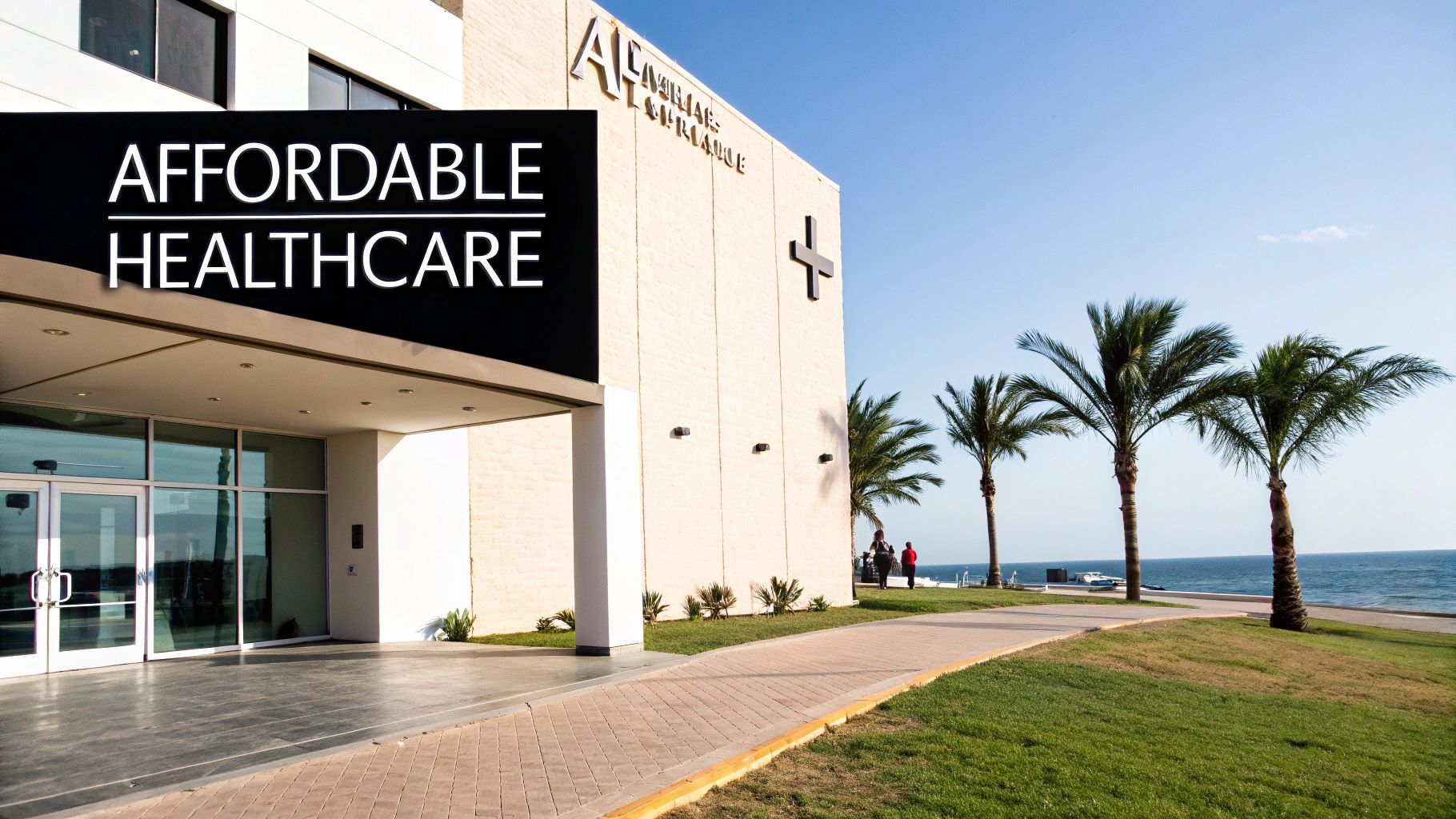
From the vibrant arts scene in San Miguel de Allende, home to over 10,000 expats, to Lake Chapala’s massive community of over 20,000, retirees have diverse lifestyle options. Meanwhile, cities like Guadalajara and Mexico City serve as major healthcare hubs, boasting JCI-accredited facilities like Hospital Angeles and Galenia Hospital that deliver world-class care at a fraction of U.S. prices.
Navigating Healthcare and Insurance
Mexico has two public healthcare systems, IMSS and INSABI, which legal residents can join. However, these systems often face challenges with wait times, resource limitations, and a language barrier. For these reasons, the vast majority of expatriates rely exclusively on the country’s excellent private healthcare network.
A comprehensive international health insurance policy is non-negotiable for retirees in Mexico. It is the key to accessing top-tier private hospitals and English-speaking specialists without incurring significant out-of-pocket expenses. This is particularly important for managing chronic conditions or unexpected medical emergencies. For those considering Mexico, understanding options for finding a top dentist in Mexico is also crucial for comprehensive healthcare planning.
Actionable Insurance Tips:
- Prioritize Private Coverage: Secure a robust international health insurance plan before you move. This is your primary tool for accessing high-quality care.
- Verify Hospital Networks: Ensure your chosen insurance plan includes major private hospital networks like Angeles Health and CMQ in its direct-billing network.
- Include Evacuation to the U.S./Canada: Add medical evacuation and repatriation coverage. This is vital for complex treatments or critical care where you may prefer to be treated in your home country.
To fully understand your coverage options, see our detailed guide on health insurance for travel in Mexico. Proper insurance planning ensures you can take full advantage of Mexico’s affordable, high-quality retirement lifestyle with complete peace of mind.
3. Spain: EU Healthcare + Southern European Lifestyle
Spain is a perennial favorite for retirees, offering a vibrant Mediterranean lifestyle, world-class healthcare, and a cost of living that remains affordable compared to many Western European nations. Its appeal is rooted in a straightforward residency process and access to a high-quality public health system, making it one of the best countries to retire in for those seeking a blend of culture and security. The primary route for retirees is the Non-Lucrative Visa, which grants residency to individuals with sufficient passive income to support themselves without working.
This visa makes Spain accessible to a wide range of retirees. Major cities like Madrid and Barcelona are hubs for top-tier medical specialists, while coastal areas like Valencia and the Costa del Sol offer a more relaxed pace with excellent modern healthcare facilities. This variety allows retirees to choose an environment that perfectly suits their lifestyle and budget.
Navigating Healthcare and Insurance
Spain’s public healthcare system, the Sistema Nacional de Salud (SNS), is renowned for its quality and is available to all legal residents. Upon securing residency, you can register at your local health center (Centro de Salud) to gain access. However, the visa application process itself requires proof of comprehensive private health insurance from a company authorized to operate in Spain.
Many expats continue to maintain private insurance even after gaining access to the public system. Private plans offer faster access to specialists, reduce waiting times for non-urgent procedures, and often provide care in facilities with more English-speaking staff. This two-tiered approach ensures comprehensive and timely medical attention.
Actionable Insurance Tips:
- Get Compliant Coverage: Purchase a Spain-specific expat health insurance plan that meets all Non-Lucrative Visa requirements, including no co-payments or deductibles.
- Register Locally: Once your residency is approved, register with your local Centro de Salud to activate your access to the public SNS system.
- Supplement for Speed: Use your private plan to bypass wait times for specialists and diagnostic tests within the public system, ensuring you receive prompt care when needed.
Understanding your options is key. You can learn more about finding the right international health insurance for retirees to ensure you meet visa requirements and have peace of mind. With careful planning, Spain offers a secure, healthy, and culturally rich retirement.
4. Costa Rica: English-Friendly Zone with Tropical Healthcare
Costa Rica is a premier destination for retirees who want political stability, a tropical “Pura Vida” lifestyle, and a welcoming, English-friendly culture. Its main draw is the accessible Pensionado visa, which requires a modest, stable monthly income from a pension or similar source. This simplicity, combined with high-quality healthcare, makes it one of the best countries to retire in the Americas.
The country’s established expat communities are a significant advantage for newcomers. For example, upscale suburbs like Escazú and Santa Ana in the Central Valley attract American and Canadian retirees with their modern hospitals and amenities. Meanwhile, areas like San Isidro de El General offer a more authentic Costa Rican experience with a lower cost of living and solid local healthcare access.
Navigating Healthcare and Insurance
Costa Rica operates a dual healthcare system. The public system, Caja Costarricense de Seguro Social (CAJA), is mandatory for all legal residents, including retirees on the Pensionado visa. While CAJA is known for its quality preventative and emergency care, wait times for non-urgent procedures can be long. Consequently, most expats rely on the excellent private system for their primary care needs.
Having a robust international health insurance plan is non-negotiable, particularly when you first arrive and are navigating the residency process. Private facilities in San José, such as Hospital CIMA and Clínica Bíblica, offer world-class care at a fraction of U.S. prices, and a private plan ensures you have immediate access to these English-speaking providers.
Actionable Insurance Tips:
- Secure Private Coverage First: Purchase a comprehensive expat health plan before your move. This will provide immediate access to the private system while you complete your CAJA registration.
- Plan for Evacuation: Ensure your policy includes medical evacuation coverage. For complex or critical conditions, transport to top-tier medical centers in Miami or Houston is a crucial safety net.
- Leverage Both Systems: Once you are a resident with CAJA, use it for routine check-ups, prescriptions, and emergencies. Maintain your private insurance for specialists, elective surgeries, and faster access to care.
To ensure you have the right coverage for a secure retirement in Costa Rica, review our tailored international health insurance plans. Proper preparation makes all the difference in enjoying a worry-free life abroad.
5. Panama: Tax Haven + Caribbean Accessibility
Panama stands out as one of the best countries to retire, offering a unique combination of financial incentives, modern infrastructure, and tropical living. Its appeal is anchored by the renowned Pensionado Visa, which requires a modest, stable lifetime pension, and a territorial tax system that doesn’t tax foreign-earned income. The use of the U.S. dollar simplifies finances for many North American retirees.
This strategic blend attracts a diverse expat community. Retirees seeking a vibrant, urban lifestyle with top-tier amenities gravitate toward Panama City and its upscale suburbs like Clayton. Meanwhile, those desiring a cooler climate choose the mountain town of Boquete, and beach lovers establish themselves in coastal communities like Coronado.
Navigating Healthcare and Insurance
Panama offers high-quality healthcare, but it is highly concentrated in Panama City, where several JCI-accredited hospitals are located. Outside the capital, medical infrastructure can be more basic. Consequently, a strategic approach to healthcare is essential for retirees, especially those living in rural or coastal areas.
While Panama has a public system, most expatriates rely exclusively on the private sector for its accessibility, English-speaking doctors, and higher standard of care. A robust international health insurance plan is non-negotiable, serving as your primary access to this private network and fulfilling a key requirement for many residency applications.
Actionable Insurance Tips:
- Prioritize a Comprehensive Plan: Choose a policy that provides extensive coverage for major procedures and specialist consultations at Panama’s leading private hospitals.
- Confirm Evacuation to the U.S.: Your policy must include medical evacuation coverage, specifically to Miami. This is a critical safeguard for complex medical emergencies that may exceed local capabilities.
- Plan Around Panama City: If living outside the capital, coordinate with your insurer to plan for non-emergency specialist care and significant procedures in Panama City, where the best facilities are located.
6. Ecuador: Affordable Andean Living with Varied Climates
Ecuador stands out as one of the best countries to retire due to its exceptional affordability, diverse geography, and straightforward residency options. Its dollarized economy provides financial stability by eliminating currency exchange risks for U.S. retirees, while its Pensioner Visa requires a modest, stable income, making it highly accessible.
The country’s varied climates cater to every preference. Retirees can choose from the UNESCO World Heritage city of Cuenca, known for its mild Andean weather and excellent private clinics, to coastal beach towns like Salinas, or the health-conscious mountain community of Vilcabamba. This geographic diversity allows for a truly customized retirement experience.
Navigating Healthcare and Insurance
Ecuador offers a dual healthcare system, with the public network (IESS) and a growing number of high-quality, affordable private facilities. While residents are eligible for the IESS, many expats prefer the private system for its shorter wait times, modern infrastructure, and greater availability of English-speaking doctors, particularly in cities like Quito and Cuenca.
A comprehensive international health insurance plan is non-negotiable for retirees in Ecuador. It is a mandatory requirement for the Pensioner Visa application and provides immediate access to the superior private healthcare network. Without it, you would face out-of-pocket costs and potential barriers to receiving specialized care.
Actionable Insurance Tips:
- Secure Visa-Compliant Coverage: Purchase a plan that meets Ecuador’s specific visa requirements before you apply to ensure a smooth residency process.
- Prioritize Evacuation: Your policy must include robust medical evacuation coverage. This is critical for transport to top-tier facilities in Miami or Bogotá for complex medical emergencies.
- Choose Local Access: Select an insurance plan with a strong network of private hospitals and specialists in your chosen city, whether it’s Quito, Cuenca, or Guayaquil.
Proper insurance planning is the cornerstone of a secure and healthy retirement in Ecuador, providing peace of mind and access to the best care available.
7. Thailand: Long-Term Resident Elite Program & Low-Cost Living
Thailand has long been Asia’s premier retirement destination, offering an unparalleled combination of exceptional affordability, vibrant culture, and world-class private healthcare. The country’s appeal is enhanced by straightforward long-term residency options, including the popular Long-Term Resident (LTR) Visa and the prestigious Thailand Elite program, which simplify the process of settling down. This makes it one of the best countries to retire for those seeking a high standard of living on a modest budget.
This accessibility attracts a diverse expat community. For instance, retirees seeking urban convenience and top-tier medical facilities flock to Bangkok, home to internationally renowned hospitals. Meanwhile, Chiang Mai offers a more relaxed pace and even lower living costs without sacrificing quality healthcare, while Phuket provides a beach-centric lifestyle with a growing network of modern clinics and hospitals.
Navigating Healthcare and Insurance
While Thailand’s public healthcare system exists, it is not typically used by expatriates due to language barriers and varying standards of care. Instead, the country’s private healthcare sector is a major draw, with numerous JCI-accredited hospitals like Bumrungrad International Hospital and the Samitivej Hospital network offering services comparable to Western nations at a fraction of the cost.
A comprehensive international health insurance plan is non-negotiable, as it is a mandatory requirement for most long-term visas. It provides access to the best private facilities where English is widely spoken and wait times are minimal. Without robust insurance, out-of-pocket costs for serious medical events can be substantial, despite being lower than in the US.
Actionable Insurance Tips:
- Secure Visa-Compliant Coverage: Purchase an international health insurance plan before applying for your retirement visa to meet the strict coverage requirements.
- Plan for Major Procedures: For complex surgeries, ensure your policy covers top-tier hospitals in Bangkok, which have the highest concentration of specialists.
- Include Evacuation: Add medical evacuation coverage to your policy. While Thai healthcare is excellent, this ensures you can be transported to Singapore or Hong Kong for highly specialized or critical care if needed.
8. Philippines: Island Living + Affordable American-Style Healthcare
The Philippines presents a unique retirement proposition, combining a remarkably low cost of living with a widespread use of English and a healthcare system heavily influenced by American standards. This tropical archipelago is particularly appealing for its straightforward retirement visa, the Special Resident Retiree’s Visa (SRRV), which offers a long-term pathway for expats. Its warm climate and welcoming culture make it a strong contender for those seeking an adventurous yet affordable retirement.
This accessibility attracts a diverse expat community. For instance, major urban centers like Manila and Cebu are home to JCI-accredited hospitals such as St. Luke’s Medical Center and Makati Medical Center, drawing retirees who prioritize top-tier medical facilities. Meanwhile, areas like Subic Bay and Davao offer a more relaxed lifestyle with solid healthcare infrastructure and established communities of American and European expats.
Navigating Healthcare and Insurance
While the Philippines has a public healthcare system (PhilHealth), it is often underfunded and primarily serves local citizens. For this reason, nearly all expatriates rely exclusively on the private healthcare sector, which is known for its high standards and English-speaking medical professionals, many of whom were trained in the United States.
A comprehensive international health insurance plan is not just a recommendation; it is an absolute necessity for retiring in the Philippines. It provides access to the best private hospitals and is often a prerequisite for the SRRV application. For those considering the move, it’s wise to explore the specific migration and visa options for the Philippines to ensure all requirements, including insurance, are met.
Actionable Insurance Tips:
- Prioritize Comprehensive Coverage: Secure a high-limit expat medical insurance policy before you relocate to cover all potential health needs at private facilities.
- Demand Evacuation: Ensure your policy includes robust medical evacuation coverage. In cases of highly complex medical emergencies, transport to world-class facilities in Singapore or Hong Kong is critical.
- Build Your Network: Upon arrival, register with a JCI-accredited hospital in your chosen city and establish a relationship with an English-speaking primary care physician to streamline future medical care.
9. Colombia: South American Gateway with Modern Healthcare
Colombia has shed its past reputation to emerge as one of the best countries to retire, offering a vibrant culture, stunning biodiversity, and a surprisingly low cost of living. The country’s primary draw for retirees is the Migrant (M) Pensioner Visa, which has a modest income requirement, making it highly accessible. This straightforward path to residency opens the door to a high-quality lifestyle in a nation with a rapidly modernizing infrastructure.
Major cities like Medellín and Bogotá are epicenters for this new wave of expatriate life. Medellín, with its “City of Eternal Spring” climate and over 30,000 foreign residents, boasts a thriving cultural scene and top-tier medical facilities. Bogotá offers the amenities of a bustling capital, while cities like Cali present even more affordable alternatives without sacrificing access to quality healthcare.
Navigating Healthcare and Insurance
Colombia is renowned for its excellent healthcare system, ranked highly in Latin America, particularly its private sector. Major cities feature numerous JCI-accredited hospitals, such as Fundación Santa Fe de Bogotá and Medellín’s IPE Health, which offer world-class care at a fraction of Western prices. While residents can join the public Entidades Promotoras de Salud (EPS) system, most expats prefer the private system for its speed, modern facilities, and English-speaking staff.
A comprehensive international health insurance plan is non-negotiable. It is required for the visa application and is essential for accessing the best private hospitals and specialists without delay. This coverage ensures you receive premium care from day one.
Actionable Insurance Tips:
- Secure Pre-Arrival Coverage: Your visa application will require proof of a health insurance policy that provides coverage in Colombia.
- Prioritize JCI Network: Choose an insurance plan with a strong network of JCI-accredited hospitals in your chosen city to ensure direct billing and high standards of care.
- Insist on Evacuation: Ensure your policy includes medical evacuation to the United States (often Miami) or Panama for highly complex or critical care scenarios.
- Connect Locally: Join expat medical networks in Medellín or Bogotá to get peer recommendations for trusted, English-speaking physicians and specialists.
With its combination of affordability and exceptional private healthcare, Colombia presents a compelling and modern retirement destination.
10. Malta & Cyprus: EU Mediterranean Gateways with Healthcare Standards
For retirees seeking an English-speaking EU base steeped in Mediterranean culture, Malta and Cyprus present compelling, sun-drenched options. Both island nations offer accessible residency pathways for retirees with stable incomes, blending a relaxed lifestyle with high standards of safety and EU-compliant healthcare. Their appeal is magnified by a lower cost of living compared to much of Western Europe.
The widespread use of English, especially in Malta where it is a co-official language, significantly eases the transition for North American and British expats. Cities like Valletta in Malta offer cosmopolitan amenities within a historic setting, while Limassol and Paphos in Cyprus provide vibrant beachside communities with excellent infrastructure, making them some of the best countries to retire in for island lovers.
Navigating Healthcare and Insurance
Both Malta and Cyprus provide high-quality public healthcare systems available to legal residents. Malta’s Mater Dei Hospital is a leading EU-standard public facility, and Cyprus’s General Healthcare System (GHS) offers comprehensive coverage. However, as smaller island nations, their networks of highly specialized medical professionals can be more limited than in larger European countries.
For this reason, a hybrid insurance strategy is highly recommended for expat retirees. A comprehensive international health insurance plan is a prerequisite for most residency applications and is essential for accessing the robust private healthcare sectors in both countries. This ensures quicker access to specialists and a wider choice of English-speaking providers.
Actionable Insurance Tips:
- Plan for Complex Care: Your international health insurance policy should explicitly include medical evacuation coverage. This is critical for transport to major European hubs like Rome or Athens in the event of a serious medical condition requiring specialized treatment unavailable locally.
- Budget for Private Premiums: Supplement public system access with a private plan. Budgeting around $100-$150 per month can provide peace of mind and access to private clinics for routine and specialized care.
- Fulfill Visa Requirements: Secure a compliant expat medical insurance plan before starting your residency application, as proof of full health coverage is a non-negotiable requirement.
Top 10 Retirement Countries — Healthcare, Cost & Residency
| Destination | 🔄 Complexity (process) | ⚡ Resource requirements | 📊 Expected outcomes (results) | 💡 Ideal use cases | ⭐ Key advantages |
|---|---|---|---|---|---|
| Portugal: The Golden Visa & EU Healthcare Haven | Moderate — D7 or Golden Visa paperwork; some bureaucracy and waiting | Golden Visa €280k+ property or D7 income; living $1,200–$2,500/mo | High-quality EU healthcare, reciprocal access; occasional regional wait times | Retirees wanting EU residency, high-quality public care, investor-residency | EU healthcare access, NHR tax benefits, Mediterranean lifestyle |
| Mexico: Proximity, Affordability & Major Urban Healthcare Hubs | Low–Moderate — Temporary/Perm. residency procedures straightforward but variable by consulate | Temporary Resident ≈ $2,700/mo income proof; living $1,500–$4,000/mo | Excellent private care in major cities (JCI), large cost savings vs US; variable rural quality | North American retirees prioritizing proximity, low cost, and medical tourism | Close to US/Canada, affordable private care, established expat hubs |
| Spain: EU Healthcare + Southern European Lifestyle | Moderate–High — Non‑Lucrative visa paperwork strict; Golden Visa option requires investment | Non‑Lucrative ≈ €27,792/yr; living $1,800–$2,800/mo | World‑class public healthcare; free/minimal cost for residents; some wait times | Retirees seeking EU residency, top specialists, cultural lifestyle | Top-tier healthcare, EU mobility, strong infrastructure and culture |
| Costa Rica: English-Friendly Zone with Tropical Healthcare | Low — Pensionado visa simple to obtain; residency registration required | Pensionado $1,050/mo income; living $1,500–$2,200/mo | Good private care in Central Valley; CAJA public available but can have long waits | Retirees wanting tropical, English-friendly environment with modest budget | Low visa income requirement, English-friendly, stable politics, quality private care |
| Panama: Tax Haven + Caribbean Accessibility | Low–Moderate — Multiple visa paths (Pensioner, Friendly Nations) with paperwork | Pensioner $1,350/mo; living $1,500–$2,500/mo; USD currency eliminates FX risk | Modern healthcare concentrated in Panama City; limited rural specialists | Retirees seeking tax advantages, USD stability, Caribbean travel access | Territorial tax system, USD currency, modern capital healthcare |
| Ecuador: Affordable Andean Living with Varied Climates | Low — Pensioner visa straightforward; local bureaucracy minimal | Pensioner $1,350/mo; living $1,200–$1,800/mo; USD currency | Affordable private care in Quito/Cuenca; public system limited outside cities | Budget-conscious retirees wanting diverse climates and low costs | Dollarized economy, very low cost of living, mild Andean climate |
| Thailand: Long-Term Resident Elite Program & Low-Cost Living | Moderate–High — LTR Elite expensive; retirement visa requires annual renewal or proof | LTR option costly; retirement visa ~ $12k/yr income; living $1,000–$1,800/mo | Excellent private hospitals (Bangkok/Chiang Mai), major cost savings on procedures | Retirees seeking top private care in Asia, medical tourism, long-term stays | World-class private hospitals, English-speaking specialists, very low costs |
| Philippines: Island Living + Affordable American-Style Healthcare | Low–Moderate — SRRV deposit/process manageable; residency straightforward | SRRV $20k deposit or investment; living $800–$1,500/mo | Good private care in Manila/Cebu (American-influenced); variable outside cities | English-speaking retirees wanting island life and low costs | Very affordable, English prevalent, US-style private healthcare in cities |
| Colombia: South American Gateway with Modern Healthcare | Moderate — Pensioner visa needs income proof; improving administrative efficiency | Pensioner $1,350/mo; living $1,200–$1,800/mo | High-quality private healthcare in Medellín/Bogotá; affordable specialist care | Retirees seeking modern cities, pleasant climate, strong expat communities | Excellent private care, low cost, “eternal spring” climate in highlands |
| Malta & Cyprus: EU Mediterranean Gateways with Healthcare Standards | Moderate — Residency via property/financial proof; island-specific procedures | Living $2,000–$3,000/mo; property/investment requirements vary | EU‑standard public healthcare; smaller specialist networks than large EU centers | Retirees wanting English-friendly EU island living with easy EU access | EU healthcare reciprocity, English prevalence (Malta), stable EU regulations |
Your Next Step: Building a Custom Global Health Safety Net
Embarking on the journey to find your ideal retirement haven is exhilarating. We’ve explored a diverse tapestry of destinations, from the sun-drenched coasts of Portugal and Spain to the lush, tropical landscapes of Costa Rica and Thailand. Each of these top-tier locations offers a unique blend of culture, climate, and cost of living, presenting a compelling case for your golden years. You’ve seen how some countries boast world-class private hospitals in major cities while others offer more rustic, localized care.
The core takeaway is this: the “best” country is deeply personal, but the universal non-negotiable is a secure and reliable healthcare plan. As you transition from dreaming to planning, your focus must shift from “where” to “how.” Specifically, how will you guarantee access to premier medical care, protect your savings from unexpected health crises, and ensure peace of mind no matter which flag you call your own? Relying solely on a foreign country’s public healthcare system, with its potential language barriers, long wait times, and eligibility hurdles, introduces an unnecessary layer of risk into what should be a stress-free chapter of life.
From Research to Reality: Actionable Steps
Choosing from the list of the best countries to retire is just the beginning. The most critical action you can take now is to build a personalized health and wellness strategy tailored to your specific needs and chosen destination.
- Conduct a Personal Health Audit: Before you even apply for a visa, take stock of your current health. List any pre-existing conditions, chronic illnesses, and prescription medications you and your partner rely on. This audit is the foundation of your insurance search, as it dictates the level and type of coverage you’ll need.
- Investigate Your Target Country’s System: For your top two or three choices, dig deeper. Does the public system have residency requirements? What are the typical out-of-pocket costs for common procedures in the private system? Are the best hospitals concentrated in one city, or are they widespread? This research will reveal the specific gaps your international insurance policy needs to fill.
- Model Your Financial Scenarios: Don’t just budget for rent and groceries; budget for healthcare. What would a major dental procedure cost in Mexico versus Malta? What is the price of an MRI or a specialist consultation in Panama? Understanding these costs makes the value of a comprehensive insurance plan crystal clear. It’s not an expense; it’s an asset that protects your retirement nest egg.
Key Insight: Your international health insurance isn’t just a backup plan. It is your primary tool for navigating foreign healthcare systems with confidence, giving you the power to choose your doctor, hospital, and treatment language.
The True Value of a Global Health Plan
A robust international medical insurance plan is the bridge between the local healthcare system and the standard of care you expect. It’s the key that unlocks access to private hospitals, English-speaking doctors, and state-of-the-art facilities. More importantly, it provides critical benefits that local plans or travel insurance simply can’t match, such as:
- Medical Evacuation: The ability to be transported to the nearest center of medical excellence, or even back to your home country, in a serious emergency.
- Portability: The freedom to move between countries or travel extensively without ever losing your coverage.
- Direct Billing: The convenience of having the insurance company pay the hospital directly, avoiding massive upfront, out-of-pocket expenses.
Ultimately, securing the right insurance transforms your retirement abroad from a hopeful venture into a secure, well-planned reality. It empowers you to fully embrace the adventure, culture, and relaxation you’ve worked so hard for, knowing you have a world-class safety net in place. Your retirement should be defined by discovery and joy, not by navigating medical bureaucracy or worrying about unforeseen costs.
Ready to build that safety net? The specialists at Expat Global Medical can help you compare plans and design a custom policy that perfectly aligns with your chosen retirement destination and personal health needs. Secure your peace of mind by visiting Expat Global Medical to get a free, no-obligation quote today.