For seniors dreaming of extended trips abroad or even retiring in a new country, expat medical insurance isn’t just a nice-to-have item on your checklist—it’s absolutely essential. Your health plan back home, including Medicare, offers virtually zero coverage once you leave the country. This creates a massive, dangerous gap that can turn a medical emergency into a financial catastrophe.
Why Your Domestic Health Plan Is Not Enough Abroad
Relying on your domestic health insurance for an international move is like trying to use your house key to start a car. It’s the right tool for a completely different job. Your U.S.-based insurance is built around a specific network of local doctors and hospitals. The moment you cross an international border, that network—and your coverage—vanishes.

This coverage gap is a huge deal, especially for senior expats. As we get older, the odds of needing a doctor—for a sudden bug, a sprained ankle, or managing a chronic condition—naturally go up. In a foreign country, the bill for even a minor issue can be shocking. A serious medical event could easily spiral into tens or even hundreds of thousands of dollars.
The Staggering Cost of Global Healthcare
Here’s the hard truth: healthcare systems and costs are wildly different across the globe. A simple procedure that’s routine and affordable back home might be incredibly expensive somewhere else, and you’ll almost always be asked to pay upfront. Without the right insurance, you’re on the hook for every single dollar.
A dedicated expat medical insurance plan is the only real way to bridge this gap. It’s not a supplement; it becomes your primary health coverage, built from the ground up for life on the global stage. It ensures you can get quality care without putting your life savings on the line.
This isn’t a niche problem, either. The market for robust medical coverage for seniors abroad is exploding, driven by retirees and older adults who understand the unique risks of living abroad and are wisely seeking real protection.
Medicare’s International Limitations
One of the most common—and dangerous—myths is that Medicare will act as a safety net when you’re overseas. It won’t. With only a few rare and specific exceptions, Medicare does not cover health care or supplies you get outside the U.S. This leaves a massive vulnerability for any senior traveling or living abroad.
For a deeper dive into these limitations, you should read our guide on why U.S. health insurance doesn’t work abroad.
Let’s quickly compare how these different insurance types stack up for someone living or traveling internationally.
Comparing Coverage for Senior Global Travelers
This table shows the stark differences between what you might have now and what you truly need for a life abroad. It highlights why expat medical insurance is the superior choice for long-term stays.
| Coverage Feature | Domestic Medicare | Standard Travel Insurance | Expat Medical Insurance |
|---|---|---|---|
| Primary Purpose | U.S. domestic healthcare | Short-term trip emergencies | Long-term global healthcare |
| Routine Doctor Visits | Covered (in the U.S. only) | Not covered | Covered |
| Chronic Condition Care | Covered (in the U.S. only) | Not covered | Covered |
| Prescription Drugs | Covered (in the U.S. only) | Emergency refills only | Covered |
| Medical Evacuation | Not covered | Limited coverage | Comprehensive coverage |
| Choice of Hospitals | Limited to U.S. network | Nearest adequate facility | Global network of hospitals |
| Coverage Duration | Lifelong (in the U.S.) | Days or weeks | Annual, renewable policy |
As you can see, relying on Medicare or a basic travel policy for long-term international living is a recipe for disaster.
Expat medical insurance isn’t just an add-on. It is the fundamental, primary solution for a secure life abroad. Think of it as the comprehensive global map you need for your journey, making sure you’re prepared for any unexpected detour along the way.
Understanding Your Global Insurance Options
When you’re planning a new life abroad, it’s crucial to understand that not all insurance plans are built the same. The biggest mistake I see people make is confusing a policy designed for a temporary “trip” with one built for a long-term “lifestyle.” Getting this wrong can leave you dangerously exposed right when you need protection the most.
Think of it like this: for a weekend getaway, you might book a nice hotel. It’s perfect for a short stay, but you wouldn’t try to live there permanently. For a real move, you’d sign a lease on a house—something stable and comprehensive for your new life. Insurance works the same way.
Short-Term Solutions for Vacations
First, let’s get the short-term options out of the way so we’re all on the same page. These are the “hotels” of the insurance world—great for their specific purpose, but totally wrong for an expat.
-
Single-Trip Plans: This is your standard travel insurance. You buy it for one specific trip with a start and end date. It’s there for emergencies like a broken arm, a sudden illness, or a lost passport. Its job is to patch you up and get you home safely.
-
Multi-Trip Plans: If you’re a jet-setter taking several international trips a year, this is a more convenient option. You get one annual policy that covers multiple journeys, but here’s the catch: each trip has a time limit, usually 30 to 90 days. It’s still all about temporary travel emergencies, not ongoing health.
These plans are fantastic for holidays. But for a senior planning to spend six months, a year, or even retire abroad, they fall critically short. Why? Because they aren’t designed to be your primary health insurance.
Long-Stay Plans for an Expat Lifestyle
This is where we shift the conversation from temporary fixes to genuine healthcare. For seniors heading off on an extended stay or retiring overseas, the focus has to be on expat medical insurance. This isn’t just another flavor of travel insurance; it’s your new primary health plan, built from the ground up for the realities of living globally.
Expat medical insurance is your comprehensive health plan from back home, but with a worldwide network. It’s like signing a long-term lease on your health—giving you stability and security, no matter where you decide to put down roots.
Unlike short-term policies that only kick in for unexpected emergencies, expat medical insurance provides robust, continuous coverage. This is the “long-term lease” that protects your new life.
What Makes Expat Medical Insurance Different
The fundamental difference is the scope of care. An expat health plan is meant to be your day-to-day medical coverage, handling everything from major surgery to a routine check-up. This is the true solution for seniors living abroad.
Here’s what you can typically expect:
- Comprehensive Medical Care: Full coverage for hospital stays, surgeries, and emergency treatments.
- Routine and Wellness Visits: Annual physicals, preventative screenings, and regular doctor’s appointments.
- Chronic Condition Management: Ongoing care for pre-existing conditions like diabetes, high blood pressure, or heart disease.
- Prescription Drug Coverage: Reimbursement for the medications you rely on every month.
- Mental Health Support: Access to therapists and counseling services to help with the transition.
Ultimately, choosing between a short-term travel plan and a long-term expat plan comes down to one simple question: Are you just visiting a place, or are you building a life there? For any senior making a home abroad, expat medical insurance is the only choice that delivers real peace of mind and financial security.
Getting Covered With a Pre-Existing Condition
For many seniors, the biggest question mark hanging over a dream retirement abroad isn’t the logistics or the language barrier. It’s the nagging fear that a pre-existing health condition will make getting proper insurance impossible.
That’s a perfectly valid concern. Standard, off-the-shelf travel policies often have blanket exclusions for everything from high blood pressure to a past heart issue. But this is exactly where specialized expat medical insurance plans completely change the game.

Unlike short-term trip insurance designed to avoid risk, long-term expat plans are built to manage it. They operate a lot more like your health insurance back home, using a detailed process called medical underwriting to get a complete picture of your health.
Think of it less like a rigid yes-or-no checkbox and more like an open conversation with the insurer. The goal isn’t to find reasons to say no; it’s to understand your health history so they can offer a policy that works for everyone. This distinction is what provides real peace of mind.
What to Expect During the Application Process
When you apply for an expat medical plan, you’ll need to share detailed information about your health. Let me be direct: complete honesty here is non-negotiable. Trying to hide a condition is the fastest way to get a claim denied later, which defeats the whole purpose of being insured.
Once the underwriters review your history, the outcome usually falls into one of four categories:
- Full Coverage: Your condition might be covered right away with no strings attached.
- Waiting Period: The insurer may apply a waiting period, often 12 to 24 months, before benefits for that specific condition kick in.
- Coverage with a Surcharge: You could be offered full coverage for your condition, but with a higher monthly premium to reflect the added risk.
- Exclusion: In some cases, a particular condition might be permanently excluded, but everything else about your health is fully covered.
This whole process is designed to find a pathway to “yes.” While not every condition can be covered every time, the system is structured to provide solid, reliable protection for the vast majority of people. It’s about replacing anxiety with a clear, actionable plan for your health abroad.
This need for security is reshaping the entire insurance industry. Seniors over 50 are now the dominant force in the global travel and expat insurance markets, driven by a desire to explore the world without compromising their health security. Their demand for robust medical coverage is a major factor in the market’s significant growth.
The Power of Full Disclosure
You can make the underwriting process go much more smoothly by being prepared. The more organized your information is, the faster and more accurately an underwriter can assess your application. For instance, if you have a heart condition, having details ready like understanding your AFib burden can be incredibly helpful.
Before you apply, take the time to compile your medical records. Get the dates of diagnoses, note your treatment plans, and list your current medications. Having this information ready shows you’re proactive and helps the insurer make a fair assessment. For many seniors, successfully navigating this step is the final hurdle to a confident and secure life overseas. For a deeper dive, our guide on medical travel insurance for pre-existing conditions offers even more detailed strategies.
At the end of the day, getting coverage for pre-existing conditions isn’t about finding a loophole. It’s about finding the right type of plan—an expat medical policy—and engaging honestly with the underwriting process. That straightforward approach is the key to unlocking the freedom to live anywhere, knowing you’re protected.
The Must-Have Features of Your Expat Health Plan
Once you’ve settled on a long-term expat medical plan, it’s time to look under the hood. You need to make sure it has the right engine to truly protect you. Not all policies are built the same, and for seniors living abroad, some features are completely non-negotiable. These are the core components that form the bedrock of your financial security and well-being.
First up, check the overall policy limit. This is the absolute maximum the insurer will pay out during your policy term. A limit of $1,000,000 or more might sound like a huge number, but it’s the standard for a good reason. A serious accident or a sudden illness in a foreign country can rack up staggering medical bills, and a low limit could leave you dangerously exposed.
The Critical Role of Medical Evacuation
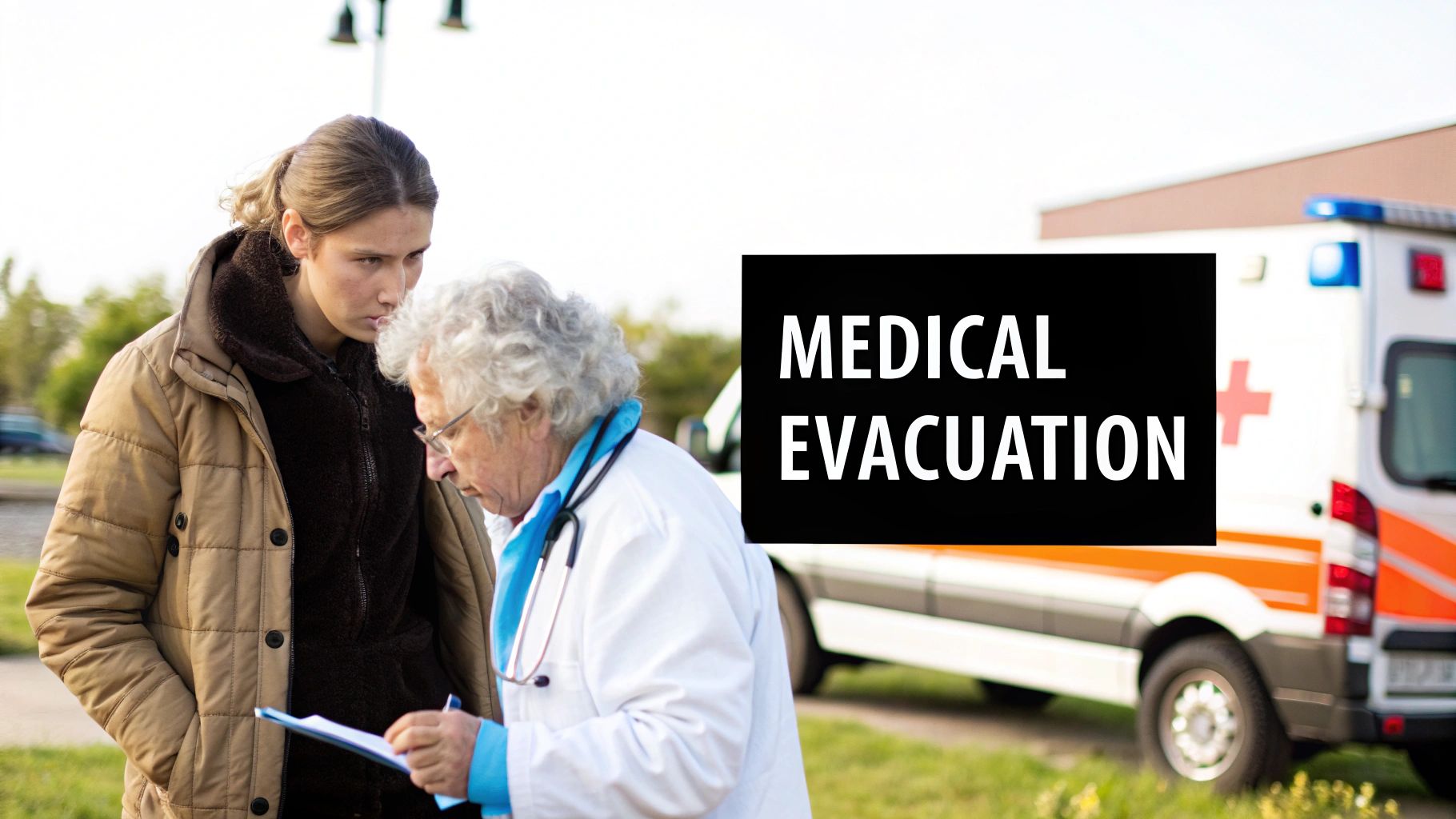
If there’s one feature that’s absolutely essential for any senior expat, it’s robust medical evacuation coverage. Picture this: you’re living in a beautiful, remote coastal town in Portugal. You suffer a major heart attack, but the local clinic, while perfectly fine for minor issues, doesn’t have the specialized cardiac unit you need. Now.
This is precisely when medical evacuation becomes a lifesaver. It’s not just a flight home; it’s a fully supervised medical transport to a facility that can give you the level of care you desperately need. Without it, you’d be on the hook for an air ambulance and a medical team, a bill that can easily top $100,000.
When you’re looking at this benefit, the fine print is everything. There’s a world of difference between two key phrases:
- Evacuation to the ‘Nearest Adequate Facility’: This means the insurer will fly you to the closest hospital equipped to handle your condition. That could be in a nearby city or even a neighboring country.
- Evacuation to a ‘Hospital of Choice’: This is a premium feature, but it gives you the power to be transported back to your home country or another location where you feel more comfortable receiving care.
For many seniors, the peace of mind that comes with getting back to a familiar doctor and the support of family is priceless. Our guide on medical evacuation insurance breaks down these crucial options in much more detail.
Essential Benefits Beyond Evacuation
While evacuation is your safety net for a catastrophe, your day-to-day health depends on a much wider range of benefits. A solid expat medical insurance plan should feel just as comprehensive as the coverage you had back home, simply with a global network.
This isn’t just a trend; it’s a major market shift. The global travel insurance market is projected to hit $98.74 billion by 2034, and seniors are the ones driving the demand for these high-value benefits. You can discover more insights about these travel insurance market trends at Precedenceresearch.com.
A quality expat medical plan isn’t just an emergency button. It’s a complete health management tool, designed to support your well-being no matter where you live, providing routine care and peace of mind for the long term.
To help you get a clear picture of what to look for, here’s a quick-reference table outlining the essentials.
Key Policy Features and Recommended Minimums for Seniors
| Coverage Component | Recommended Minimum | Why It’s Critical |
|---|---|---|
| Overall Policy Maximum | $1,000,000+ | Protects against catastrophic medical costs that can quickly exhaust lower limits. |
| Medical Evacuation | $500,000+ | Covers the high cost of medically-supervised transport to a suitable hospital. |
| Repatriation of Remains | $25,000+ | Handles the significant logistical and financial burden of returning home in a worst-case scenario. |
| Outpatient Care | Included in Plan | Essential for routine doctor visits, specialist consults, and diagnostics without a hospital stay. |
| Prescription Drugs | Included in Plan | Crucial for managing chronic conditions and ensuring access to necessary medications abroad. |
| Wellness & Preventative | Included in Plan | Covers routine physicals and screenings, promoting proactive health management. |
This table serves as a solid starting point for evaluating any plan. Make sure these components are not just present, but robust enough to give you real security.
Here are a few other must-have features to look for in any policy you consider:
- Repatriation of Remains: This is a difficult thing to think about, but it’s a necessary benefit that covers the cost of returning your body to your home country if you pass away abroad.
- Outpatient Care: This is your day-to-day coverage. It pays for doctor’s visits, specialist consultations, and lab tests that don’t require an overnight hospital stay.
- Prescription Drug Coverage: Absolutely vital for managing chronic conditions, this benefit ensures you can get reimbursed for your necessary medications.
- Wellness Benefits: Many top-tier plans now include coverage for routine physicals and preventative screenings, which helps you stay on top of your health.
By making sure your plan includes these core components, you’re not just buying a policy—you’re investing in a secure, healthy, and worry-free life abroad.
Common Policy Exclusions and Pitfalls to Watch For
An insurance policy is a contract, and like any contract, the devil is in the details. Honestly, figuring out what your expat medical insurance plan doesn’t cover is just as critical as knowing what it does. Getting this wrong is how you end up with a denied claim and a shockingly massive bill.
Many plans look great on the brochure, but once you dig in, you find the limitations. Think of it like buying a powerful SUV. It’s built for rough roads and steep hills, sure, but it’s not a submarine. Your expat health plan has its own boundaries, and you need to know exactly where they are.
Understanding Common Exclusions
Every international health policy comes with a list of things it just won’t cover. While the specifics vary from one insurer to another, some exclusions are pretty much universal. Reading this section of your policy document isn’t optional—it’s essential homework to protect your financial health abroad.
You can almost always count on seeing exclusions for:
- High-Risk Activities: Most plans are fine with you hiking or swimming, but activities like scuba diving below a certain depth, mountaineering, or competitive racing are typically off-limits. You’ll need to buy a special “adventure sports” rider to get coverage for those.
- Alternative Therapies: Treatments like acupuncture, naturopathy, or chiropractic care are usually not covered, especially if a traditional physician doesn’t deem them medically necessary.
- Elective or Cosmetic Procedures: This one is a hard no. Any treatment that isn’t medically necessary, from a facelift to experimental therapies, won’t be paid for.
Knowing these limitations upfront helps you match your plan to your lifestyle, so there are no nasty surprises when you’re thousands of miles from home.
Navigating Cost-Sharing and Procedural Pitfalls
Beyond the straight-up exclusions, the biggest headaches for expats come from simple misunderstandings about the rules of the road. A small procedural misstep can get your claim denied, even for a medical event that should have been covered. It’s not just what is covered, but how it’s covered.
The most expensive mistake you can make is assuming your insurance works on autopilot. Failing to follow the rules—like getting pre-authorization for a hospital stay—isn’t a minor oversight. It can void your coverage for that entire event.
This is where so many people get tripped up. Here are the three most critical traps to watch for:
-
Pre-Authorization Failures: This is a big one. For any planned hospitalization or major procedure, you are almost always required to get pre-authorization from your insurer. That means you must call them before the treatment happens. If you don’t, you could face a huge penalty or even a complete denial of the claim.
-
Deductible and Coinsurance Confusion: You have to know how the cost-sharing works. Your deductible is what you pay out-of-pocket first, before the insurance company pays a dime. After that, coinsurance kicks in, which means you’ll pay a percentage of the bill (say, 20%) until you hit your out-of-pocket maximum. Getting this math wrong can leave you with a much larger bill than you ever expected.
-
Out-of-Network Penalties: Even with a “global” plan, insurers have a preferred network of hospitals and doctors where they’ve negotiated rates. You might be able to go “out-of-network,” but it’ll almost certainly cost you more in the form of higher deductibles and coinsurance.
Your best defense is becoming an informed buyer. Read your policy documents, understand these common exclusions and pitfalls, and learn how to use your insurance correctly. That’s how you ensure it’s there to protect you when you really need it.
A Step-by-Step Guide to Choosing Your Plan
Picking the right expat medical insurance can feel like the last big hurdle before your adventure begins, but it doesn’t have to be a headache. If you break it down into a few clear, manageable steps, you can move forward knowing you’re truly protected.
Think of it like building a house for your new life abroad. Each step is a crucial part of the foundation, making sure the final structure is solid enough to handle anything. Let’s walk through it.
Define Your Geographic Needs
First things first: where on the map will you actually be? Some expat medical plans offer worldwide coverage, which is fantastic, but others will specifically exclude high-cost countries (like the U.S.) to keep the price down.
Be honest with yourself about your travel patterns. Do you plan on flying back home for holidays or family visits? Will you be hopping over to neighboring countries for weekend trips? Your policy’s coverage area has to match your real-life itinerary, or you risk finding yourself in a major bind with zero coverage.
Prepare Your Complete Medical History
Before you even think about getting quotes, it’s time to get your paperwork in order. Round up all your medical information. Insurers need a full picture of your health to give you an accurate offer, and this is especially true when it comes to pre-existing conditions.
Doing this prep work upfront makes the whole application process smoother. Having diagnosis dates, treatment details, and a list of your current medications ready to go helps the underwriters make a fair assessment. Frankly, it just makes you look organized and serious, which can only help your case.
This flowchart is a great mental model for navigating the system and avoiding common pitfalls before you ever need to make a claim.
As you can see, asking about pre-authorization requirements, in-network doctors, and specific coverage before you get treatment is the key to preventing a denied claim later on.
Compare and Scrutinize Your Options
Okay, now you’re ready to start shopping around. Focus on providers that specialize in insurance for seniors and expats. It’s tempting to just look at the price, but you have to dig into the actual policy documents. For a more detailed look at what to watch for, this guide on How To Choose The Right Travel Insurance For Your Adventure is a great resource.
Pay close attention to the fine print that really matters to older expats.
- Medical Evacuation: Does the policy cover transport to the “nearest adequate facility,” or will it get you to a “hospital of your choice”? That small difference in wording is massive when it comes to your care and peace of mind.
- Pre-Existing Conditions: Get crystal clear on the terms. Is there a waiting period before your condition is covered? Will they add a surcharge to your premium? Or is it excluded altogether? You need to know this upfront.
- Claims Process: Before you sign anything, figure out how you’d actually file a claim. Is there a 24/7 helpline you can call from anywhere? Can you submit everything online? Knowing this ahead of time saves a world of stress during an actual emergency.
By tackling this methodically, you turn a daunting task into an empowering one. You’ll end up with a plan that lets you truly relax and embrace your global lifestyle, knowing you’ve got a rock-solid safety net in place.
A Few Common Questions
When it comes to expat medical insurance for seniors, a few key questions always come up. Let’s tackle the most common ones we hear from retirees and long-term travelers to give you the clarity you need to move forward.
Does Medicare or Medigap Cover Me Overseas?
The short answer is almost always no. Medicare provides virtually zero coverage once you step outside the United States. It’s just not built for international life.
Some Medigap plans might offer a tiny sliver of emergency care coverage for the first 60 days of a trip, but this is a dangerous safety net to rely on. It’s designed for a two-week vacation mishap, not the realities of living abroad as an expat. For any kind of extended stay, you absolutely need a policy built for global living.
What Is the Real Difference Between Travel and Expat Insurance?
I like to use a simple analogy: standard travel insurance is like a first-aid kit. It’s there to handle an unexpected, one-time emergency—a broken arm from a fall, a sudden bout of food poisoning, or a stolen passport. Its entire purpose is to patch you up and get you back home.
On the other hand, expat medical insurance is your actual health plan for a life lived abroad. It’s built for the long haul. It covers emergencies, of course, but it also handles the routine stuff: doctor visits, managing chronic conditions, wellness checkups, and prescription refills. It’s designed for a lifestyle, not just a trip.
Is There an Age Limit for Getting Expat Medical Insurance?
This is a huge point of confusion, but the answer is usually quite reassuring. While many cheap, short-term travel plans have hard age cutoffs—often around 70 or 75—the specialized expat medical insurance market is a different world.
Many of the best long-term plans are specifically designed with retirees in mind and have no maximum entry age at all. Better yet, once you’re enrolled, some of these policies offer guaranteed lifelong coverage as long as you keep the plan active. The trick is to find providers who actually specialize in the needs of senior expats, not just general tourists.
Can I Really Get My Pre-Existing Conditions Covered?
Yes, with the right kind of expat medical plan, it’s absolutely possible. This is one of the biggest distinctions between a true expat plan and a basic travel policy, which almost universally excludes pre-existing conditions.
Proper long-term plans use a process called medical underwriting to get a full picture of your health history. Based on their review, they might offer full coverage right away, apply a temporary waiting period for a specific condition, or add a small surcharge to your premium. The single most important thing you can do is be completely honest and thorough on your application. That transparency is what builds a reliable policy that will actually be there for you when you need it.
Ready to feel secure about your health and finances, no matter where in the world you are? The experts at Expat Global Medical are pros at matching retirees with the perfect plan. Get a free, no-obligation quote and start your next chapter with total confidence.