So, you’re picturing your new life in Thailand—the incredible food, the electric culture, the stunning beaches. It’s an amazing dream. Now, imagine a different picture: a medical emergency strikes, and you’re left scrambling without the right support. Nailing down the proper health insurance in Thailand is hands-down the most important thing you can do to protect your health and your savings as an expat.
Securing Your Peace of Mind in Paradise

Moving to the Land of Smiles is a massive adventure, but it’s easy to get so caught up in the excitement that you overlook the practical stuff. At the top of that list for any expat is healthcare. Thailand is known for its world-class private hospitals, but walking into one without solid insurance can lead to some truly eye-watering, out-of-pocket bills.
A common mistake new expats make is thinking their insurance from back home or a simple travel plan will cut it. Big mistake. Your domestic plan almost never covers you overseas, and travel insurance is designed only for short trips—think emergencies, not routine check-ups or ongoing care for someone living abroad.
The Essential Choice for Expats
This brings every expat to a critical crossroads: do you go with a local Thai insurance policy or a full-blown international health plan designed for expatriates? Local policies can be lighter on the wallet, but they often come with lower coverage limits, are geographically restricted to Thailand, and can sometimes present language barriers when you need help most.
International expat health plans, on the other hand, are built from the ground up for people living a global life. They offer much higher limits, coverage that follows you around the world, and support systems that understand what expats need.
Good expat health insurance is about so much more than just money; it’s about having genuine peace of mind. When you know you can walk into the best medical facility and get the care you need without a second thought, you can truly relax and enjoy your new life.
Choosing the right expat medical insurance isn’t just about checking a box on a visa form. It’s about building a real safety net so you can get top-tier medical care when it matters most, without torpedoing your finances.
This guide is here to cut through the confusion for expats. We’re going to break down everything you need to know about getting the right health insurance coverage in Thailand. Whether you’re retiring in Chiang Mai, working in the heart of Bangkok, or living the digital nomad dream in Phuket, understanding your options is everything. We’ll get into the costs, the benefits, and the common traps to avoid, so you can make a smart choice that protects both your health and your new life in paradise.
Understanding Thailand’s Two-Tier Healthcare System for Expats
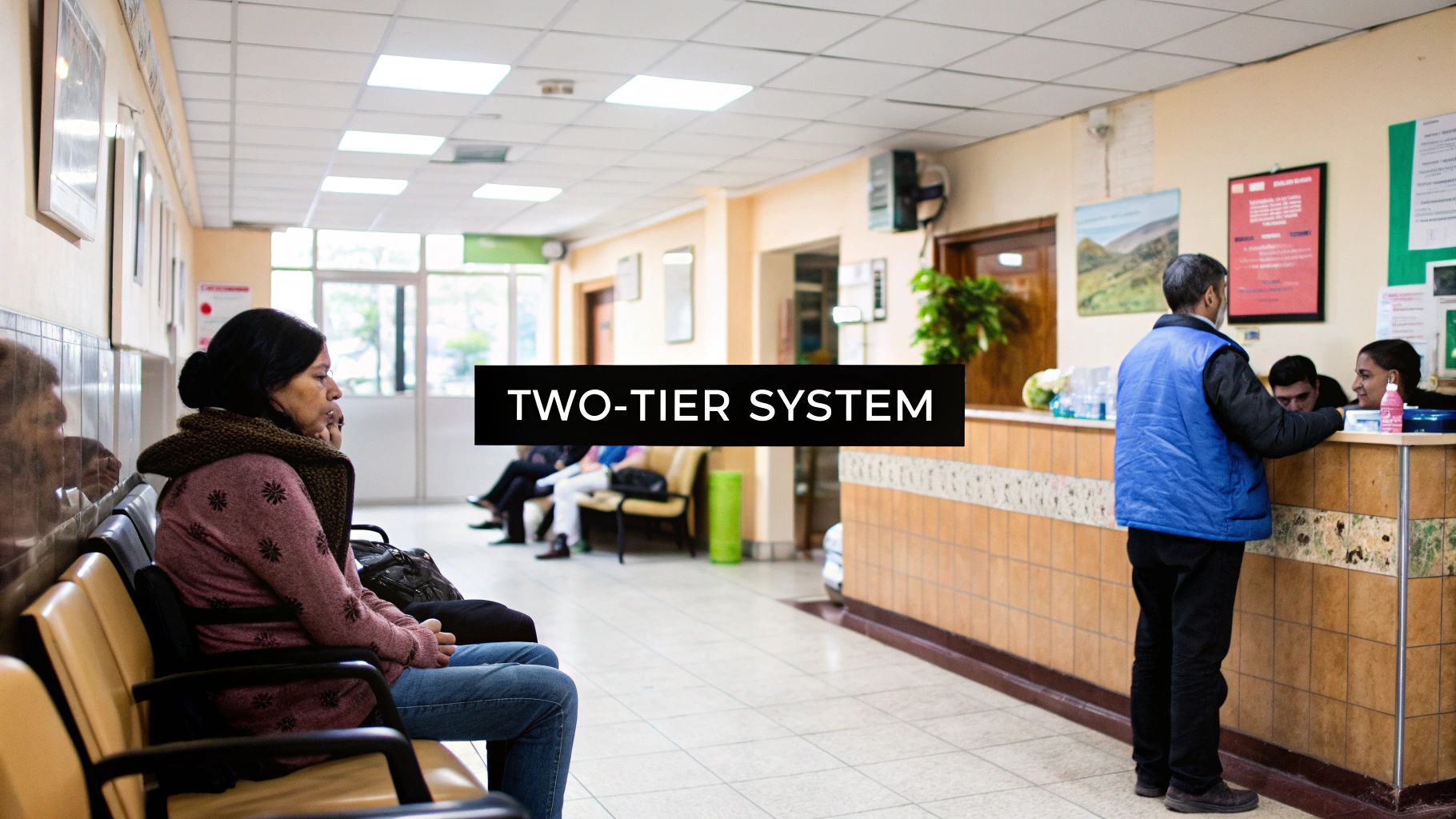
Before you can pick an expat insurance plan in Thailand, you need to get a handle on the healthcare landscape itself. The country basically runs on a two-track system: public and private. They both offer medical care, but for an expatriate, the experience is worlds apart.
Imagine it like this: you have the local city bus and a private chauffeur service. Both can get you across town, but the journey—the speed, the comfort, the personal attention—is completely different. For expats, knowing which system you’ll be using is the first and most critical step to a stress-free life here.
The Public Healthcare System
Thailand has a solid public healthcare system that takes care of its citizens. If you’re an expat with a work permit, you’ll be automatically enrolled in the Social Security system. A small part of your salary gets contributed each month, and in return, you get access to a designated public hospital.
Now, this system is incredibly affordable and covers the basics. But—and this is a big but for most expats—it comes with some serious trade-offs.
- Long Wait Times: Public hospitals are almost always packed. Be prepared to spend hours waiting just to see a doctor.
- Language Barriers: While you might find staff who speak some English, it’s far from guaranteed. Trying to explain your symptoms or understand a diagnosis can become a real struggle for an expat.
- No Choice: You don’t get to pick your hospital or doctor. You’re assigned one, and that’s where you have to go.
Because of these hurdles, most expats view the Social Security plan as a very basic safety net, not their primary healthcare solution. It’s there, but it’s not the comfortable, convenient care they’re used to. Our guide on public vs. private healthcare options for expats breaks this down even further.
The Private Hospital Network
This is where Thailand really rolls out the red carpet for expats. The country is a global hub for medical tourism, and for good reason. It’s home to a network of world-class private hospitals that rival the very best in the West. Places like Bumrungrad International Hospital and Samitivej Hospital are famous for their five-star service and JCI-accredited standards.
For the vast majority of expats, the private hospital system is the only way to go. It delivers a standard of care that feels familiar and trustworthy, taking the anxiety out of getting medical help in a foreign country.
When you go private, you get immediate appointments with English-speaking specialists, comfortable private rooms, and the latest medical technology. Of course, this top-tier experience comes with a price tag to match. A serious illness or accident could easily cost an uninsured expat tens of thousands of dollars out-of-pocket.
This is precisely why a robust private health insurance plan isn’t a “nice-to-have”—it’s an absolute must for any expat who wants to use this system. The trend is clear: as healthcare costs rise, more and more expats are turning to private insurance. In fact, the market’s health segment saw a staggering 24% premium growth in the first half of 2025 alone, showing just how essential this coverage has become.
Public vs Private Healthcare for Expats in Thailand
To make it even clearer for expats, let’s put the two systems side-by-side. This table gives you a quick snapshot of what you can expect from each.
| Feature | Public Healthcare (e.g., Social Security) | Private Healthcare (e.g., Bumrungrad, Samitivej) |
|---|---|---|
| Cost | Very low cost, covered by social security contributions. | High cost, requires private expat insurance or self-payment. |
| Wait Times | Often very long, with crowded waiting rooms. | Minimal to no wait times; appointments are prompt. |
| Facilities | Basic and functional, but can be old or overcrowded. | Modern, comfortable, often resembling a high-end hotel. |
| Doctors | Qualified, but may not speak English fluently. | Top specialists, many Western-trained and fluent in English. |
| Choice | Limited. You are assigned to a specific hospital. | Full choice of doctors, specialists, and hospitals. |
| Best For | A basic safety net for minor issues if you’re a working expat. | Comprehensive care, serious conditions, and peace of mind for expats. |
Ultimately, the choice comes down to the level of care, comfort, and financial security you want as an expat. While the public system provides a fundamental service, the private system offers the standard of care that most expatriates expect and need for true peace of mind.
Choosing Your Expat Coverage: Local vs. International Plans
Once you’ve decided to tap into Thailand’s excellent private healthcare system, you’ve got another big choice to make as an expat. How are you going to pay for it? This is where the road forks, with two very different paths: local Thai insurance plans and international expat medical insurance. They might look similar at a glance, but they’re built for completely different people with very different needs.
Think of it this way: a local plan is like a city-specific metro card. It’s perfect for getting around town, it’s efficient, and it’s affordable. But the second you step outside Thailand, it’s just a useless piece of plastic. An international expat plan, on the other hand, is like a global passport combined with a premium credit card—it works almost anywhere you go, offering a much higher level of service and security.
The Appeal of Local Thai Insurance Plans
For expats watching their budget, local Thai insurance policies can seem like a great deal initially. They’re often cheaper than their international cousins and can provide just enough coverage to satisfy the bare-minimum visa requirements. These plans are sold by Thai companies and are designed for the local market, not expatriates.
But that lower price tag comes with serious trade-offs you need to be aware of. The biggest one is usually the coverage limit. A local policy might have an annual cap that looks fine for a minor scrape or illness, but a single serious accident or a major surgery could wipe it out in an instant, leaving you on the hook for a massive bill.
On top of that, these policies have other strings attached:
- Geographic Boundaries: Your coverage literally stops at the Thai border. If you pop over to a neighboring country for the weekend or fly back home for a visit, you’re completely uninsured.
- Language and Support: Policy documents, customer service calls, and the entire claims process are often handled primarily in Thai. This can be a significant hurdle for an expat.
- Network Restrictions: While they have hospital networks, they might not include the top-tier private facilities like Bumrungrad or Samitivej that most expats prefer.
A local plan might work for a young, healthy expat who rarely travels and has a high tolerance for risk. For most expatriates, though, the potential for huge coverage gaps is a major worry. Our overseas health insurance comparison gives you a much deeper dive into how these different plan types really stack up.
The Gold Standard: International Expat Medical Insurance
For the vast majority of expats in Thailand, an international health insurance plan is simply the smarter choice. These policies are purpose-built for a global lifestyle, giving you robust, high-limit coverage that protects you not just in Thailand but pretty much anywhere else in the world. They’re the gold standard for a reason—they offer a level of security that local plans can’t come close to matching.
International expat plans are packed with benefits that address the real-world needs of expats. This means high annual limits, often running into the millions of dollars, which ensures you’re covered even for the most catastrophic medical events. They also include critical benefits like emergency medical evacuation, covering the staggering cost of flying you to a better-equipped hospital if the local one isn’t up to the task.
An international health plan is an investment in certainty for an expat. It ensures that no matter what happens—a sudden illness in Bangkok, an accident on a remote island, or a health issue while visiting family back home—you have access to the best possible care without financial ruin.
Thailand’s private health insurance market is booming, with the private sector expected to generate a whopping 80.72% of revenue in 2025. This growth is fueled by expats and locals demanding better care, but it shines a light on a critical problem: cheap local plans often don’t provide nearly enough coverage for elite hospitals where a standard room can easily cost 10,000-16,000 THB per day. International plans are designed specifically to close this gap. You can find more insights on this expanding market on grandviewresearch.com.
Here are some of the key advantages of going international as an expat:
- Direct Billing: You can walk into a top hospital like Bumrungrad or Samitivej, show your insurance card, and let the insurer settle the bill directly. No need to pay a huge sum out-of-pocket and then fight for reimbursement.
- Worldwide Coverage: Your protection follows you wherever you go, giving you peace of mind whether you’re living in Thailand, vacationing in Vietnam, or on a trip back home.
- English-Language Support: From the policy documents to 24/7 emergency hotlines, everything is designed to be clear, straightforward, and accessible for expats.
At the end of the day, the choice between local and international health insurance in Thailand boils down to your personal risk tolerance, your lifestyle as an expat, and your budget. A local plan might save you a bit on monthly premiums, but an international plan delivers the comprehensive protection and peace of mind that are essential for building a secure life abroad.
Cracking the Code on Expat Policy Costs and Features
Let’s be honest, trying to make sense of an insurance policy can feel like you’re learning a new language. But to really compare plans for health insurance in Thailand and pick a winner, an expat has got to get comfortable with the financial terms that dictate what you pay and what you get. These pieces all fit together to show you the true value of a plan.
Think of your premium as the subscription fee for your health coverage. It’s the fixed amount you pay, either monthly or annually, just to keep your policy active. This price tag is shaped by things like your age, your current health, and how beefy you want your benefits to be.
Next up is the deductible. This is the amount you have to pay out of your own pocket for medical care before your insurance company starts to chip in. A higher deductible often means a lower premium, but it also means you’ll shoulder more of the initial cost if you need to see a doctor.
Then you have the co-payment (sometimes called co-insurance). This is a percentage of the medical bill you’re responsible for even after your deductible is met. For example, if you have a 10% co-payment on a $1,000 bill, you’d pay $100, and the insurer would handle the other $900.
Finally, the annual limit is the absolute maximum your insurance provider will pay out in a single policy year. A basic local Thai plan might have a pretty low limit, but a solid international expat plan will offer a much higher ceiling—often in the millions of dollars—to shield you from the cost of a major medical catastrophe.
Estimating Annual Insurance Costs for Expats
The cost of your premium can swing wildly depending on who you are and what you need as an expat. A young, healthy digital nomad is going to pay a lot less than a retired couple who needs more comprehensive benefits. Getting a handle on these variables is the first step to budgeting for the right plan. If you want to dive deeper into all the factors that affect the final price, you can learn more about international health insurance costs in our detailed guide.
To give you a clearer picture, we’ve put together some realistic annual premium estimates for different types of expats looking for international coverage in Thailand.
Estimated Annual Premiums for Expat Health Insurance in Thailand
This table gives you a ballpark idea of what you might expect to pay for an international health insurance plan, broken down by different expat profiles and how much coverage they need.
| Expat Profile | Basic Coverage (Inpatient Only) | Comprehensive Coverage (Inpatient + Outpatient) |
|---|---|---|
| Young Digital Nomad (30s) | $1,200 – $2,000 | $2,500 – $4,000 |
| Expat Couple (50s) | $4,000 – $6,500 | $7,000 – $11,000 |
| Retiree (65+) | $6,000 – $9,000+ | $10,000 – $18,000+ |
Keep in mind, these are just illustrations. The numbers show how age and the level of benefits directly drive up the final premium. You can often bring these costs down by choosing a higher deductible or picking a plan that excludes coverage in notoriously expensive countries like the USA.
The Non-Negotiables: Must-Have Features for Your Expat Policy
Beyond just the numbers, a truly great expat health insurance plan is all about its features. These are the practical benefits that actually matter when you find yourself needing to use your insurance. When you’re comparing policies, think of the following as your non-negotiable checklist.
A cheap policy that fails you when you need it most is the most expensive mistake an expat can make. The real value of a plan is measured by its reliability and the comprehensiveness of its core features.
Here are the essential features your expat plan absolutely should include:
- Comprehensive Inpatient and Outpatient Care: Your policy needs to have your back for hospital stays, surgeries, and intensive care (inpatient). But just as crucial is solid outpatient coverage for your regular doctor visits, specialist appointments, and lab tests—the things that manage your day-to-day health.
- Emergency Medical Evacuation: This is a critical safety net for any expat, no exceptions. If you have a serious accident or illness in a remote part of Thailand, this benefit covers the astronomical cost of transporting you to a top-tier hospital, making sure you get the best care possible when it counts.
- Direct Billing Network: A strong policy will have partnerships with major private hospitals across Thailand. This means you can just show your insurance card, and the hospital bills the insurer directly. It saves you from having to pay huge sums out-of-pocket and wait for reimbursement.
- Dental and Vision Options: While not always included as standard, the ability to add dental and vision coverage is the hallmark of a flexible, high-quality plan. Routine check-ups, major dental work, and prescription glasses can add up quickly, making this a seriously valuable add-on for expats.
Matching a Plan to Your Expat Lifestyle
Choosing health insurance isn’t just about grabbing the policy with the biggest numbers; it’s about finding coverage that fits your expat life in Thailand like a glove. The needs of a globe-trotting digital nomad are a world away from those of a retiree settling down in Chiang Mai or an expat family raising kids in Bangkok. A one-size-fits-all approach just doesn’t cut it.
Think of it like getting a custom-tailored suit. It has to be measured and cut specifically for your unique situation. When you match your policy to your real life, you avoid overpaying for benefits you’ll never touch—or worse, discovering a massive gap in your coverage right when you need it most.
This simple decision tree can help you see which path to start down, depending on your expat profile.
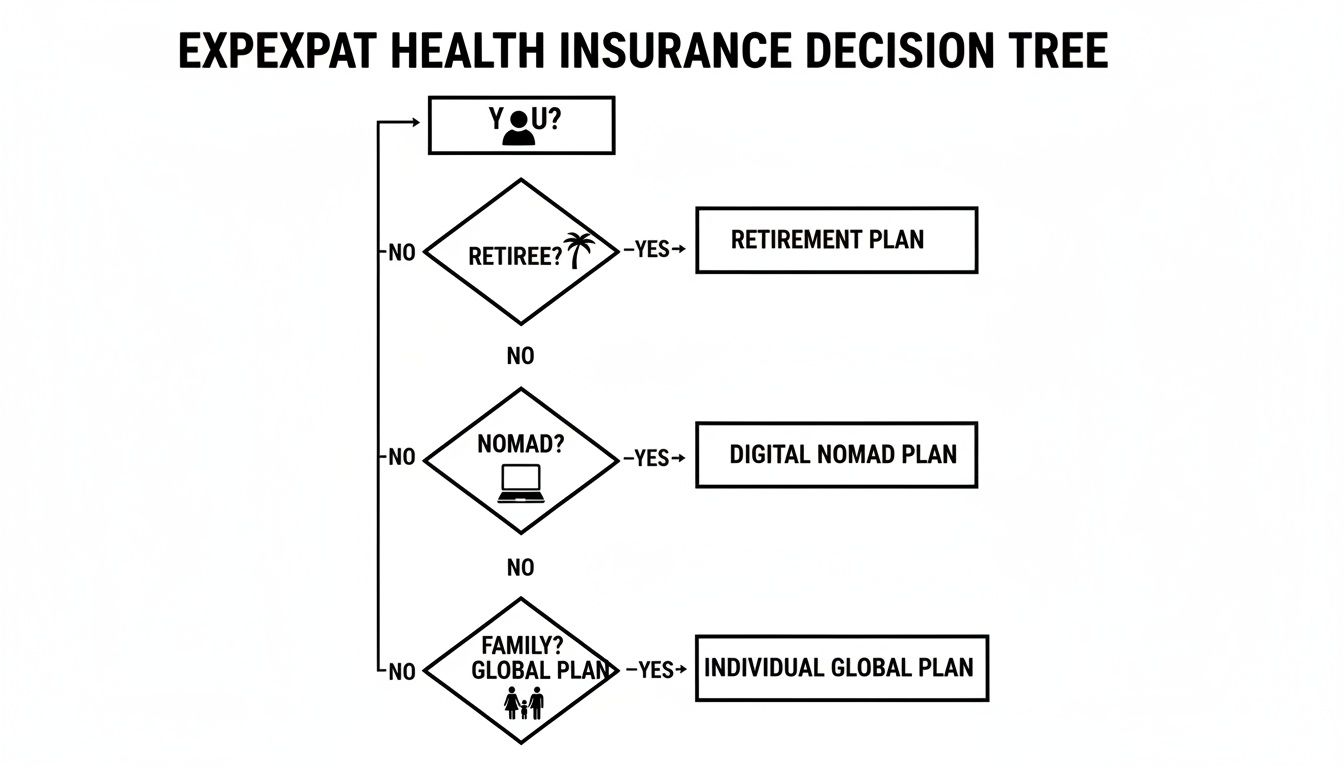
As you can see, your personal circumstances as an expat are the biggest factor in deciding which insurance features to prioritize.
Insurance for the Digital Nomad
As a digital nomad, your office is wherever your laptop opens. One month you might be working from a condo in Phuket, the next from a cafe in Vietnam. You need a health plan that’s as mobile as you are. A local Thai-only policy is a non-starter; you absolutely need worldwide coverage that doesn’t tie you to a single country.
The key is to find international plans with strong global networks and flexible “area of coverage” options. This lets you include or exclude high-cost regions (like the USA) to keep your premiums reasonable while ensuring you’re fully protected across Southeast Asia and beyond.
Coverage for the Expat Retiree
For expat retirees, the top priorities are usually managing long-term health and, just as importantly, meeting visa rules. Thailand’s Non-Immigrant O-A and O-X retirement visas come with mandatory health insurance requirements, demanding specific minimum coverage for both inpatient and outpatient care.
Your search should focus on plans that not only meet but comfortably exceed these government mandates. Look for high annual limits, guaranteed lifetime renewability, and solid coverage for any pre-existing or chronic conditions. These features deliver the long-term security you need for a peaceful retirement.
For retirees in Thailand, health insurance is more than just a visa checkbox. It’s a foundational pillar for your financial security and well-being for all the years ahead.
Protection for the Expat Family
When you have a family living abroad, your insurance needs multiply. Your policy has to be a safety net for everyone, from newborns to adults. The must-have features include maternity benefits (with a reasonable waiting period), excellent pediatric care for routine check-ups and vaccinations, and enough outpatient coverage to handle all those inevitable fevers and scrapes.
Make sure your plan allows you to easily add dependents and bundles everyone under a single, manageable policy. This cuts down on the paperwork and ensures no one in your family is left unprotected.
The Working Expat’s Strategy
If you’re working in Thailand as an expatriate, your employer will likely provide a group health plan. While this is a fantastic perk, corporate plans are often quite basic. They tend to have low coverage limits that might not be enough for a serious medical event at one of Thailand’s top-tier private hospitals.
The smartest move is to treat your company’s plan as your base layer and get a personal supplemental or “top-up” expat plan. This extra policy fills in the gaps, offering higher annual limits, better outpatient benefits, and critical features like medical evacuation that are rarely part of a standard corporate package. On top of picking the right policy, managing your new life can be a lot; a virtual assistant for personal tasks can help streamline everything, including scheduling your healthcare appointments. This layered approach gives you gold-standard protection without having to rely solely on what your employer provides.
Why the Growing Insurance Market Is Good for Expats
When you’re sorting out life in a new country, digging into the local insurance market might sound like a chore. But here’s the thing: understanding the big picture of Thailand’s health insurance scene gives you something incredibly valuable—confidence. The entire sector is booming, and that’s fantastic news for any expat looking for solid, long-term medical coverage.
This isn’t just a temporary blip on the radar. It’s a stable, upward trend driven by a real demand for top-quality care from both locals and the expat community. This growing demand supports and strengthens Thailand’s already impressive private healthcare system. For you, it means choosing a good private plan is a smart, future-proof move, not just a quick fix.
What This Market Growth Actually Means for You as an Expat
Forget about abstract numbers on a spreadsheet for a second. A growing insurance market brings real, tangible benefits directly to you as an expatriate. More competition means insurers have to work harder to win your business, and that forces them to step up their game.
This healthy competition sparks several positive changes for expats:
- Better Plan Options: Insurers are now designing more varied plans that actually fit different expat lifestyles, whether you’re a digital nomad, a retiree, or raising a family.
- Improved Service Quality: To stand out, providers must offer better customer support, quicker claims processing, and stronger hospital networks, often with services tailored to expats.
- More Stability: A booming market means insurers are financially healthy, which seriously lowers the risk of your provider suddenly folding or pulling out of Thailand.
You can think of this market expansion as a guarantee for expats. It’s your assurance that the system you’re investing in is not only world-class today but is built to last for the long haul.
The Numbers Behind the Confidence
The statistics paint a clear picture of a strong and expanding industry. In 2024, the health insurance market in Thailand was valued at a massive $35.72 billion. It’s projected to climb to $46.93 billion by 2032. That’s a steady annual growth rate of 5.51%, fueled by an aging population and more people—including expats—wanting care beyond what the basic public system can offer. You can dive into the full analysis of Thailand’s health insurance market trends on databridgemarketresearch.com.
What’s especially reassuring for any expat planning to stay long-term is that lifetime coverage plans are the biggest piece of the pie, pulling in $22.80 billion in revenue in 2024 alone. This shows a powerful focus on sustainable, long-term solutions for people who have made Thailand their home.
Ultimately, all this growth just proves why it pays to have a knowledgeable advisor in your corner. An expert can help you cut through the noise of this evolving market, pinpoint the providers offering the best long-term value for expats, and lock in a plan that truly protects your future in the Land of Smiles.
Got Questions? We’ve Got Answers for Expats.
Figuring out the ins and outs of health insurance in Thailand can feel like a puzzle, especially when you’re trying to get it right for your life as an expat. To cut through the confusion, we’ve pulled together the questions we hear most often from expatriates just like you. Think of this as your cheat sheet for getting clear, straightforward answers.
These aren’t just random questions; they cover the essentials for expats, from visa rules to the nitty-gritty of medical coverage. Getting a handle on these key points is the final step to feeling confident and ready to protect your health in your new home.
Is Health Insurance Mandatory for an Expat Visa in Thailand?
Yes, for many long-stay visas, having health insurance isn’t just a good idea—it’s a requirement. The Thai government requires expats to show proof of coverage for visas like the retirement (Non-Immigrant O-A) and the Long-Term Resident (LTR) visas. The minimum coverage levels change depending on the visa type, but they’ll always specify what you need for both inpatient and outpatient care.
If you don’t meet these requirements, your visa application or renewal can be flat-out denied. This is a big reason why international plans are so popular among expats; they’re built to easily meet and often exceed these government standards, which helps make your visa process a whole lot smoother.
Can I Get Coverage for Pre-Existing Conditions as an Expat?
It’s definitely possible, but how it works varies wildly from one insurer to another. Local Thai insurance companies tend to be very strict on this front. They might exclude a condition completely or make you wait a long time before you can claim anything related to it.
International health insurance plans for expats usually offer more flexibility. Depending on your condition and the provider, they might offer you full coverage after a waiting period, charge a higher premium, or ask for a detailed medical review. The golden rule here is honesty. Always disclose everything upfront so your policy is there for you when you actually need it.
“A common pitfall for expats is not disclosing a minor pre-existing condition, only to have it cause major claim denials later. Full transparency with your insurer from day one is the only way to guarantee your policy will protect you.”
What Is Medical Evacuation and Why Do I Need It as an Expat?
Medical evacuation is a non-negotiable benefit that pays for you to be transported to the nearest top-tier medical facility if the local care just isn’t up to the task. Sure, Thailand’s big cities like Bangkok and Chiang Mai have world-class hospitals, but that’s not the reality in more remote areas or on the islands where many expats live.
Imagine suffering a serious accident or falling critically ill far from a major city. An emergency transfer could be what saves your life. Without insurance, this service can easily set you back tens of thousands of dollars, making it an absolutely vital safety net for an expat. It’s the ultimate peace of mind, ensuring you get the best possible care no matter where your Thai adventure takes you.
What Is the Difference Between Inpatient and Outpatient Care?
Getting this distinction is crucial for an expat picking the right plan. Inpatient care is any treatment that requires you to be formally admitted to a hospital. Think major surgery or a severe illness that requires an overnight stay. This is the bedrock of any solid health insurance policy.
Outpatient care, on the other hand, is for everything else—all the medical services that don’t need a hospital bed. This covers your routine doctor’s visits, appointments with specialists, prescription drugs, and diagnostic tests like X-rays or blood work. While some bare-bones plans might only cover inpatient costs, a proper expat insurance policy will include strong outpatient benefits to manage your day-to-day health.
Ready to secure your peace of mind with the right health insurance plan for your life in Thailand? The experts at Expat Global Medical are here to help you compare quotes from top international providers and find coverage that fits your needs and budget. Get your free quote and personalized advice today at https://expatglobalmedical.com.