Think of expat medical insurance as more than just an add-on for a trip. It’s a comprehensive health plan built for people living or working abroad for the long haul, like expats, digital nomads, and global retirees. It acts a lot like your health plan back home, covering everything from emergencies to routine check-ups and wellness visits—a world away from short-term policies designed only for travel-related accidents.
Why Your Health Abroad Needs Specialized Protection
Imagine you’re building a new home in another country. You wouldn’t protect it with a flimsy renter’s insurance policy meant for a one-week stay, right? Of course not. You’d get a solid homeowner’s policy designed for long-term residency.
That’s the perfect way to think about expat medical insurance. This isn’t about covering a trip; it’s about protecting your life and your savings while you build a new one somewhere else.
The biggest mental shift for any aspiring expat is moving away from the “vacation coverage” mindset and embracing the idea of “global life protection.” Your health plan from back home is likely useless once you establish residency abroad. And those short-term travel policies? They’re designed with one goal in mind: to patch you up just enough to get you on a plane back home. They are not a substitute for proper health insurance.
The Gaps in Standard Insurance
Relying on the wrong kind of policy creates dangerous gaps in your healthcare. A simple stomach bug or a sprained ankle could leave you with a surprisingly large bill. A serious medical event, however, could result in costs spiraling into the tens, or even hundreds, of thousands of dollars.
Here’s what standard travel plans just don’t cover for long-term residents abroad:
- Routine and Preventive Care: Things like annual physicals, wellness checks, or the ongoing treatments you need to stay healthy are almost never included.
- Chronic Condition Management: If you’re managing something like diabetes or hypertension, you need consistent care. Trip-based insurance simply isn’t built for that.
- Choice of Local Providers: Proper expat plans give you access to a network of high-quality local doctors and hospitals, so you’re covered for both everyday needs and emergencies.
A specialized expat medical plan is a non-negotiable part of a successful international lifestyle. It acts as a foundational safety net, ensuring you have reliable access to quality healthcare without risking financial ruin, no matter where you are in the world.
For anyone planning a long-term life abroad, getting your legal status sorted out is a critical first step, and it often goes hand-in-hand with your healthcare requirements. For instance, learning how to get a UAE residence visa shows just how intertwined legal residency and health coverage can be. Getting these fundamentals right sets the stage for choosing the protection you actually need.
Decoding Your Global Insurance Options
Trying to figure out international insurance can feel a lot like ordering coffee in a country where you don’t speak the language. One wrong word, and you might get something completely different from what you wanted. Picking the wrong insurance plan is a similarly costly mistake, one that can leave you exposed when you can least afford it.
To find the right fit, you have to understand the three main players on the field: standard short-term travel insurance, flexible long-term travel health insurance, and comprehensive expat medical insurance. Each one is built for a different kind of global journey, and for those living abroad, only one provides true security.
Think of short-term travel insurance as a first-aid kit for your vacation. It’s perfect for that two-week holiday, designed to patch up emergencies like a sudden illness, a lost suitcase, or a cancelled flight. Its only real job is to handle the immediate crisis and get you well enough to return home. It was never meant to cover routine check-ups or manage ongoing care.
This visual helps clarify how you graduate from basic trip coverage to comprehensive health protection abroad.
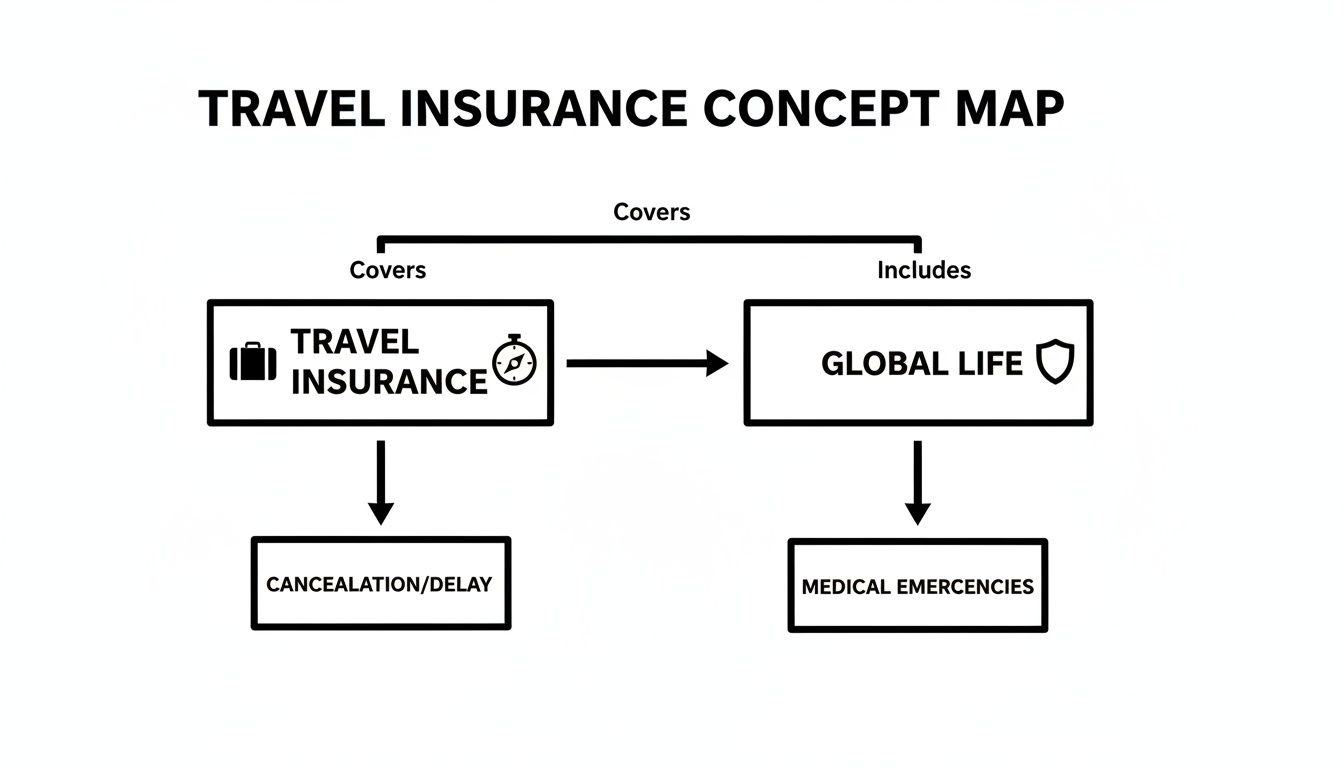
As you can see, specialized insurance evolves from covering simple travel mishaps to providing a robust shield for your health while you’re actually living overseas.
Expat Medical Insurance: Your Everyday Health Plan Abroad
This is where expat medical insurance completely changes the game. It’s not a temporary fix; it’s your primary health plan while living in another country. Imagine it as the same kind of health coverage you have back home, but with a global passport.
Unlike travel policies that only kick in for emergencies, an expat plan is built for residency. It gives you access to a global network of doctors and hospitals for all your health needs—from annual physicals and dental cleanings to managing chronic conditions. This is the real deal for someone who isn’t just visiting a country but is putting down roots there.
For a deeper look at how these stack up, our guide on expat medical insurance vs. travel insurance breaks it down even further.
Some plans, often called long term travel health insurance, sit in a middle ground. They are often the go-to for digital nomads or perpetual travelers who are on the move for months but don’t establish formal residency. These plans offer more robust medical benefits than a short-term policy but may lack the depth of routine care found in a true expat plan.
Your choice of insurance should directly mirror the nature of your time abroad. A policy for a vacationer is inadequate for a resident, just as a resident’s plan is overkill for a short holiday. The key is aligning the coverage scope with your lifestyle.
To make this distinction crystal clear, let’s break down how these plans stack up side-by-side.
Insurance Plan Comparison: Short-Term vs. Long-Term vs. Expat Medical
This table highlights the key features, coverage scope, and the ideal person for each type of international insurance plan, helping you see at a glance which one fits your life.
| Feature | Short-Term Travel Insurance | Long-Term Travel Health Insurance | Expat Medical Insurance |
|---|---|---|---|
| Primary Purpose | Covers trip-related emergencies for vacations and short trips (under 90 days). | Provides medical coverage for extended travel (6-12+ months) without establishing residency. | Acts as a primary health plan for individuals and families residing abroad for a year or more. |
| Medical Coverage | Emergency medical and dental care only. The goal is stabilization and return home. | Comprehensive emergency medical care, with some plans offering limited routine check-ups. | Full inpatient, outpatient, wellness, dental, vision, and chronic condition management. |
| Non-Medical Benefits | Includes trip cancellation, interruption, lost luggage, and travel delays. | Limited or no coverage for non-medical travel issues like lost bags. | Generally excludes non-medical benefits like trip cancellation. The focus is entirely on health. |
| Ideal User | Holidaymakers, business travelers, and tourists on trips lasting a few weeks. | Digital nomads, backpackers, and gap-year students traveling for many months. | Expats, international employees, retirees, and families relocating to a new country. |
Ultimately, the best plan is the one that understands your journey. A quick trip needs a quick fix, but a new life abroad requires a real healthcare foundation.
Anatomy of a Bulletproof Expat Medical Plan
So, what separates a flimsy travel policy from a genuinely comprehensive expat medical plan? Think of it like buying a car. The basic model gets you from A to B, sure. But the fully-equipped one has the advanced safety features, all-weather tires, and a reliable navigation system—the things that give you real confidence on any road, in any condition. A top-tier expat plan is that fully-loaded model, built with specific components designed for life abroad.

This isn’t just about ticking boxes; it’s about knowing what that insurance jargon actually means for you in the real world. Once you understand these core components, you’ll be able to spot a plan that offers genuine, reliable protection for your new life overseas.
Core Medical Coverage: Inpatient and Outpatient Care
The bedrock of any solid expat medical insurance plan is how it handles both inpatient and outpatient care. This distinction is absolutely critical for anyone living abroad because it determines whether your entire spectrum of medical needs is covered.
- Inpatient Care: This is for the serious stuff that requires you to be formally admitted to a hospital. Think surgeries, major illnesses, or accidents that land you in a hospital bed overnight or longer. This coverage should handle your room, surgeon’s fees, and all the other related hospital services.
- Outpatient Care: This is everything else—all the medical services that don’t require a hospital admission. It’s your day-to-day healthcare: visiting a doctor for a check-up, seeing a specialist, getting diagnostic tests like bloodwork or an X-ray, and picking up prescription medications.
For an expat, strong outpatient benefits are non-negotiable. A standard travel policy might pay for the emergency room visit after you break your arm, but it almost certainly won’t cover the multiple physical therapy appointments you’ll need afterward. A proper expat plan will.
Lifesaving Emergency Benefits
While routine care is essential for daily life, the emergency benefits are what provide that critical safety net, especially when you’re far from home or in a place with shaky medical infrastructure. Two components are an absolute must.
The first is emergency medical evacuation. If you have a serious accident or fall ill in a remote area, this benefit pays to transport you to the nearest hospital that can actually provide the care you need. It can be a literal lifesaver.
The second is repatriation of remains. It’s a somber topic, but this feature is essential. It covers the staggering costs of transporting a deceased person’s body back to their home country, protecting your family from a huge financial burden during an already devastating time.
The fine print in any policy document holds the key to your actual protection. Understanding terms like deductibles, co-pays, and exclusions is not just recommended—it is essential to avoid catastrophic financial surprises when you need your coverage the most.
Coverage for Pre-Existing and Chronic Conditions
For anyone settling abroad long-term, this is often the most important—and most misunderstood—part of a policy. Short-term travel insurance almost universally excludes pre-existing conditions. Good expat medical plans, on the other hand, are often designed to cover them.
A pre-existing condition is any health issue you had before your policy began, like diabetes, asthma, or high blood pressure. A chronic condition is a long-lasting illness that needs ongoing medical attention.
A quality expat plan will frequently cover these conditions, sometimes after a medical underwriting process or a waiting period. This is a complete game-changer. It means you can continue managing your health wherever you are, without the stress and expense of flying home for treatment.
The demand for this kind of reliable coverage is exploding. The global medical travel insurance market was recently valued at USD 30.59 billion and is projected to hit USD 63.98 billion by 2030. That growth is fueled by global citizens looking for real protection from international medical bills, which can easily climb into the six figures. You can dig into more of these market insights on Next MSC. The bottom line? When you’re evaluating a policy, be completely upfront about your medical history. It’s the only way to ensure your coverage will actually be there for you when you need it.
Navigating Costs and Eligibility for Global Coverage
Figuring out the price of expat medical insurance can feel a bit like solving a puzzle, but it really boils down to a handful of key factors. Think of it like adjusting the settings on a camera to get the perfect shot—you can tweak different parts of your plan to bring the final premium into focus, striking the right balance between cost and solid protection.
The biggest things that shape your premium are all connected. Your age and health history are the starting point, since that’s how insurers gauge risk. But from there, you have several levers you can pull to design a plan that fits your budget without ditching the coverage you actually need for life abroad.
These elements work together, letting you build a policy that reflects both what you need and what you’re comfortable spending.
Key Factors That Shape Your Insurance Premiums
A few core components will directly impact what you pay for your global health plan. Getting a handle on these will put you in the driver’s seat.
- Geographical Area of Coverage: Where you plan to live and travel is a huge deal. Healthcare in places like the USA, Switzerland, and Hong Kong is famously expensive, so plans that cover these countries will naturally cost more. Just by choosing a “Worldwide excluding USA” plan, you could lower your premium by 30-50% if you don’t need coverage there.
- Deductible and Co-insurance: Your deductible is what you pay out-of-pocket before your insurance starts covering bills. A higher deductible usually means a lower monthly premium, but you’ll pay more upfront if you need care. Co-insurance is the percentage of the costs you share with the insurer after you’ve met your deductible.
- Level of Coverage: A bare-bones plan that only covers major medical events like hospitalization will be much cheaper than a comprehensive one that includes routine check-ups, dental, vision, and wellness visits.
By playing with these settings, you can find that sweet spot between a price you can live with and protection that lets you sleep at night. For a deeper dive, our guide to expat health insurance cost walks through more specific examples and budgeting tips.
Understanding Eligibility and the Application Process
Getting the right plan isn’t just about the price tag; you also have to meet the insurer’s eligibility criteria. This step is called medical underwriting, and it’s where the insurance company reviews your health history to decide if they can offer you a policy and on what terms.
Being totally upfront about your health here is non-negotiable. It’s absolutely critical to disclose all pre-existing conditions—that means any medical issue you had before your policy’s start date. Hiding something can lead to your claims being denied or, even worse, your entire policy being canceled, leaving you high and dry when you need it most.
Honesty during the application process is everything. Full disclosure of your medical history is what makes your policy valid and ensures it will be there to protect you financially in an emergency.
This process ensures your coverage is rock-solid. For many people, especially those looking ahead to their later years, understanding the bigger picture of planning for healthcare costs in retirement is a crucial part of building a secure future abroad. A solid insurance plan is the foundation of that security. By thoughtfully navigating these cost and eligibility factors, you can build a health safety net you can truly rely on during your global adventures.
How to Choose the Right Plan for Your Lifestyle

When you start shopping for expat medical insurance, it quickly becomes clear that there’s no such thing as a one-size-fits-all plan. What works perfectly for a solo entrepreneur bouncing between cities is completely wrong for a family settling in for a multi-year corporate assignment.
This is exactly why we need to think in terms of lifestyles, not just policies. When you see your own situation reflected in a real-world scenario, you can instantly zero in on the features that actually matter. It’s the most effective way to cut through the noise and find a plan that truly fits.
The Digital Nomad Exploring Southeast Asia
Let’s start with a classic example: Alex, a freelance web developer, who’s spending the next year working from Thailand, Vietnam, and Malaysia. Alex is young, healthy, and always on the move, often ducking into remote areas for a hiking or diving trip. With a lifestyle this unpredictable, the insurance has to be incredibly flexible.
For Alex, a few features are non-negotiable:
- Worldwide Coverage (Excluding the USA): This is key. It provides protection across multiple countries without the massive premium hike that comes with including U.S. healthcare.
- Robust Emergency Medical Evacuation: When you’re hours from the nearest major hospital, this benefit is an absolute lifesaver. It guarantees you can be transported to a facility equipped to handle a serious illness or injury.
- Adventure Sports Rider: Standard plans almost never cover activities like scuba diving or rock climbing. For an active lifestyle, this add-on is essential.
- High-Quality Outpatient Benefits: From a nasty bout of food poisoning to a minor infection, quick access to local clinics is crucial for staying healthy and productive on the road.
This kind of nimble, emergency-focused plan is the perfect safety net for a nomad. We dive much deeper into this specific lifestyle in our complete guide on health insurance for digital nomads.
The American Retirees in Portugal
Now, let’s shift gears and consider Maria and John, a retired couple moving from the U.S. to settle down in Portugal’s Algarve region. They’re in their late 60s and, while generally healthy, they need a plan that supports their long-term wellness and gives them financial predictability. They’re not country-hopping; they’re building a new life.
Their ideal expat medical policy looks completely different and prioritizes stability:
- Excellent Chronic Condition Management: They need a plan that reliably covers routine care for conditions like high blood pressure or arthritis, including regular check-ups and prescriptions.
- Predictable Out-of-Pocket Costs: A plan with a clear deductible and co-pay structure helps them budget for healthcare without any nasty surprises.
- Strong Inpatient and Outpatient Coverage: From planned surgeries to specialist visits, their plan needs to function like a solid domestic health policy.
- Limited Home Country Coverage: The option to get covered for short trips back to the U.S. to see family is a great perk, but it’s a secondary feature.
For retirees, the focus shifts from emergency readiness to long-term health maintenance. The right plan delivers peace of mind, ensuring consistent, quality care and financial security throughout their retirement abroad.
The Expat Family on Assignment in Dubai
Finally, picture a family with two young children relocating to Dubai for a three-year work assignment. Their needs are complex, covering everything from routine pediatric care to the possibility of expanding their family. Their plan has to be a true family healthcare solution.
The must-have features for this family would include:
- Comprehensive Wellness Benefits: This is vital for the kids, covering routine check-ups, vaccinations, and developmental screenings.
- Strong Maternity Coverage: If they’re thinking about having another child, a policy with robust maternity benefits is non-negotiable.
- Dental and Vision Add-Ons: For a family, these aren’t luxuries—they’re essential components of overall health.
- Direct Billing Network: A plan with a large network of hospitals and clinics that bill the insurer directly is a game-changer. It avoids the hassle of paying huge sums upfront and waiting for reimbursement.
The growing demand for tailored plans like these is fueling a market boom. The global travel medical insurance market was valued at USD 5.24 billion recently and is projected to nearly double to USD 10.21 billion by 2034. This surge is driven by skyrocketing overseas medical costs and stricter visa rules that demand proof of coverage. You can read more about these trends at ProgramBusiness.com.
By seeing a bit of yourself in these personas, you can confidently start building a shortlist of plans that are actually designed for your unique life abroad.
Your Partner in Global Health Security
Choosing the right expat medical insurance isn’t just another box to check before you leave—it’s one of the most important decisions you’ll make for your new life abroad. We’ve walked through the different policy types, broken down what’s actually covered, and seen how the right plan changes depending on your lifestyle. It’s clear this isn’t a simple purchase. It’s the foundation of your security and peace of mind.
The whole process can feel like a maze, but you don’t have to find your way through it alone.
This is where working with a specialist broker changes the game. Instead of you spending hours trying to translate dense insurance jargon from dozens of different policies, you get an expert advocate on your side. A good broker cuts through the noise and offers straightforward advice based on your specific destination, health needs, and budget.
Why Expert Guidance Matters
When you work with a specialist, you get instant access to a handpicked selection of world-class insurance carriers. This alone is a huge advantage, as it means you’re only looking at high-quality, reputable plans from the get-go. More importantly, you get an objective partner to help you strike that perfect balance between rock-solid coverage and a premium that actually makes sense for you.
This kind of expert support is becoming more critical every day. The entire travel insurance market hit USD 27.05 billion recently and is on track to skyrocket to USD 63.87 billion by 2030. In just one year, nearly 87 million people were covered by plans issued in the U.S., many of them for long-term situations requiring serious medical and evacuation benefits. You can discover more insights about these market trends to see just how fast this world is moving and why specialized guidance is no longer a luxury—it’s a necessity.
Take the Next Step with Confidence
You’ve done your homework and you get what’s at stake. Now it’s time to find the plan that will protect your health, your finances, and your sanity on this incredible global journey. The simplest, most effective way to do that is to talk to a professional.
Don’t leave your global health security to chance. Partnering with a specialist broker is the most efficient way to secure a comprehensive, reliable, and cost-effective expat medical plan tailored precisely to your life abroad.
Ready to find your perfect fit? The next move is to get a free, no-obligation quote from an expert who can compare top-tier plans for you. It’s a simple step that will give you clear options, empowering you to move forward with your adventure, fully protected and ready for whatever comes next.
Your Questions, Answered
Let’s be honest, figuring out the nuts and bolts of expat health insurance can feel a bit overwhelming. You’ve got questions, and that’s perfectly normal. We’ve gathered the most common ones we hear from expats and global residents to give you the clear, straightforward answers you need.
Does Expat Medical Insurance Cover Me in My Home Country?
This is a big one, and the answer is: it depends. Most expat medical plans do offer some coverage back home, but it’s usually limited. Think of it as a safety net for short, incidental trips—maybe for 30 to 90 days a year—not a replacement for your domestic health insurance.
If you plan on spending a good chunk of time in your home country, you absolutely need to check the fine print on what “incidental home country coverage” actually means for your specific policy. Otherwise, keeping a separate domestic plan is the safest bet.
Can I Get Coverage for a Pre-Existing Medical Condition?
Yes, you often can, but how it’s handled varies from one insurer to another. Many top-tier expat health plans will cover pre-existing conditions after you go through a medical underwriting process, where they take a close look at your health history.
Some plans might apply a waiting period, meaning you’ll have to wait a certain amount of time before that specific condition is covered. In other cases, a condition might be excluded entirely or just mean you’ll pay a higher premium. This is why being upfront about your entire medical history during the application is non-negotiable. It’s the only way to lock in the right coverage and avoid a devastating claim denial later on.
Transparency is your best policy. Disclosing your full medical history ensures the plan you choose will actually protect you when you need it most, preventing devastating claim rejections down the road.
What Is the Difference Between Medical Evacuation and Repatriation?
It’s easy to mix these two up, but they serve very different purposes within an expat medical plan.
Think of it like this: Medical Evacuation is the emergency transport that gets you from where you are to the nearest suitable medical facility that can give you the care you need. This is a lifesaver if you’re in a remote location or a country with less-than-ideal healthcare. It’s all about getting you to safety and proper treatment, fast.
Repatriation, on the other hand, is the journey back home. This usually happens after you’re medically stable enough to travel and involves transporting you to your country of citizenship for ongoing treatment or recovery. Both are absolutely critical components of any solid expat medical insurance plan.
Trying to sort through these details on your own can be a headache. At Expat Global Medical, we live and breathe this stuff. Our job is to find the perfect plan that fits your global life.
Get your free, no-obligation quote today and travel with complete peace of mind.