Planning to live abroad? Your health plan from back home or a basic travel policy is simply not designed for an international lifestyle. True expat medical insurance is built differently, giving you comprehensive healthcare access for months or even years. It’s the robust solution needed for a life overseas, covering far more than just the emergencies you’d worry about on a two-week vacation.
Why Your Old Health Plan Is Not Enough for Life Abroad
Moving overseas for six months or more is a massive decision, and it requires a totally different way of thinking about your health. Sticking with the insurance you used back home is a common—and frankly, dangerous—mistake. Your domestic plan was designed for local doctor networks and regulations, which means it offers little to no real coverage once you’re living in another country.
Likewise, a short-term travel policy is for exactly that—a short trip. It’s perfect for a two-week getaway, covering things like a broken ankle from a hiking mishap or a sudden illness. But it almost never includes routine check-ups, preventive care, or treatment for ongoing conditions, leaving huge gaps for anyone actually living abroad.
The Phrasebook vs. Fluent Analogy
Here’s a good way to think about the difference: standard travel insurance is like carrying a tourist phrasebook. It’s incredibly handy for ordering a coffee or asking for help in a pinch, but it won’t help you have a real, meaningful conversation. It’s a tool for temporary, basic situations.
Expat medical insurance, on the other hand, is like becoming fluent in the local language. It lets you navigate the entire healthcare system with confidence, covering everything from emergency surgery to regular doctor visits, specialist appointments, and wellness checks. It’s a deep, integrated solution for someone who is truly living in a place, not just passing through.
This guide is your roadmap to getting that fluency. We’ll show you how to move beyond tourist-level protection and pick the right expat medical insurance for your new life. We’re going to break down what you need to know about:
- Decoding Policies: Learn to cut through the jargon and see what actually matters for your coverage.
- Comparing Coverage: Understand the critical differences between plans so you can choose wisely.
- Securing Your Well-being: Get the confidence that comes from knowing your health and finances are protected, no matter where you decide to call home next.
For anyone with a U.S.-based plan, these limitations are especially critical. Many people find out the hard way that their policies are almost useless overseas. You can dive deeper into this in our guide on why U.S. health insurance doesn’t work abroad. The journey starts by accepting that your old plan was built for a different life—the one you’ve left behind.
Choosing Your Coverage: Travel vs. Expat Insurance
Picking the wrong insurance plan when you’re thousands of miles from home can turn into an expensive, soul-crushing mistake. It’s absolutely critical to understand the difference between short-term travel insurance and true expat medical insurance. Each one is built for a completely different kind of life abroad.
Think of it like this: short-term travel insurance is like renting a car for a weekend trip. It’s perfect for that specific, temporary purpose. But expat medical insurance? That’s like owning a reliable car for your new daily life in another country—it’s designed for the long haul, ready for anything.
This visual helps break down the difference between just having a basic phrasebook for emergencies versus being fluent in your healthcare needs for a real, long-term stay.
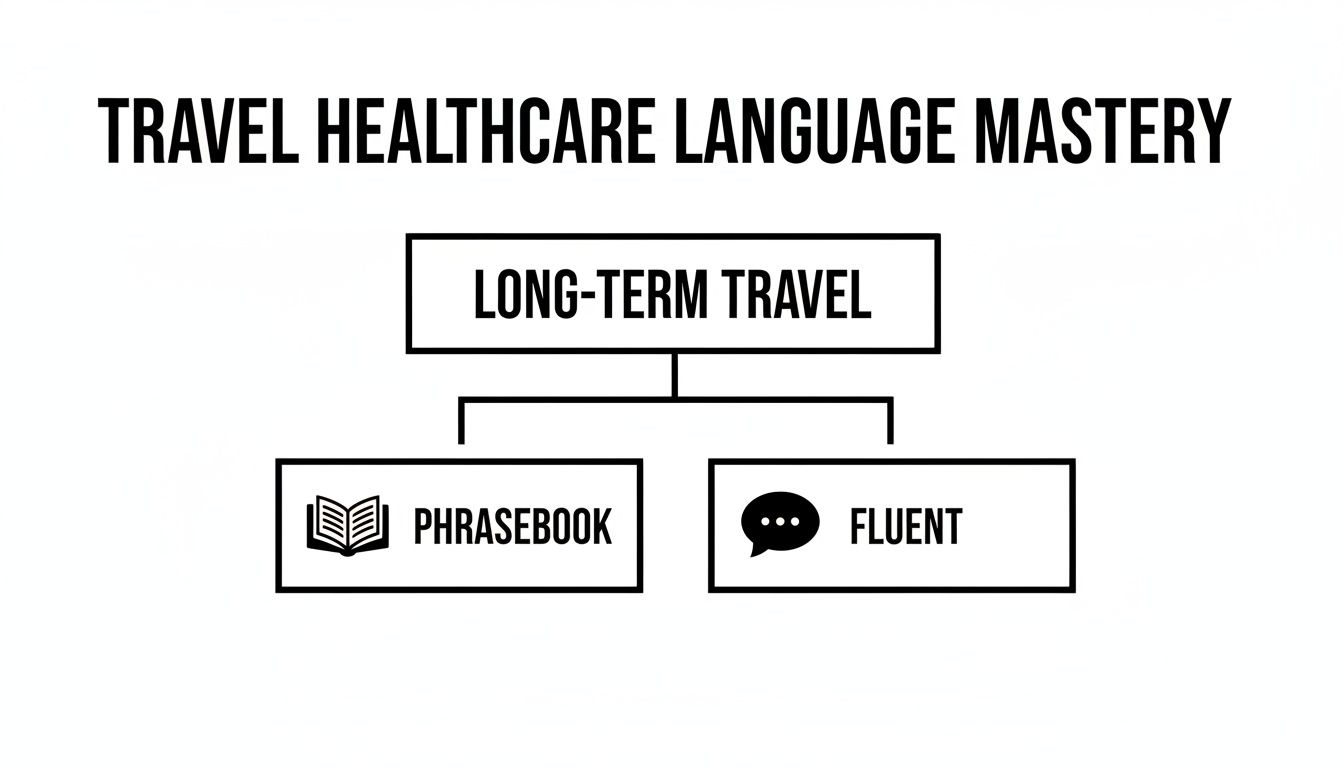
As you can see, while a basic “Phrasebook” level of coverage is fine for a quick trip, living abroad requires a more “Fluent” solution—expat medical insurance—for true peace of mind.
Defining Your Needs: Short-Term vs. Long-Term
The real dividing line comes down to your intent and how long you’ll be gone.
Short-term travel insurance is for vacations and trips under a few months. Its main job is to cover emergencies—a sudden illness, a bad accident, or travel headaches like lost luggage. It was never intended for routine check-ups or managing ongoing health issues.
On the other hand, expat medical insurance is built for people living abroad for six months or more. These plans operate much more like the health insurance you’d have back home, offering a wide range of benefits that go way beyond just patching you up after an emergency.
And this market is getting bigger every year. The global travel medical insurance market was valued at around $5.24 billion in 2024 and is expected to blow past $10.21 billion by 2034. That surge shows just how many people are living and working globally and need real, dependable medical protection.
Key Distinctions in Coverage
The differences really pop when you start digging into the policy details. A standard travel plan is a safety net for the unexpected, while expat medical insurance is your complete healthcare system abroad. To really get a handle on this, it’s essential to compare expat medical insurance vs travel insurance side-by-side.
Here’s a table that cuts through the noise and lays out the critical differences between these plans.
Insurance Plan Comparison: Short-Term Travel vs. Expat Medical
This breakdown shows exactly what each type of plan is designed for, helping you see where your own needs fit in.
| Feature | Short-Term Travel Insurance | Long-Term Travel (Nomad) Insurance | Expat Medical Insurance |
|---|---|---|---|
| Primary Purpose | Emergency medical care & travel mishaps (cancellations, lost bags) for short trips. | Comprehensive medical care for nomads & long-term travelers. | Full healthcare system for individuals living/working abroad. |
| Coverage Duration | Up to 90 days, sometimes renewable up to 180 days. | Annual policies, renewable, for stays of 6+ months. | Annual, renewable policies meant for multi-year residency. |
| Routine & Preventive Care | Almost never included. Excludes check-ups, physicals, wellness visits. | Often included. Covers routine doctor visits and some preventive care. | Comprehensive. Covers check-ups, screenings, specialist visits, and wellness. |
| Pre-existing Conditions | Usually excluded or limited to acute-onset emergencies only. | Can sometimes be covered after medical underwriting for a higher premium. | Often coverable after underwriting, providing long-term management. |
| Medical Limits | Lower maximums, focused on stabilizing you for a flight home. | High limits (often $1,000,000+), suitable for major medical events. | Very high limits, designed to cover complex and long-term treatments abroad. |
| Flexibility & Choice | Limited choice of doctors, often directing you to network partners. | Good freedom to choose your preferred doctors and hospitals worldwide. | Maximum freedom of choice for doctors and hospitals, often with direct billing. |
This table makes the core purpose of each plan crystal clear. One is for visiting, and the other is for living.
The most important takeaway is this: travel insurance is designed to get you well enough to fly home. Expat medical insurance is designed to provide you with quality healthcare wherever you call home.
Making the right call starts with being honest about your plans. If you’re relocating, retiring abroad, or working as a digital nomad for the foreseeable future, a basic travel policy will leave you dangerously exposed. A true expat medical insurance plan is the only way to ensure your health and financial security are properly protected for the long run.
What a Strong Expat Medical Plan Actually Covers
Think of a good expat medical plan like the engine of a car you’re about to drive cross-country. Before you hit the road, you want to pop the hood and make sure all the essential parts are solid and ready for anything. A proper policy isn’t just a formality; it’s your personal healthcare system, built to support you no matter where you are in the world.

Unlike basic travel insurance, which is really just for short-term emergencies, a true expat medical insurance plan is designed for robust, everyday protection. Let’s pull back the curtain on the non-negotiable pillars of a great plan so you can see past the confusing insurance jargon to the real-world benefits.
The Core Pillars of Expat Coverage
Every solid expat medical plan rests on a foundation of three critical coverage areas. These are the workhorses that handle everything from a quick doctor’s visit to a life-threatening emergency.
- Inpatient Care: This is for when you’re formally admitted to a hospital. It covers your room, nursing care, surgeries, intensive care unit (ICU) stays, and the medications you receive while admitted. Think of it as the heavy-duty shield for serious illnesses or accidents.
- Outpatient Care: This handles all the medical services that don’t require an overnight hospital stay. We’re talking about visits to your general doctor or a specialist, diagnostic tests like X-rays and blood work, and prescription drugs. It’s your day-to-day healthcare, keeping you healthy on the go. Many modern plans now even include convenient virtual care like telehealth services, which is a huge plus when you’re abroad.
- Emergency Medical Evacuation: This might just be the single most important benefit. If you have a serious medical crisis in a place that can’t provide the care you need, this coverage pays to get you to the nearest capable hospital—often by air ambulance.
These three pillars are the bedrock of any legitimate international medical insurance for expats. They create a safety net for both the small stuff and the major health crises.
Why Emergency Evacuation Is Non-Negotiable
It’s hard to overstate how crucial evacuation coverage is until you hear a real-world story. Imagine an expat, Sarah, trekking through a remote part of Peru. She takes a bad fall and suffers a severe leg fracture. The local clinic is small and simply isn’t equipped for the complex surgery she needs.
Without evacuation coverage, Sarah faces an impossible choice: drain her life savings on a private medical flight costing tens of thousands of dollars or risk permanent disability by staying put. With it, her insurance company steps in, arranges an air ambulance, and flies her to a top hospital in Lima for proper treatment. This one benefit can stop a medical disaster from becoming a financial one, too.
The reality is, emergencies are the most expensive part of global healthcare. Emergency medical expenses make up 25-30% of all claims, with air ambulances alone costing anywhere from $15,000 to over $100,000.
This is where the value of a dedicated expat medical insurance plan really shines. Standard health plans from back home often cap foreign emergency coverage at $50,000 or exclude it entirely, leaving a massive gap in your protection.
Demystifying Your Financial Responsibility
So, the plan covers the big stuff, but what about your share of the costs? Two terms cause a lot of confusion: deductibles and co-insurance.
Let’s break them down with an analogy. Think of your health coverage like a night out at an exclusive club.
- Deductible: This is the cover charge you pay at the door. It’s a fixed amount you pay out-of-pocket for medical care before your insurance plan starts chipping in. If your plan has a $1,000 deductible, you’re responsible for the first $1,000 of your covered medical bills.
- Co-insurance: This is like splitting the drink tab with the club once you’re inside. After you’ve paid your deductible, co-insurance is the percentage of the remaining bill you share with your insurer. A common split is 80/20, which means the insurance company pays 80%, and you pay 20%.
Getting a handle on these concepts is key. Opting for a higher deductible can lower your monthly premium, but it means you’ll pay more upfront if something happens. When you understand how these pieces fit together, you can look at a policy and see the true financial shield it offers—not just a price tag.
How Your Premium Is Calculated and How to Manage Costs
Trying to understand the price tag on an expat medical insurance plan can feel a bit like solving a puzzle. Unlike a simple, one-size-fits-all travel policy, an expat medical plan’s cost is shaped by your unique profile and needs. Insurers look at a few key factors to figure out your final premium, making sure the price truly reflects your personal situation and the level of protection you’re getting.
The need for this kind of coverage is exploding. The global market for medical travel insurance hit $30.59 billion in 2024 and is on track to more than double to $63.98 billion by 2030. A big part of that growth comes from North America, where over 70 million people travel abroad each year, and a savvy 25% of them invest in proper medical plans. You can dig into the numbers and trends in this detailed medical travel insurance market report. This isn’t just a niche product anymore; it’s becoming essential.
The Primary Factors That Shape Your Premium
Your premium isn’t just a number plucked out of thin air. It’s a carefully calculated figure based on a few core variables that tell the insurer how much risk they’re taking on.
- Your Age: This is one of the biggest drivers of your premium. Statistically, the older you are, the more likely you are to need medical care. It’s just a fact of life. That’s why a 30-year-old digital nomad will almost always pay less than a 65-year-old retiree for the exact same plan.
- Area of Coverage: Where you plan to live and travel is huge. Healthcare costs can be wildly different from one country to another. Including the USA in your plan, for example, will cause your premium to jump significantly due to its notoriously high medical expenses. It’s the single most expensive country for healthcare.
- Plan Design and Benefits: Naturally, the more comprehensive your plan, the more it will cost. Think of it like adding features to a car. Higher coverage limits, lower deductibles, and extras like maternity or full dental coverage will all raise your premium. A basic, catastrophic-only plan will be cheaper, but one with robust inpatient and outpatient benefits will give you far more peace of mind.
Demystifying the Underwriting Process
Beyond those main factors, there’s a crucial step that really separates a true expat plan from a simple travel policy: underwriting.
Underwriting is the insurer’s process of getting to know your personal health history. This is where they take a deep dive into any pre-existing conditions you might have, like diabetes, a heart condition, or a past battle with cancer.
Based on this review, they’ll decide if they can offer you coverage, if they need to exclude a specific condition from the policy, or if they need to charge a higher premium (known as a “loading”) to cover the added risk. It might feel a bit invasive, but this process is what allows them to offer sustainable, reliable coverage you can count on for years.
Actionable Strategies to Manage Your Costs
While you can’t change your age, you have more control over the final price than you think. There are several powerful levers you can pull to make your expat medical insurance more affordable without gutting the essential protection you need.
The goal isn’t just to find the cheapest plan, but to find the best value—a policy that offers the right protection at a price that fits your budget. Smart adjustments can make a high-quality plan much more accessible.
Here are a few of the most effective strategies you can put into practice:
- Adjust Your Deductible: This is one of the quickest ways to lower your monthly premium. By choosing a higher deductible—say, $2,500 instead of $500—you’re agreeing to pay more of your initial medical costs out-of-pocket. This lowers the insurer’s immediate risk, and they pass those savings on to you.
- Select Your Coverage Area Wisely: Be honest with yourself about your travel plans. If you have no intention of setting foot in the United States, choose a “Worldwide Excluding USA” plan. This one decision can slash your premium by as much as 30-50%.
- Use Co-insurance to Your Advantage: Similar to a deductible, opting for a co-insurance split (like an 80/20 split instead of 100% coverage) means you’ll share a small percentage of the medical bills after your deductible is met. This shared responsibility also helps bring down your premium.
By thinking through these options, you can design a plan that gives you real financial security while you’re living abroad, all while keeping the cost firmly in your control.
A Step-By-Step Guide to Choosing Your Expat Insurance
Let’s be honest: picking the right expat medical insurance can feel like a massive chore. But it doesn’t have to be. If you break the process down into a few simple steps, you can go from feeling overwhelmed to completely confident in your choice. This isn’t about guesswork; it’s a straightforward approach to finding the best possible coverage for your new life abroad.

Step 1: Define Your Personal Profile
Before you even glance at a single policy, you need to get crystal clear on what you’re actually shopping for. This all starts with an honest look at your personal needs, health, and travel plans. Getting this foundation right makes everything else easier.
Start by asking yourself a few simple questions:
- Where am I going? Jot down every country you plan to live in or visit frequently. Keep in mind, if you need coverage in high-cost regions like the USA, it will have a big impact on your premium.
- What’s my health history? Create a private list of any pre-existing conditions, chronic illnesses, or significant past surgeries. This is absolutely essential for the underwriting process.
- What’s my budget? Figure out a realistic monthly or annual amount you can comfortably set aside for your insurance premium.
Taking a few minutes to do this upfront will stop you from wasting hours looking at plans that were never a good fit to begin with.
Step 2: Research Top-Rated Insurers
With your personal profile in hand, it’s time to find the reputable players in the expat insurance market. Not all insurers are created equal, especially when it comes to global coverage. You want to look for companies with a long, solid track record, strong financial ratings, and glowing reviews from fellow long-term travelers.
A classic mistake is getting drawn in by a flashy brand without checking their claims-paying reputation. Slick marketing means nothing if the company is known for denying legitimate medical bills. Zero in on providers praised for their customer service and smooth claims process—that’s what truly counts when you’re in a tough spot.
The best insurance isn’t about the cheapest price; it’s about the promise that the company will have your back when you need them most. Look for insurers with high marks on independent review sites and a reputation for being reliable.
Step 3: Request and Compare Personalized Quotes
Now for the fun part—seeing some real numbers. You can reach out to your shortlisted insurers directly or work with a specialized broker like Expat Global Medical to get personalized quotes. A good broker is a huge time-saver, pulling together multiple options that are already matched to your profile.
Once the quotes start rolling in, resist the urge to just look at the price tag. I recommend popping the details into a simple spreadsheet to compare the key features side-by-side:
- Overall policy maximum
- Deductible amount
- Co-insurance percentage
- Coverage for inpatient vs. outpatient care
- Emergency evacuation limits
This kind of organized comparison lets you see the true value you’re getting, which often goes far beyond the monthly cost.
Step 4: Read the Policy Fine Print
Okay, this is the most critical step, and it’s the one too many people skip. You have to read the full policy wording—sometimes called the “certificate of insurance”—before you hand over any money. This document is your contract. It spells out exactly what is and isn’t covered, no exceptions.
Pay very close attention to the exclusions section. This is where you’ll find things that might not be covered, like injuries from certain adventure sports, routine mental health care, or treatment for specific pre-existing conditions. For example, if you’re an avid scuba diver, you need to double-check that your policy covers it without tricky conditions. Overlooking a key exclusion is one of the easiest and most costly mistakes an expat can make.
Step 5: Navigate the Application and Underwriting
Once you’ve found your plan, the last hurdle is the application and underwriting process. You’ll need to fill out a detailed health questionnaire, and it’s vital to be 100% honest about your medical history. Trying to hide a pre-existing condition could lead to your policy being canceled right when you need it most.
After you hit submit, the insurer’s underwriting team will review your application. They might come back and ask for more information from your doctor. Once you’re approved, you’ll get your official policy documents, and your coverage will begin. By following these steps, you can confidently lock in a solid expat medical insurance plan that protects your health and your wallet, freeing you up to focus on the adventure ahead.
Got Questions About Expat Medical Insurance? We’ve Got Answers.
As you get closer to your move, the questions naturally start piling up. Choosing the right health coverage is a huge decision, and you deserve clear, straightforward answers to feel good about it. To tie everything together, we’ve pulled some of the most common questions we hear from expats about expat medical insurance.
Think of this as your final checklist—a quick way to clear up any lingering doubts. Let’s get you the clarity you need to move forward with total confidence.
Can I Get Coverage With a Pre-Existing Condition?
This is probably the number one concern for anyone moving abroad, and the short answer is: yes, it’s often possible. This is a huge difference from standard travel insurance, which almost universally excludes pre-existing conditions. Real expat medical plans are built to handle them through a process called medical underwriting.
When you apply, you’ll give the insurer a detailed look at your health history. Their underwriting team then reviews everything to figure out the level of risk. From there, a few things can happen:
- Full Coverage: If your condition is stable and well-managed, they might cover it without any strings attached.
- Coverage with a “Loading”: The insurer agrees to cover your condition but adds a surcharge (a “loading”) to your premium to balance out the higher risk.
- An Exclusion: For more complex or unpredictable conditions, they might offer you a policy but specifically exclude that one illness from coverage.
- A Waiting Period: Sometimes, the plan will cover your condition, but only after a certain amount of time has passed.
The single most important thing is to be 100% honest and thorough on your application. Trying to hide a condition can lead to your claims being denied or, even worse, your entire policy being cancelled just when you need it most.
Am I Covered When I Visit My Home Country?
Most quality expat medical plans do include what’s called “home country coverage” or a “temporary trip home” benefit. It’s designed to cover you for short visits back home, but it’s crucial to understand the rules.
This benefit is absolutely not a substitute for a full-time health plan back home. It’s there for unexpected medical needs that pop up while you’re visiting family or taking a holiday trip.
Think of it as a temporary safety net, not a permanent healthcare solution. It ensures a sudden illness during a holiday visit doesn’t leave you unprotected, but it won’t replace a domestic health plan if you were to move back.
This coverage usually comes with two main limitations:
- Time Limits: You’ll typically be covered for a set number of days per trip (like 30 or 60 days) and a total number of days per policy year (say, 90 or 180 days).
- Coverage Restrictions: Treatment for pre-existing conditions is often excluded while you’re in your home country, even if the plan covers it abroad.
Always, always check the fine print on your policy to see exactly how your home country coverage works before you book that flight.
What Is the Real Difference Between Annual Travel and Expat Medical Plans?
This is a big one. Both cover you for longer periods, but they’re built for completely different situations. Mixing them up is a common—and potentially very expensive—mistake. An annual multi-trip travel plan is for frequent vacationers, not for someone actually living overseas.
Let’s try a simple analogy. An annual travel plan is like having a bus pass for a city you visit often on weekends. It’s handy for those short, repeated trips, but it’s not designed for someone who has packed up and moved there.
An expat medical plan, on the other hand, is like owning a car in that new city. It’s your primary transportation for daily life—built for routine appointments, unexpected detours, and long-term reliability.
Here’s a more direct look at what sets them apart:
| Feature | Annual Multi-Trip Travel Plan | True Expat Medical Plan |
|---|---|---|
| Primary Goal | Covers emergencies during multiple short trips (e.g., up to 30 days each). | Provides comprehensive healthcare for long-term residency abroad. |
| Routine Care | Almost never covers doctor visits, check-ups, or wellness appointments. | A core benefit, covering both routine and specialist care. |
| Renewability | Typically renewed annually with little to no health review. | Fully underwritten and designed for continuous, long-term renewal. |
| Medical Limits | Lower limits focused on stabilizing you enough to fly home. | High limits ($1 million+) designed for ongoing, quality care abroad. |
Choosing the right long term travel medical insurance is all about recognizing that living abroad requires a real healthcare solution, not just an emergency backstop. An expat plan is built for that reality.
Feeling more confident about your options? The next step is to see what a plan tailored to your specific situation looks like. At Expat Global Medical, our team specializes in helping expats find the perfect fit without the headache. Let us do the hard work of comparing top-rated insurers so you can get back to planning your adventure.
Get Your Free Personalized Expat Insurance Quote Today on expatglobalmedical.com