Think of Schengen travel insurance as more than just a document for your visa application—it’s your official key to unlocking 29 European countries. It’s a specific kind of medical insurance, built to satisfy the strict demands of the Schengen visa process, ensuring you have a solid financial safety net for unexpected health troubles. This isn’t just a recommendation; it’s an absolute must-have for your visa application to even be considered, especially for expats beginning their journey abroad.
Why Schengen Travel Insurance Is a Non-Negotiable Requirement
Imagine you’ve just landed in Europe to start your new life as an expat, only to be hit with a sudden medical emergency. Without the right coverage, you could face overwhelming medical bills and difficulty accessing care. This is precisely the scenario the Schengen Area authorities designed the mandatory insurance rule to prevent. Its main purpose is to shield both you, the traveler, and the local healthcare systems of the member states.
This requirement acts as a guarantee that you can cover any emergency medical costs without becoming a financial burden on your host country. For anyone planning a longer stay—like expats, digital nomads, or retirees—this is far more than an administrative hurdle. It’s the foundational layer of security for your new life in Europe, but as we’ll see, it’s often just the starting point.
The Minimum Coverage You Absolutely Must Have
For a policy to be accepted by the consulate, it has to meet specific, non-negotiable standards. You can’t just use any travel plan; it must explicitly state that it meets these requirements.
To make it crystal clear, here’s a quick rundown of the essentials your policy needs to have.
Schengen Insurance Requirements at a Glance
| Coverage Requirement | Minimum Amount | Why It Is Required |
|---|---|---|
| Emergency Medical | €30,000 | To cover unexpected hospital stays, doctor visits, and treatments without burdening local healthcare systems. |
| Medical Evacuation | Included | Guarantees you can be transported to a suitable medical facility if local care isn’t adequate. |
| Repatriation of Remains | Included | Covers the costs of returning a deceased person to their home country, a sensitive but necessary provision. |
| Geographic Validity | All 29 Schengen States | Ensures you are covered no matter which Schengen country you travel to during your stay. |
| Duration of Stay | Entire period of stay | Your policy must be active from the day you arrive until the day you leave the Schengen zone. |
These rules are a baseline—they ensure you are protected for emergencies during your initial entry and stay.
The Schengen Area’s mandatory insurance rule has fundamentally changed the landscape for international travel, turning an optional purchase into a compulsory entry ticket. As of 2025, every visitor applying for a Schengen visa must show proof of at least €30,000 in medical coverage. This rule creates consistent demand for compliant insurance products, from France and Germany to Portugal and the Czech Republic.
Your health plan from back home? It’s almost certainly not going to cut it. Most domestic insurance policies provide little to no coverage overseas and rarely come with the specific documentation that Schengen consulates demand. A dedicated policy is truly essential for visa approval.
For expats planning to live, work, or study in Europe, understanding these rules is the first step. However, it’s crucial to recognize that this initial coverage is often just for the visa, not for your long-term life. To learn more, check out our essential tips for safe travels.
Decoding Your Policy: What Absolutely Must Be Covered
Hitting the €30,000 minimum is the first hurdle, but what truly matters in a crisis is what your Schengen travel insurance actually does. Think of your policy not as a single safety net, but as a toolkit with specific shields for different emergencies. Understanding these components is critical, especially for expats and long-term residents who face a wider range of health needs over time than a typical tourist.
Grabbing the cheapest plan just to get your visa is a common mistake—and a risky one. A solid policy isn’t about paperwork; it’s about translating insurance jargon into real, life-saving action when you’re vulnerable in a new country.
Emergency Medical Expenses: The Core Safety Net
This is the heart of your Schengen insurance. It covers the bills for an unexpected illness or injury, from a severe case of the flu in Berlin to a serious accident in Lisbon requiring hospitalization. This coverage is designed purely for urgent, unforeseen medical care.
Without it, you’d be responsible for every euro. Considering a night in a European hospital can easily cost thousands, this component is non-negotiable.
Medical Evacuation: Getting You to the Right Care
Imagine you’re hiking in a remote part of the Austrian Alps and have a serious fall. The local clinic is small and not equipped to handle your injuries. This is when medical evacuation coverage becomes a lifesaver.
This feature covers the cost of transporting you from a place with inadequate medical care to a facility that can properly treat you. This might involve:
- An ambulance ride to a major hospital.
- A helicopter airlift out of a hard-to-reach area.
- A specially equipped flight to a hospital in another country if necessary.
Evacuation ensures your location doesn’t compromise your care. It’s a vital piece of the puzzle for adventurous expats or anyone living far from a major city.
Repatriation: Bringing You Back Home
Repatriation is often confused with evacuation, but they serve different purposes. Repatriation covers the cost of getting you back to your home country after you’re stable enough to travel following a major medical event. This could be a commercial flight with a medical escort or a private air ambulance.
Crucial Distinction: Evacuation gets you to the nearest appropriate facility, while repatriation gets you home. Both are mandatory for a compliant Schengen travel insurance policy.
This is critical. A last-minute, one-way international flight with medical support can be astronomically expensive. The policy also handles the sensitive provision for the repatriation of remains, covering costs to return a deceased person’s body home.
The demand for robust travel protection is growing. The European travel insurance market generated USD 9,499.3 million in 2024 and is projected to reach USD 21,129.8 million by 2030. With 75% of Europeans planning to travel soon, the need for solid coverage is clear. You can find more data on this market at Research and Markets.
Finding the right Schengen insurance isn’t one-size-fits-all. A family on a two-week holiday has vastly different needs than a digital nomad moving to Lisbon for a year. Your policy should fit your journey.
The key is to think about your plans. Are you a frequent business traveler to Europe? Or are you relocating as an expat? Answering that question is the first step toward finding a plan that is both compliant and practical.
Single Trip vs. Annual Multi-Trip Plans
For initial visa applications, a single-trip policy covering the first few months is common. However, for expats who plan to travel back and forth, an annual plan is more practical. A single-trip policy covers one specific journey, making it ideal for the initial relocation.
An annual multi-trip policy, on the other hand, is built for the global citizen. You pay one premium for 12 months of coverage, making it a great option for expats who travel between their home country and Europe or for professionals with frequent European meetings. As a general rule, if you plan more than two or three separate trips to the Schengen zone in a year, an annual plan often provides better value.
To clarify the differences:
Single-Trip Versus Annual Multi-Trip Policy Comparison
For travelers from tourists to expats, this table simplifies which policy fits your travel style and budget.
| Feature | Single-Trip Insurance | Annual Multi-Trip Insurance |
|---|---|---|
| Best For | One-off holidays, initial relocation, or trips longer than 90 days. | Frequent travelers, established expats, and business professionals. |
| Cost Structure | Pay per trip; cost is based on trip duration, destination, and traveler’s age. | One upfront annual premium for unlimited trips within the policy year. |
| Convenience | Must purchase a new policy for every trip. | “Set it and forget it” convenience for 12 months. |
| Trip Length Limit | Covers the entire duration of a single, continuous trip. | Each individual trip is typically capped (e.g., 30, 60, or 90 days). |
For expats, an annual plan might be a good supplement to a primary health plan, but it’s crucial to understand its limitations for long-term residency.
Beyond the Basic €30,000 Minimum
Every Schengen-compliant policy offers at least €30,000 in medical coverage, but treating that as your goal is a mistake. Think of it as the legal floor, not a recommended ceiling. Your personal situation should guide how much coverage you actually need.
Consider these factors when deciding on your coverage limit:
- Your Age and Health: Older expats or those with pre-existing conditions should always opt for higher coverage.
- Your Lifestyle: Planning to ski in the Alps or surf in Portugal? Adventure sports increase your risk and require a higher policy limit.
- Your Destination: Healthcare costs vary significantly across the 29 Schengen countries. A hospital stay in Switzerland will be far more expensive than one in Greece.
Choosing a higher coverage limit—say, €100,000 or more—provides a much stronger financial safety net. The small increase in your premium is insignificant compared to the out-of-pocket costs of a major medical emergency.
Understanding Deductibles and Insurer Reputation
The deductible (or “excess”) is what you pay out-of-pocket before the insurance company steps in. A policy with a €200 deductible means you cover the first €200 of a bill. A higher deductible can lower your premium, but ensure it’s an amount you can comfortably pay.
Finally, don’t choose a policy on price alone. An insurer’s reputation is critical. A cheap policy from a company known for denying claims or poor service is useless in a crisis. Look for providers with strong reviews, 24/7 emergency assistance, and a clear claims process. Your peace of mind is worth it.
Why Expats Need More Than Basic Visa Coverage
A standard Schengen travel insurance policy is designed for one person: the short-term tourist. It’s an excellent safety net for emergencies, designed to patch you up and get you home. But if you’re an expat, you aren’t on holiday—you’re living your life abroad. This is why a basic, visa-compliant plan is dangerously inadequate for your long-term needs.
Think of it this way: a tourist’s insurance is a spare tire. It’s perfect for a sudden jam, but you wouldn’t drive on it for months. For daily life, you need a full set of reliable tires. A proper expat medical plan is that full set, providing the foundation for a healthy life in your new home.
The Hidden Gaps in Tourist-Level Insurance
Let’s be clear: basic visa insurance is designed to do one thing—satisfy the consulate’s minimum requirements. It’s great for a sudden accident, but it completely ignores the routine, day-to-day healthcare that makes up a normal life.
This is where the serious gaps appear. A standard travel policy will almost always exclude:
- Routine Wellness and Check-ups: Annual physicals, dental cleanings, or routine specialist visits are not covered.
- Chronic Condition Management: If you have a pre-existing condition like diabetes or asthma, a travel plan won’t cover the ongoing care and prescriptions you need.
- Mental Health Support: Therapy and psychiatric care are crucial for well-being but fall outside the “emergency” scope of a tourist policy.
- Maternity Care: Planning a family is a part of life, but travel insurance provides zero coverage for prenatal care, delivery, or postnatal needs.
Relying on a short-term plan for long-term residency means you are essentially uninsured for most common healthcare needs.
Real-World Scenarios for Expats
Let’s make this practical. Imagine you’ve moved to Spain. A few months in, your child develops a persistent ear infection. A basic Schengen plan might cover an initial emergency visit, but it won’t pay for follow-up appointments with a pediatrician or the necessary medication. You’d pay for that yourself.
Or consider the digital nomad in Portugal who needs to manage a known thyroid condition with regular blood tests and prescriptions. A travel policy isn’t built for this predictable, ongoing care. It’s for the unpredictable, leaving you exposed for the realities of managing your health abroad.
A visa-compliant travel policy gets you through the door. A proper expat medical plan lets you actually live there with peace of mind. The first is a ticket, the second is a true healthcare solution.
This distinction is critical. To dig deeper, you can see how expat medical insurance vs. travel insurance compare for long-term stays.
The Only Sustainable Healthcare Solution
For anyone planning to live in the Schengen Area for more than 90 days, a comprehensive international health insurance plan is the only responsible choice. These plans are designed for the expat lifestyle, offering coverage that mirrors—and often surpasses—what you’d get back home. Beyond just meeting visa rules, expats and remote workers often have specific insurance needs, especially when applying for different Digital Nomad Visas.
A genuine expat medical plan fills all the gaps that travel insurance leaves behind. It gives you a solid framework for your health, allowing you to see a doctor for minor illnesses, manage chronic conditions, get preventative screenings, and access mental health support without worrying if it counts as an “emergency.” It’s the key to truly settling into your new country and building a sustainable, healthy life.
How to Purchase and Submit Your Policy for Visa Success
Getting your insurance paperwork right is one of the most stressful parts of the Schengen visa application and an easy place to make a mistake that leads to rejection.
Let’s walk through the process. The goal isn’t just to buy a policy, but to provide the consulate with clear, undeniable proof that you meet their requirements for medical and financial protection.
First, Assess Your Needs and Compare Providers
Before buying, think about what you actually need. The visa requirement is just the baseline. Consider your health, age, and planned activities. While €30,000 is the official minimum, it’s a low bar for a serious medical emergency in Europe. A higher limit provides a more realistic safety net.
Once you know your needs, compare quotes from reputable providers. Don’t just chase the cheapest option. Look for insurers who specialize in Schengen visa applicants and have positive reviews for their claims process. This is particularly important for expats who will need to transition from this initial policy to a long-term plan.
This chart illustrates the difference between simple tourist coverage and the robust protection needed for a long-term move.
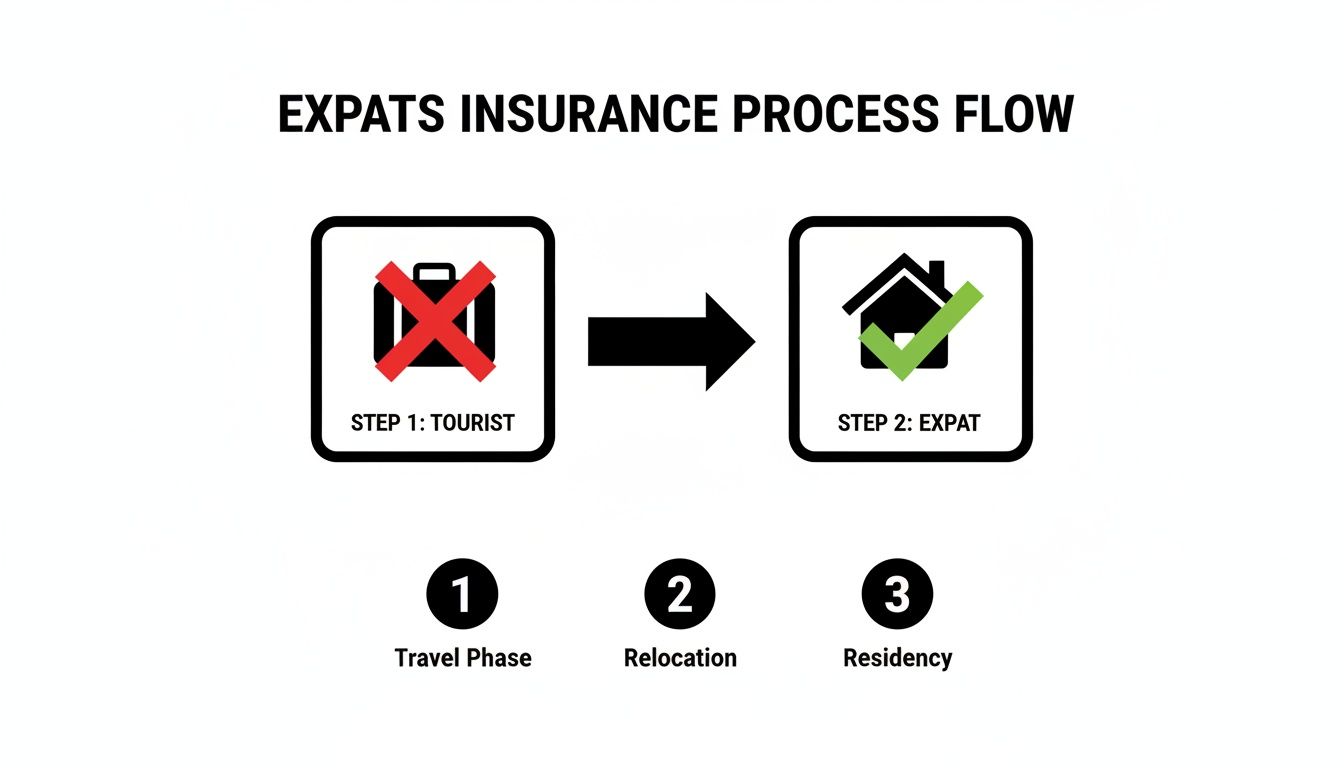
As you can see, a basic travel plan is a dead end for anyone staying long-term. A proper expat policy is the only sustainable path forward.
Your Visa Submission Checklist
After you purchase your policy, the insurer must provide a visa confirmation letter or an official certificate of insurance. This is the key document for your application. Your regular insurance card or a policy summary won’t suffice.
This official letter must clearly state:
- Your Full Name: It must match your passport exactly.
- Policy Validity Dates: The coverage must span your entire trip, from arrival to departure.
- Geographic Coverage: The policy must be valid in all 29 Schengen member countries.
- Coverage Amounts: It must confirm at least €30,000 for emergency medical care, medical evacuation, and repatriation of remains.
The consulate officer won’t have time to read your policy’s fine print. This letter is their checklist. If it’s missing any of these key details, they will likely reject your application.
Flawless documentation is crucial. Germany, for example, accounts for 20.19% of Europe’s travel insurance market. Germans are frequent travelers, taking over 70 million trips a year, and their culture of meticulous planning sets a high standard for application reviews.
Common Mistakes to Sidestep
A few simple errors trip up many applicants.
One of the biggest is incorrect travel dates. Always add a buffer of a day or two on both ends. Another common mistake is buying a cheap policy from a local provider unfamiliar with specific Schengen requirements. Stick with specialized, international insurers.
For complex applications, or if you’re helping others, exploring effective immigration case management tips can ensure everything is perfect. Following these steps gives your visa application the best chance of approval.
Navigating the Claims Process Without the Headache
When a medical emergency strikes abroad, the last thing you want is a battle with paperwork. Your focus should be on recovery. This is where a good Schengen travel insurance policy proves its worth, but you need to know the right steps to take.
First, call your insurer’s 24/7 emergency assistance line. This is almost always a requirement. This call gets the process started, allowing the insurer to offer guidance, direct you to approved facilities, and arrange for payment.
The First Steps After an Incident
Think of the assistance team as your logistics coordinator. They can communicate with hospital staff in the local language and arrange for direct billing, so you avoid paying a massive bill out of pocket.
After that call, your job is to keep meticulous records.
- Keep Every Receipt: From pharmacy bills to hospital invoices, save everything.
- Collect All Medical Reports: Request copies of your diagnosis, doctor’s notes, and treatment plans.
- Note Key Details: Write down the names of doctors and dates of visits.
This paper trail is your proof for the claim.
Payment and Reimbursement Explained
How bills get paid usually happens in one of two ways.
Direct Billing vs. Reimbursement: Direct billing is ideal; the insurer pays the hospital directly. Reimbursement means you pay first and file a claim to get your money back. For serious incidents like hospitalization, insurers will almost always arrange direct payment.
Imagine you break your wrist in Rome, and the bill is €2,500. With direct billing, the insurer settles it for you. If you have to pay upfront, you’ll need to submit all your documents to be reimbursed.
Submitting a complete, organized claim is the final step. Fill out the claim form carefully and attach all supporting documents. While most claims are smooth, denials can happen. If so, knowing how to fight back is critical. You can learn how to draft an appeal letter for a medical insurance denial to improve your chances of success.
Got Questions About Schengen Travel Insurance? We Have Answers.
Navigating the rules for Schengen travel insurance can be confusing, especially for expats whose needs differ from tourists. Here are straightforward answers to common questions.
Can I Just Use My Credit Card Insurance For a Schengen Visa?
This shortcut almost never works. While some credit cards offer travel medical benefits, these policies rarely meet the strict documentation standards of Schengen consulates.
Consulates require a dedicated insurance letter that explicitly states you have at least €30,000 in coverage for emergency medical care, evacuation, and repatriation. A generic benefits summary from your credit card company won’t cut it and is a common reason for visa rejection. A dedicated policy is your only safe bet.
What Happens If My Schengen Visa Gets Rejected?
This is a valid concern. Fortunately, most reputable insurers specializing in Schengen-compliant plans offer a full refund if your visa is denied. It’s a standard feature to look for.
To get a refund, you’ll need to provide a copy of the official rejection letter from the consulate. Always double-check the insurer’s refund policy before purchasing to ensure this protection is included.
Do I Really Need Insurance If I’m From a Visa-Waiver Country?
While you may not be required to show proof of insurance at the border, traveling without it is a huge financial risk. A medical emergency in Europe can be catastrophic, as your domestic health plan is unlikely to cover you. A broken bone or sudden illness could lead to tens of thousands of euros in medical bills.
Be aware: with the new ETIAS (European Travel Information and Authorisation System) rolling out, proof of medical insurance may soon become a requirement for all non-EU visitors. It’s a small price for crucial financial protection.
How Soon Should I Buy My Travel Insurance?
The simple answer? As soon as your travel dates are confirmed. You must purchase it before submitting your visa application, as proof of insurance is a required document.
But there’s another reason to buy early: trip cancellation coverage. Many policies include this benefit, which protects the money you’ve spent on flights and hotels. This feature usually only activates if you buy your policy shortly after making your initial trip payments, so buying early is always a smart move.
Getting these details right is the first step toward a successful move abroad. For expats, digital nomads, and retirees, having solid, reliable coverage is not just a visa requirement—it’s essential for a secure life in Europe. Expat Global Medical specializes in providing robust, compliant insurance solutions that go far beyond the visa minimums, transitioning seamlessly into long-term expat health plans that give you genuine peace of mind. Get your free quote today and find a plan built for you.