

Retirement often means more freedom to travel.
You may take one long international vacation each year. Or you may spend several months visiting family, exploring different countries, or traveling back and forth between your home and another country.
With more international travel comes an important question: Should you buy single-trip or multi-trip travel medical insurance?
The answer depends on how often you travel, how long you stay away, where you are going, and what type of medical protection you need.
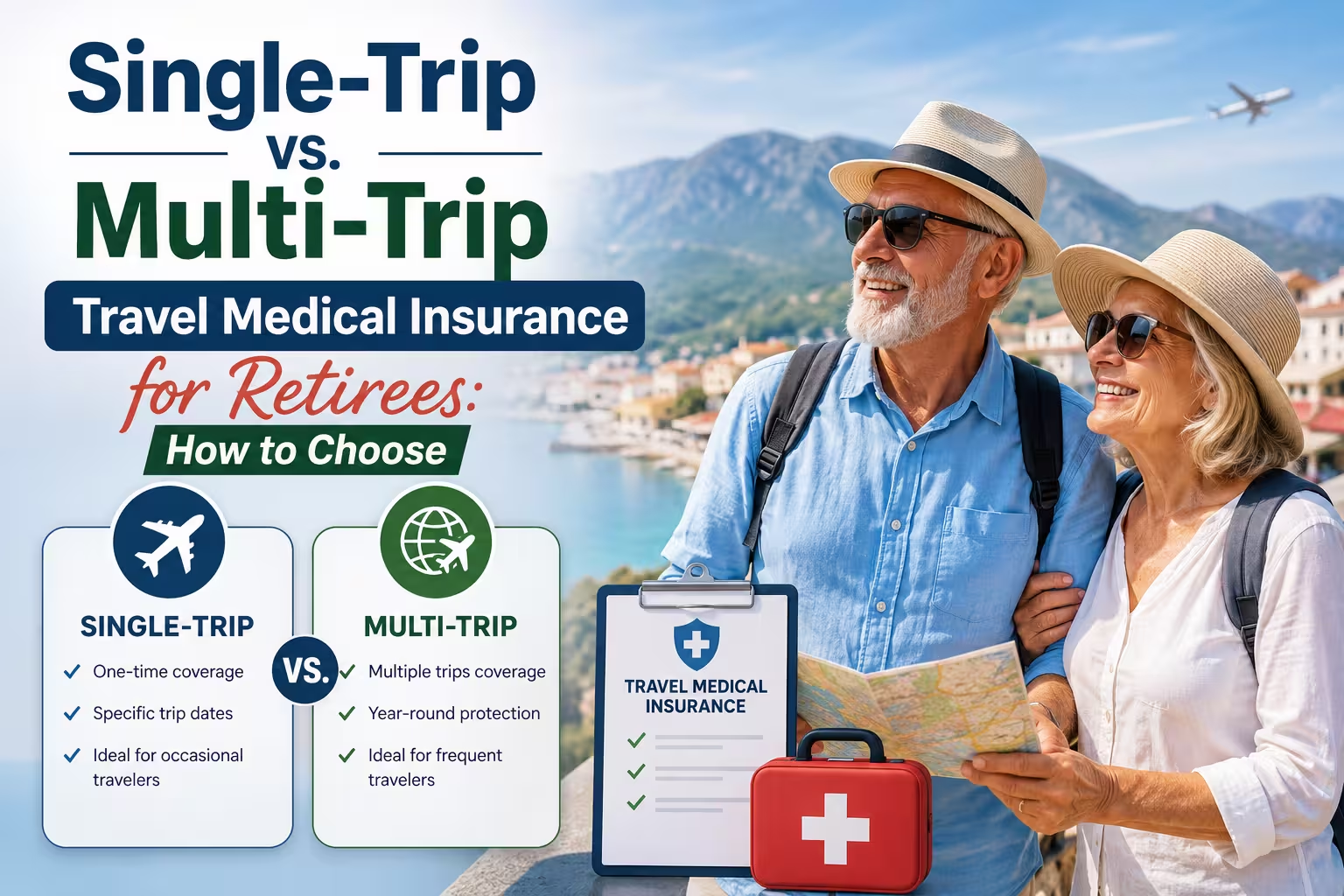
For retirees, choosing the right policy is especially important. Medicare generally does not cover medical care outside the United States, so relying on your regular U.S. health insurance may leave you with limited protection overseas. The U.S. Department of State recommends that older travelers consider travel insurance that includes emergency medical and evacuation coverage.
At ExpatGlobalMedical.com, we offer both Single Trip and Multi-Trip travel medical insurance options, along with international medical insurance and medical evacuation solutions.
What Is Single-Trip Travel Medical Insurance?
Single-trip travel medical insurance is designed to cover one specific international trip.
You select the start and end dates when purchasing the policy. Once the trip ends, the coverage ends as well.
This can be a good choice for retirees who only travel internationally once in a while.
For example, imagine you are retired in Florida and planning a three-week trip to Italy. You do not travel internationally again for the rest of the year.
A single-trip plan may make more sense than paying for an annual multi-trip policy.
The Single Trip Platinum option available through ExpatGlobalMedical.com can provide coverage for international trips outside the U.S. of up to six months for eligible travelers age 95 and younger. Benefits can include medical care, emergency evacuation, prescription coverage, mental health services, and accidental death and dismemberment benefits.
The exact benefits, limits, eligibility, and exclusions depend on the policy.
What Is Multi-Trip Travel Medical Insurance?
Multi-trip travel medical insurance is designed for people who expect to make several international trips during a 12-month period.
Instead of buying a new policy every time you leave home, you purchase one annual policy that covers multiple trips.
For frequent travelers, this can be much more convenient.
For example, you may:
- Visit your children in Canada in February
- Spend six weeks in Spain during the spring
- Take a summer trip through Europe
- Visit family in Mexico during the winter
If you regularly travel internationally, buying separate coverage for every trip can become inconvenient. A multi-trip plan gives you one annual policy for multiple journeys, subject to the plan’s rules and maximum trip length.
The Multi-Trip Platinum plan offered through ExpatGlobalMedical.com lists a $1 million medical limit and a $500,000 medical evacuation benefit. It allows unlimited trips outside the U.S. during a 12-month period, with each trip limited to 70 days.
Those limits are specific to that plan. Other multi-trip policies can have different maximum trip lengths and benefit amounts.
Single Trip vs. Multi-Trip: What’s the Difference?
The basic difference is simple.
Single-trip insurance covers one trip.
Multi-trip insurance covers multiple trips during the policy year.
But there are several other factors retirees should consider.
| Feature | Single-Trip Insurance | Multi-Trip Insurance |
|---|---|---|
| Number of trips | One | Multiple trips |
| Policy period | Specific trip dates | Usually 12 months |
| Best for | Occasional travelers | Frequent international travelers |
| New policy for each trip | Yes | No, while trips meet policy requirements |
| Trip length | Can accommodate longer single trips, depending on plan | Usually has a maximum number of days per trip |
| Medical coverage | Emergency medical coverage | Emergency medical coverage |
| Evacuation | Available on many plans | Available on many plans |
| Routine healthcare | Generally not the primary purpose | Generally not the primary purpose |
The most important thing to remember is that multi-trip does not necessarily mean unlimited time abroad.
An annual policy may cover multiple trips, but each trip can have its own maximum duration.
Which Option Is Better for Retirees?
There is no universal answer.
It depends on your travel habits.
Choose Single-Trip Insurance If You Travel Occasionally
A single-trip policy may be the better fit if you only take one or two international trips a year.
It can allow you to choose coverage specifically for the trip you are taking.
You also do not have to pay for an annual multi-trip policy if you are unlikely to use it.
For example, if you are planning a 30-day European vacation and do not expect to leave the United States again that year, single-trip coverage may be all you need for that journey.
Consider Multi-Trip Insurance If You Travel Frequently
A multi-trip plan can make more sense when international travel is part of your normal retirement lifestyle.
Frequent travelers may find an annual plan easier because they do not have to arrange a new policy before every trip.
It can also make budgeting easier because you have one annual premium instead of purchasing separate policies throughout the year.
ExpatGlobalMedical.com currently lists a Multi-Trip Platinum option with unlimited trips outside the U.S. during a 12-month period, subject to a 70-day maximum per trip.
Again, always check the current policy wording before purchasing.
Don’t Choose Based on Price Alone
It is tempting to compare policies by premium.
That is only one part of the decision.
Look at the medical limit, deductible, evacuation benefit, trip-length restrictions, pre-existing condition provisions, and exclusions.
A cheaper policy may have a lower medical limit or a higher deductible.
A more expensive policy may provide broader benefits.
The right policy is the one that gives you appropriate protection for the trip you are actually taking.
Medical Evacuation Is Important
Medical emergencies can happen anywhere.
A retiree could become seriously ill in a remote area where the available medical facilities cannot provide the required treatment.
Medical evacuation may then become necessary.
The U.S. Department of State notes that many regular health insurance plans do not cover medical evacuation back to the United States. It also warns that air ambulance evacuation can cost tens of thousands of dollars and, in some circumstances, much more.
That is why evacuation coverage deserves attention when comparing travel medical insurance.
At ExpatGlobalMedical.com, evacuation coverage is available through its travel medical insurance options. The company also offers dedicated Travel Medical & Air Evacuation solutions.
What About Pre-Existing Conditions?
This is another area retirees should review carefully.
Pre-existing conditions are handled differently by different insurance plans.
Some travel medical policies may exclude pre-existing conditions. Others may provide limited coverage or offer specific provisions if certain requirements are met.
For example, the Single Trip Platinum option listed by ExpatGlobalMedical.com can cover pre-existing conditions for medical services and evacuation for eligible individuals who have a current U.S. health plan.
The Multi-Trip Platinum option also lists coverage for pre-existing conditions, subject to its eligibility and policy terms.
Do not assume that your existing medical condition is covered simply because a policy mentions pre-existing conditions.
Read the actual terms and ask questions before purchasing.
What If You Are Retiring Abroad?
This is where the decision becomes different.
If you are not simply traveling but are living abroad, neither single-trip nor multi-trip travel insurance may be the right primary solution.
Travel medical insurance is generally designed for temporary trips.
Expat medical insurance is designed for people who actually live outside their home country. It can provide broader, long-term healthcare coverage, including benefits that standard travel medical plans generally do not provide.
For example, a retiree who spends several months in Costa Rica, maintains a residence there, and plans to live abroad year-round should look at international health insurance rather than assuming an annual multi-trip policy is enough.
An annual multi-trip plan may be useful for frequent travelers, but it is not automatically a replacement for comprehensive international health insurance.
How Many Trips Will You Take?
One of the easiest ways to narrow down your options is to look at your travel plans for the next 12 months.
Ask yourself:
Am I taking one international trip?
Start by looking at single-trip coverage.
Am I taking several shorter international trips?
A multi-trip plan may be more convenient.
Am I spending most of the year outside my home country?
Look beyond travel insurance and compare international or expat medical insurance.
This distinction can prevent you from buying a policy that does not match your lifestyle.
Consider the Length of Each Trip
Trip length is just as important as the number of trips.
A retiree who takes four 10-day vacations has a very different insurance need from someone who takes three six-week trips.
Multi-trip policies commonly place a maximum duration on each individual trip.
For example, the Multi-Trip Platinum plan listed by ExpatGlobalMedical.com has a 70-day maximum per trip.
If your trip is longer than the permitted period, you may need a different policy.
Always check the maximum trip duration before buying.
What Should Retirees Check Before Buying?
Before choosing single-trip or multi-trip travel medical insurance, review:
- Medical coverage limits
- Emergency evacuation benefits
- Deductible
- Maximum trip length
- Pre-existing condition rules
- Age eligibility
- Countries included in the coverage area
- Prescription medication benefits
- Emergency dental coverage
- Mental health benefits
- Accidental death and dismemberment coverage
- Claims procedures
- Exclusions and limitations
Also check whether your current domestic health insurance provides any coverage abroad.
For U.S. retirees, Medicare generally does not cover healthcare outside the United States.
Single Trip or Multi-Trip: A Simple Way to Decide
If you are still unsure, look at your retirement calendar.
One international trip: Single-trip coverage may be the simpler choice.
Several international trips: Compare annual multi-trip plans.
Frequent travel with longer stays: Pay close attention to the maximum number of days allowed per trip.
Living abroad: Consider comprehensive expat medical insurance instead.
Remote travel: Give serious attention to medical evacuation coverage.
There is no reason to buy more insurance than you need. But there is also little value in choosing a cheap policy that does not provide enough protection when something goes wrong.
Travel Medical Insurance for Your Retirement Lifestyle
Retirement gives you the freedom to travel on your own schedule.
Your insurance should fit that freedom.
At ExpatGlobalMedical.com, we offer travel medical insurance options for both single trips and frequent international travelers. Available plans can provide medical and evacuation benefits, 24/7 assistance, and other benefits depending on the policy selected.
For retirees who are moving overseas permanently, we also offer international and expat medical insurance solutions designed for longer-term living abroad.
The key is choosing the coverage that matches what you are actually doing.
A Final Word From John W. McGee
“The right insurance plan should fit the way you travel and the life you are building abroad. It is not about buying the most expensive policy. It is about having the right protection when you need it.”
If you are unsure whether Single-Trip, Multi-Trip, or Expat Medical Insurance is right for you, refer to our chatbot for quick guidance and help identifying the questions you should ask before choosing a plan.
You can also request a free quote from ExpatGlobalMedical.com and speak with an international insurance specialist about your travel plans and coverage needs.
Travel with confidence. Plan your medical coverage before you leave home.