When you hear “travel insurance for seniors,” you might picture a short-term policy for a two-week vacation. But for today’s adventurous retirees—especially those planning extended stays or moving abroad—that concept is far too limited. The real conversation isn’t just about covering a trip; it’s about securing your health for a new lifestyle. This is where expat medical insurance becomes the essential solution, offering a robust safety net far beyond what any standard travel plan can provide.
Why Standard Travel Insurance Falls Short for Seniors

Think about buying a one-size-fits-all raincoat. Sure, it might keep some of the water off, but during a real downpour, you’ll quickly find the gaps where it’s too tight or too loose. Standard travel insurance is a lot like that for seniors—it provides a bit of cover, but it often leaves you dangerously exposed right when you need protection the most.
As we get older, our health needs naturally become more specific, and our risk profile changes. But generic travel insurance plans are built for a younger, healthier crowd. They simply aren’t designed for the realities of traveling in your golden years, a mistake that can lead to devastating financial and health consequences.
The Gaps in Generic Coverage
Standard plans are riddled with frustrating limitations that make them unsuitable for long-term travelers or retirees abroad. The biggest shortcomings usually pop up in three key areas:
- Insufficient Medical Limits: What starts as a minor slip on a cobblestone street can quickly turn into a five-figure medical bill abroad. Basic plans often cap their emergency medical coverage at levels far too low to handle a serious hospitalization or surgery.
- Strict Pre-existing Condition Exclusions: This is the deal-breaker. Most off-the-shelf policies will flat-out refuse to cover any medical issue even remotely related to a pre-existing condition. That term can be defined so broadly it includes everything from high blood pressure and arthritis to a past heart condition.
- Lack of Long-Term Support: If you’re planning an extended stay or retiring abroad, a generic policy is useless. These plans are designed for two-week holidays, not a new chapter of life. They offer zero support for routine check-ups, ongoing prescriptions, or managing chronic conditions.
The Growing Need for Specialized Protection
It’s clear that seniors aren’t just looking for better coverage; they’re demanding it. The global market for senior travel insurance was valued at a staggering USD 8,488.6 million in 2024 and is on track to more than double by 2030. This isn’t just a statistic—it’s proof that a massive wave of seniors is embracing global travel, making specialized coverage an absolute must-have. You can dig into the numbers yourself in the senior travel insurance market research from Grand View Research.
For seniors, especially those retiring or living abroad, specialized coverage isn’t a luxury—it’s a fundamental necessity. Standard insurance is a temporary fix for temporary trips, whereas seniors embarking on a new chapter of life overseas need a permanent, reliable health safety net like expat medical insurance.
This guide is your roadmap. We’re going to look past the flimsy promises of standard plans and dive into real solutions, like expat medical insurance, that deliver true peace of mind. You deserve to feel fully protected, no matter where your adventures take you.
Getting a Handle on Pre-Existing Conditions and Age Restrictions
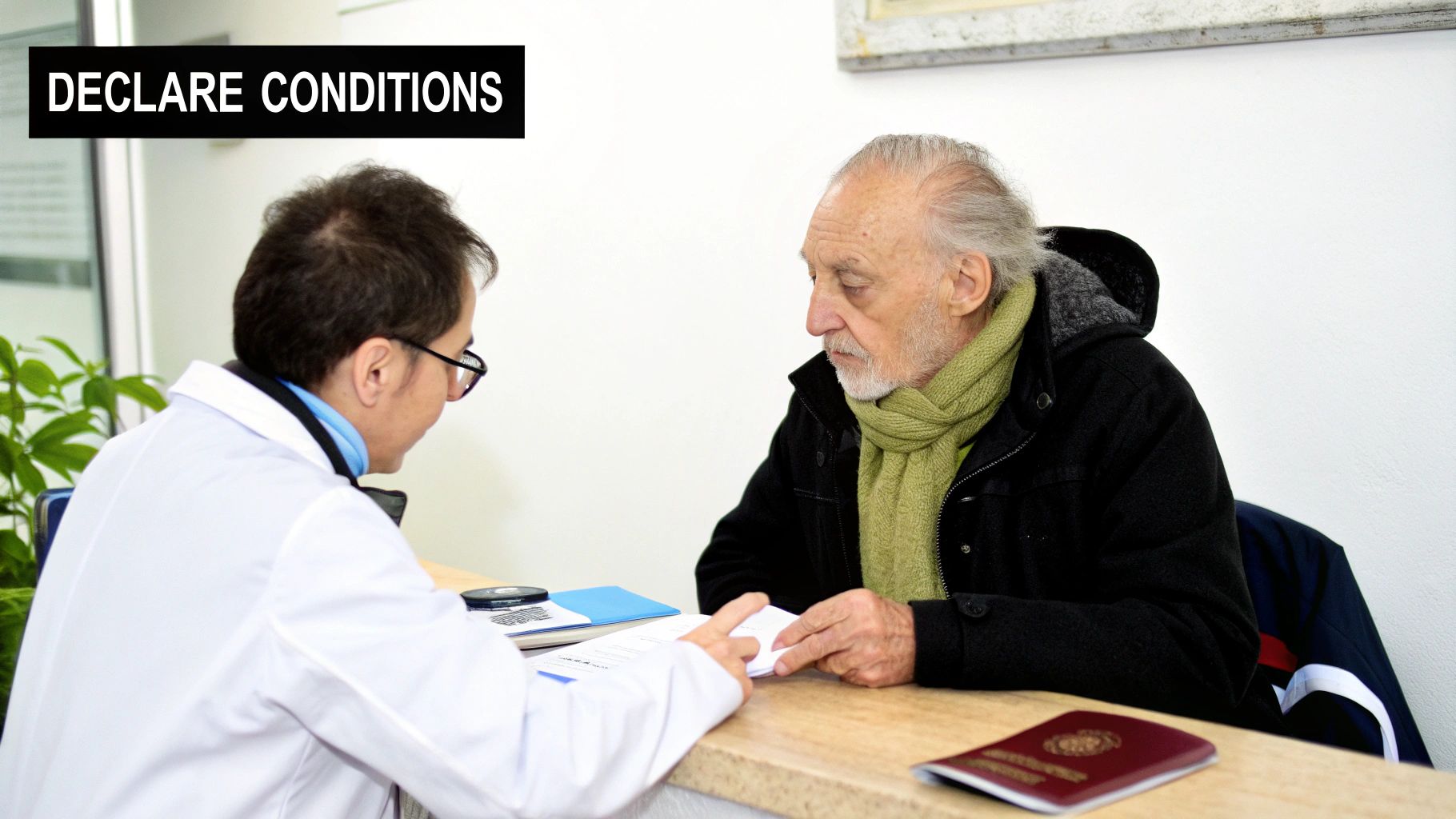
For a lot of senior travelers, the phrase “pre-existing condition” can feel like a big red stop sign. It’s often the toughest part of finding solid health coverage for life abroad, but it absolutely does not have to keep you from seeing the world. The key is to find the right type of plan—one designed for long-term care.
So, what exactly is a pre-existing condition? In insurance-speak, it’s any illness, injury, or health issue that you’ve gotten advice, diagnosis, or treatment for before your policy kicks in. This includes really common, managed conditions like high blood pressure, diabetes, asthma, or even a heart surgery you had years ago. The number one rule here is total honesty. Full disclosure isn’t just a good idea—it’s critical.
Trying to hide a condition can get your claim denied right when you need that safety net the most. It’s like building a house on a shaky foundation; if a storm hits, the whole thing could come crashing down.
Understanding the Fine Print: Look-Back Periods
To figure out their risk, insurance companies use what’s called a look-back period. This is just a set amount of time, usually between 60 and 180 days for travel plans, where they review your medical records. With long-term expat medical insurance, this period can be much longer, often years.
Any condition that was diagnosed or treated during that window is flagged as pre-existing. A standard travel policy will probably reject a claim related to it. However, a comprehensive expat medical plan is designed differently; it aims to underwrite and cover these conditions, often after a waiting period, providing the continuous care you need.
Moving Beyond Waivers to Real Coverage
For short trips, some travelers rely on a pre-existing condition waiver. This is a travel insurance add-on that tells the insurer to ignore the exclusion for acute, unexpected flare-ups.
But for a retiree living abroad, a waiver isn’t enough. You don’t just need emergency coverage; you need ongoing management for your health. This is a primary benefit of expat medical insurance. These plans are built to cover the routine care, prescriptions, and specialist visits needed to manage long-term conditions, something a travel policy waiver will never do.
The Reality of Age Restrictions
Right up there with pre-existing conditions, age limits are another big hurdle. A ton of standard travel insurance plans have a strict age cutoff, often around 70 or 75. This leaves older travelers feeling like they have no good options.
But the market is changing. Specialized providers, especially those focused on expat medical insurance for seniors, have filled this gap. They understand that a global lifestyle isn’t limited by age and offer robust annual plans for travelers in their 80s and even 90s.
It’s a common myth that good international health coverage is impossible after a certain age. The truth is, specialized expat medical plans are designed specifically for older adventurers, offering the high medical limits and comprehensive support that standard policies lack.
For instance, a basic plan might top out at a $50,000 medical limit. A specialized senior or expat plan, on the other hand, will often provide coverage of $500,000, $1 million, or more. They understand the real-world costs of healthcare abroad and provide a solution for long-term peace of mind.
The Critical Importance of Medical Evacuation Coverage
Let’s picture a scenario for a moment. You’re living in a charming but remote village overseas and suffer a serious fall. The local clinic, unfortunately, isn’t equipped to handle your injuries. It’s a terrifying thought, but it’s exactly where medical evacuation coverage becomes an absolute, non-negotiable lifeline.
For senior expats and long-term travelers, this isn’t just some optional add-on; it’s the ultimate safety net.
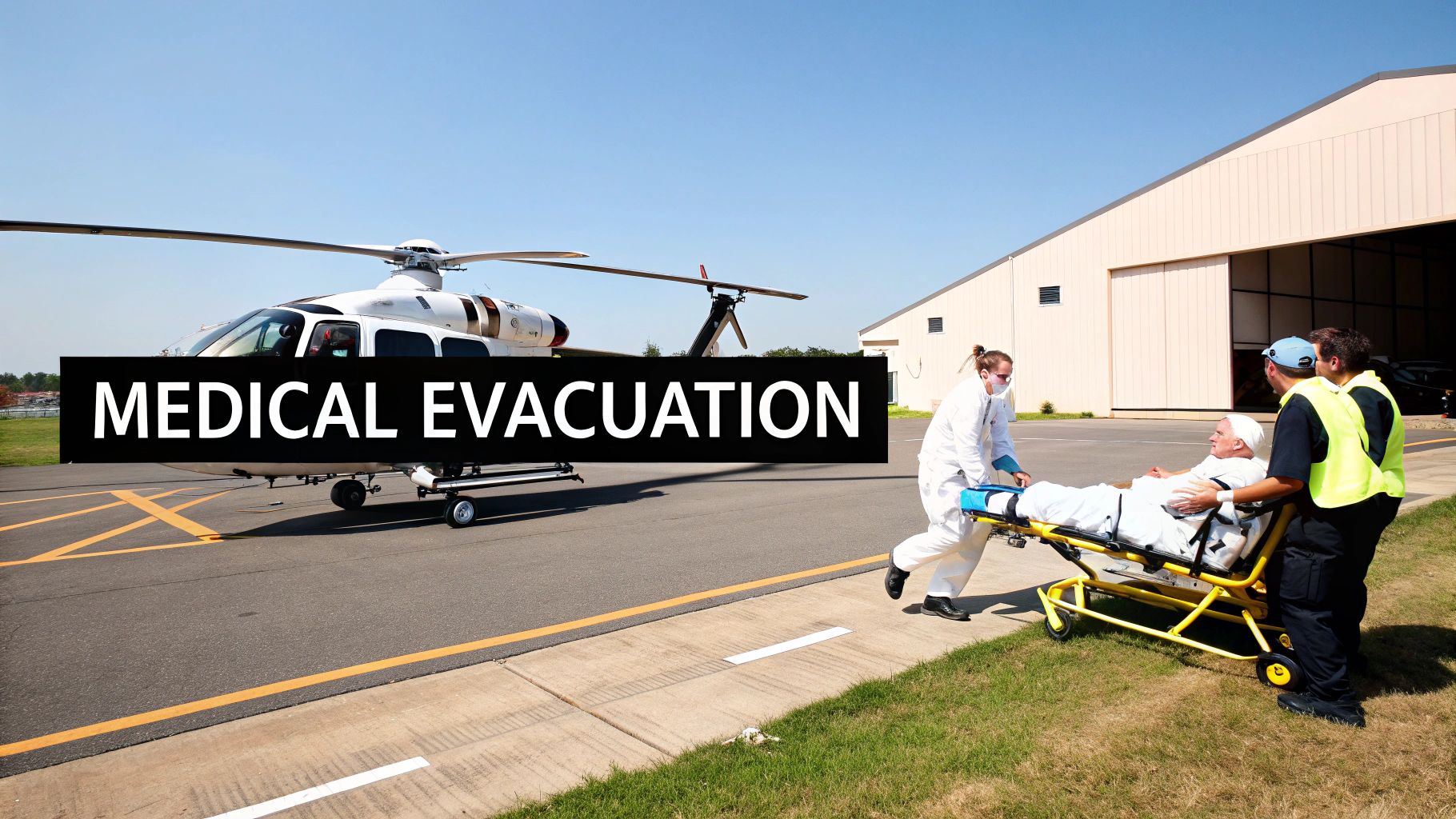
This benefit is what gets you transported from an inadequate facility to the nearest hospital that can actually provide the high-quality care you need. Without it, you’re left with two devastating choices: settle for substandard care or pay an astronomical sum out of your own pocket for a private air ambulance.
Evacuation vs. Repatriation: Understanding the Difference
It’s easy to get two critical terms mixed up: medical evacuation and medical repatriation. They both involve transportation, but their purpose is entirely different, and knowing that difference is vital when you’re choosing an expat medical insurance plan.
- Medical Evacuation: Think of this as the emergency response. It’s the immediate, often life-saving, transport to the nearest appropriate medical facility. The goal here is stabilization and treatment, no matter where in the world that happens to be.
- Medical Repatriation: This service comes into play later. It transports you back to your home country to continue your recovery, but only once you are medically stable enough to make the journey.
A truly robust expat plan will cover both. First, you get evacuated to a top-tier hospital to handle the crisis. Then, once you’re stable, you can be repatriated to recover near family and your own trusted doctors.
The Staggering Costs of an Emergency Flight
The financial risk of not having this coverage is simply immense. A single medical evacuation can easily bankrupt even the healthiest of retirement funds. These costs can soar into six-figure territory depending on the distance, the type of aircraft needed, and the medical team required on board.
This is a huge reason why seniors are such a significant part of the global insurance market. In 2024, travelers over 65 held a dominant 31.0% market share, a number driven by the need for solid protection against these kinds of high-cost events. With medical evacuations easily costing between $50,000 and $100,000, this benefit is indispensable. You can read more about the travel insurance market trends at IMARC Group.
The peace of mind that comes from knowing you have a $1,000,000 evacuation benefit is priceless. It completely removes cost from the equation, ensuring the only focus is on getting you the best possible medical attention, as fast as humanly possible.
To put these numbers into perspective, let’s compare what happens in a few common emergencies with and without the right insurance.
Comparing Medical Evacuation Scenarios
| Emergency Scenario | Estimated Cost Without Insurance | Typical Coverage with an Expat Plan |
|---|---|---|
| Heart attack on a Caribbean cruise | $75,000 – $120,000+ for air ambulance to Miami | Covered up to policy limit (e.g., $1,000,000) |
| Severe hiking injury in the Swiss Alps | $50,000 – $90,000 for helicopter and medical flight | Covered up to policy limit |
| Stroke while living in a remote part of Southeast Asia | $100,000 – $250,000 for transport to Singapore | Covered up to policy limit |
As you can see, the financial protection offered by a comprehensive expat medical plan is absolutely critical. It transforms a potentially life-altering financial catastrophe into a manageable situation where your health is the only priority.
Your Medical Evacuation Checklist
When you’re reviewing a policy’s evacuation benefits, don’t just glance at the dollar amount. The quality and reliability of the service are just as important. For a complete understanding of what this involves, you can learn more about what medical evacuation insurance is in our detailed guide.
Use this checklist to make sure you’re fully protected:
- High Coverage Limits: Don’t settle for less. Look for policies with at least $500,000 in evacuation coverage, with $1,000,000 being the gold standard.
- 24/7 Global Assistance: The provider absolutely must have a round-the-clock emergency hotline with multilingual staff who can coordinate everything.
- Direct Payment to Providers: This is key. Your insurance should pay hospitals and air ambulance companies directly, preventing you from having to pay massive costs upfront.
- “Hospital of Choice” Option: Some premium expat plans offer this incredible benefit, allowing you to choose where you are evacuated for more control over your care.
Ultimately, medical evacuation coverage is the one feature that stands between you and a potential medical and financial disaster. It guarantees that no matter where you are in the world, you will get the care you need.
Understanding the Gaps in Medicare Coverage Abroad
One of the most common—and potentially devastating—mistakes a senior traveler can make is assuming their health plan back home will cover them on an international trip. There’s a dangerous myth that your U.S. Medicare coverage simply follows you wherever you go. The reality is quite different and leaves millions of seniors unknowingly exposed to massive financial risk.
Think of your Medicare card as a key that’s been expertly cut to fit locks only within the United States. Once you step onto foreign soil, that key just won’t work. For global living, you need a completely different kind of key: expat medical insurance.
Why Original Medicare Falls Short Overseas
The rules are surprisingly simple: Original Medicare (Part A and Part B) offers virtually no coverage for healthcare services you get outside the U.S. There are a few extremely rare exceptions, like during a transit through Canada or if you live near a foreign hospital that’s closer than a U.S. one. For the average international retiree, these scenarios almost never come into play.
What this really means is that if you have a medical emergency in Rome, need a doctor in Mexico, or get hospitalized in Thailand, you are responsible for 100% of the cost. Without a separate international plan, you’d have to pay the entire bill out-of-pocket, which could easily spiral into tens or even hundreds of thousands of dollars.
The Limits of Medigap and Medicare Advantage
“But I have a supplemental plan!” is a thought many have. While Medigap and Medicare Advantage plans are great for your coverage at home, their protection abroad is very limited and often just isn’t enough for long-term residence.
- Medigap Policies: Some Medigap plans do offer a benefit for foreign travel emergencies. However, this coverage is far from complete. It usually comes with a $250 deductible, requires you to pay 20% coinsurance, and is capped by a $50,000 lifetime limit. That cap can be exhausted by a single serious medical event.
- Medicare Advantage (Part C) Plans: These plans are even more restrictive. Most will only cover emergencies within the U.S. They are not a viable solution for someone living abroad.
The bottom line is that neither Medigap nor Medicare Advantage is a true substitute for dedicated expat medical insurance. Their international benefits are designed for short trips, not as your primary health plan for a new life overseas.
The growing awareness of these coverage gaps is a key reason why the senior travel insurance market is projected to explode from $5.21 billion in 2024 to $24.12 billion by 2034. With U.S. seniors spending a massive $157 billion on trips in 2023 alone, the need for robust, specialized coverage has never been clearer. You can dive deeper into these senior travel insurance market insights from Global Insight Services.
Proper expat medical insurance for seniors isn’t an optional upgrade; it’s the essential replacement for the U.S.-based coverage you leave behind. As we’ve detailed in our guide, it’s critical to find out why U.S. health insurance doesn’t work abroad and what you need to do to stay protected. This type of insurance is the only way to get high-limit medical benefits, emergency evacuation, and comprehensive health management for the realities of global living.
Expat Medical Insurance: The Gold Standard for Retirees Abroad
If you’re planning on more than just a quick vacation, you’ve got to understand the massive difference between short-term travel insurance and long-term health coverage. For anyone dreaming of spending months or even years living in another country, relying on a standard travel policy is like trying to fix a broken bone with a band-aid. It’s just not the right tool for the job.
This is exactly where expat medical insurance comes in. Let’s be clear: this isn’t travel insurance at all. It’s actual international health insurance, designed from the ground up for someone living overseas. While your typical travel plan is there for unexpected trip emergencies, an expat plan serves as your primary, day-to-day health coverage while you reside in a new country.
A New Way of Thinking About Global Healthcare
Here’s a simple way to look at it: travel insurance is for tourists, but expat medical insurance is for residents. That one fundamental difference changes everything about what’s covered. An expat plan is built to give you security and seamless care for a life lived abroad.
Its benefits are geared toward long-term wellness and include things you’d never find in a temporary travel policy:
- Routine and Preventive Care: Think annual check-ups, wellness visits, and important screenings.
- Chronic Condition Management: This is a huge one for seniors. It provides coverage for the ongoing treatment of conditions like diabetes or heart disease.
- Specialist Consultations: Need to see a specialist for a non-emergency? You’ve got access to a network of them.
- Choice of Doctors and Hospitals: These plans give you access to a massive global network of trusted medical providers.
Expat medical insurance isn’t just a safety net for a crisis; it’s your complete health management system. It ensures the quality of your care doesn’t take a nosedive just because you’ve moved, giving you a consistent and reliable healthcare experience.
The Clear Advantages for Senior Retirees
For retirees, the benefits here are impossible to ignore. Moving abroad should be about starting an exciting new chapter, not stressing about whether you can see a doctor. For seniors who are serious about enjoying retirement overseas, having this kind of solid health coverage is non-negotiable.
An expat plan means you can manage your health proactively instead of just reacting to emergencies. With the ability to schedule regular appointments and continue treatments for any existing conditions, you can maintain your health without missing a beat. This offers a level of stability and peace of mind that a basic travel policy simply can’t provide. To really see how these plans are built for the long haul, it’s worth diving into the specifics of international health insurance for retirees to see how it supports a global lifestyle.
Ultimately, choosing expat medical insurance is an investment in your long-term health and security. It’s the only real solution for any senior who wants to make their dream of living abroad a safe, healthy, and sustainable reality.
A Practical Checklist for Choosing Your Plan
Alright, now that we’ve established why expat medical insurance is crucial for senior retirees, let’s get practical. Choosing the right plan can feel complex, but a step-by-step approach makes all the difference. This checklist is designed to walk you through the process, ensuring you end up with a policy that delivers real protection and priceless peace of mind.
Think of it like getting ready for a big move. You wouldn’t just show up in a new country without a visa or a place to live. In the same way, this checklist makes sure you don’t miss any critical details when it comes to securing your health and finances abroad.
Assess Your Unique Travel and Health Profile
First things first, let’s take a personal inventory. No two retirees are the same, so your insurance plan can’t be a generic, one-size-fits-all solution. Start by getting a clear picture of your specific needs based on where you’re moving, your lifestyle, and your current health situation.
Ask yourself these key questions:
- Where am I going? The cost of healthcare varies dramatically from one country to the next. Retiring to the United States or parts of Europe demands much higher medical limits than moving to Southeast Asia.
- How long will I be gone? This is the key differentiator. A short-term travel plan is for trips under a few months. For anything longer, especially if you’re establishing residency, an annual expat medical plan is necessary.
- What activities are planned? Are we talking about leisurely city tours and museum visits, or will you be hiking, snorkeling, or pursuing other active adventures? Your policy needs to match your lifestyle.
When you’re figuring out your insurance needs, don’t forget how your travel style plays a role. For those embarking on long-term adventures, there are many unique factors to consider. You can find some essential tips for full-time RV living that really drive home the kind of detailed planning required, which has a direct impact on your insurance needs.
This decision tree gives you a great visual for how your trip’s length should guide your insurance choice, whether it’s for a quick holiday or a longer-term stay.

The big takeaway here is that the type of insurance you need—temporary travel coverage versus long-term residential health insurance—hinges entirely on how long you plan to be away.
Scrutinize the Coverage Limits and Exclusions
Once you’ve got your personal profile sorted, it’s time to roll up your sleeves and dig into the policy details. This is where you separate the good plans from the bad ones. Don’t let the price tag be your only guide; you need to know exactly what you’re getting for your money.
The fine print isn’t just a formality—it’s the rulebook that will govern your coverage in a crisis. A few minutes spent reading the exclusions now can save you from a denied claim and a massive bill later.
Zero in on these three critical areas:
- Overall Medical Maximum: Look for a policy with a high benefit limit. For most destinations, $500,000 is a reasonable minimum, but $1,000,000 or more is what you should aim for, especially if the U.S. is on your itinerary.
- Medical Evacuation: Like we’ve talked about, this is an absolute must-have. Make sure the plan provides at least $500,000 in evacuation coverage to get you to a proper medical facility if needed.
- Pre-Existing Conditions: Get crystal clear on how the policy handles these. Does it offer coverage after a waiting period? What’s the “look-back period” for underwriting? You need to be 100% certain you understand this part before you buy.
Confirm the Provider’s Support System
Finally, a great policy on paper means nothing without a competent and responsive team to back it up. When an emergency strikes, you’re going to be leaning heavily on the insurer’s assistance services to coordinate care, arrange payments, and help you navigate a very stressful time.
Before you pull the trigger, check on the following:
- 24/7 Emergency Assistance: Is there a dedicated, around-the-clock hotline with people who can speak multiple languages?
- Direct Payment: Will the company pay hospitals and clinics directly? This is a game-changer that helps you avoid paying massive bills out-of-pocket.
- Customer Reviews and Reputation: What are other travelers saying about their experience, especially when it comes to filing a claim? A company’s track record is incredibly telling.
By following this checklist, you can confidently compare different expat medical insurance for seniors policies. This organized method helps you cut through all the marketing fluff and focus on what really matters, making sure the plan you choose is the perfect fit for your new life abroad.
Your Senior Expat Insurance Questions, Answered
Let’s be honest, figuring out international health insurance for seniors can feel like a maze. When you’re busy planning an adventure, the last thing you want is confusing insurance jargon. Let’s clear up some of the most common questions so you can make a choice you feel good about.
Am I Too Old for Expat Medical Insurance? Can I Get Covered Over 80?
Yes, you absolutely can. It’s a common misconception that once you hit a certain age, maybe 75 or 80, you’re simply out of luck. While it’s true that many one-size-fits-all insurance companies have age caps, that’s where specialized providers come in. They build their plans from the ground up with older expats in mind.
Insurers that focus on seniors and expats don’t see age as a barrier. They regularly offer solid, dependable annual plans for travelers aged 80, 85, and sometimes even beyond. The trick is to stop looking at the generic travel sites and start looking for the specialists. Your premiums and some of the fine print might look a little different, but getting comprehensive protection is entirely possible.
If I Can Only Afford One Thing, What’s the Most Important Coverage?
Hands down, it’s high-limit emergency medical and medical evacuation coverage. If you prioritize nothing else, make it this. Think of it as the ultimate financial bodyguard for a worst-case scenario.
A serious accident or sudden illness in another country can spiral into a six or even seven-figure medical bill faster than you can imagine. Without this coverage, a medical crisis could easily turn into a financial catastrophe, wiping out a lifetime of savings.
This benefit is what ensures cost never has to be the deciding factor in a life-or-death situation. It’s the guarantee that you’ll get to the best possible hospital for your needs without having to mortgage your future to pay for it.
Routine care is important for long-term health, but robust emergency coverage is the one feature that protects you from immediate, catastrophic financial risk. It’s the foundation of any good expat medical plan.
What’s the Difference Between Expat Medical Insurance and an Annual Travel Plan?
This is a critical distinction, and mixing them up can leave you dangerously exposed, especially if you plan on being abroad for more than just a short holiday. They are built for two completely different kinds of travel.
Here’s a simple way to think about it:
- Annual Travel Plan: This is for the frequent vacationer. It’s designed to cover multiple short trips—usually 30 to 90 days each—over a single year. Its purpose is to handle temporary travel hiccups like a sudden bout of flu, a broken bone on the ski slopes, or a canceled flight. It is not primary health insurance.
- Expat Medical Insurance: This isn’t really “travel insurance” at all; it’s proper long-term, international health insurance. It’s for retirees or anyone else residing abroad. This plan acts as your primary health coverage, paying for everything from emergency surgery to routine check-ups and managing chronic conditions.
In short, an annual plan is for visiting a country. An expat plan is for living in one.
Your adventures abroad deserve protection you can count on. The team at Expat Global Medical has been helping global citizens secure their health and finances since 1992. We offer personalized, expert advice to make sure you find the perfect coverage for your unique journey. Whether you’re retiring to the coast or embarking on a grand tour, let us help you travel with true peace of mind. Get your free, no-obligation quote today.