At its core, expat medical insurance is your financial safety net for the curveballs life throws at you when you’re living far from home. It’s designed to cover unexpected medical problems, reimbursing you for things like hospital emergencies, doctor visits, last-minute trip cancellations, and emergency evacuations. A solid policy ensures a single health mishap doesn’t spiral into a financial disaster.
But for expats, digital nomads, and global retirees, this is about more than just a two-week vacation. It’s about protecting your health and your entire lifestyle.
Your Guide to Medical Insurance for Life Abroad

When you live abroad, your risks are just different. A standard tourist policy is built for short trips and minor hiccups, but an expat’s needs run much deeper. You aren’t just visiting; you’re building a life in a new country, often navigating an unfamiliar healthcare system and unique logistical challenges. This is precisely where specialized expat medical insurance becomes non-negotiable.
Think of it as the foundational toolkit for your global life. It’s structured not just for emergencies but for the realities of long-term international living. The core pillars of this coverage provide a robust defense against both medical and financial crises.
The Four Pillars of Expat Coverage
To really understand what you’re getting, it helps to break down coverage into four key areas:
- Medical Emergencies: This is the big one. It’s what covers you for everything from a sudden illness to a serious accident, paying for hospital stays, doctor visits, and necessary treatments.
- Emergency Evacuation: If you’re somewhere with subpar medical care, this benefit covers the astronomical cost of transporting you to the nearest top-tier hospital. We’re talking tens of thousands of dollars, easily.
- Trip Protection: This bucket includes trip cancellation and interruption. It reimburses you for non-refundable expenses if you have to cancel or cut your trip short for a covered reason, like a sudden family emergency back home.
- Personal Belongings: This is your backup if your luggage or personal items are lost, stolen, or damaged during your travels. It helps you recoup the costs and get back on your feet.
It’s no surprise the demand for this kind of protection is skyrocketing. The global travel insurance market hit a massive USD 27.05 billion in 2024 and is on track to reach USD 63.87 billion by 2030. What’s driving this? A sharp focus on safety, with 78% of international travelers buying policies with medical coverage in 2023 to shield themselves from sky-high hospital bills overseas. You can dig into the full travel insurance market analysis on Grand View Research to see the trends for yourself.
To make this even clearer, let’s quickly compare what’s usually in a policy versus what’s often left out.
Expat Medical Insurance Coverage at a Glance
This table gives you a quick snapshot of what you can generally expect from a comprehensive expat medical insurance plan.
| Coverage Area | What’s Typically Included | What’s Often Excluded (without add-ons) |
|---|---|---|
| Medical | Emergency treatment for new illnesses or injuries. | Pre-existing conditions, routine check-ups, preventive care. |
| Evacuation | Transport to the nearest adequate medical facility. | Non-emergency transport or choosing your own hospital. |
| Trip Protection | Cancellation/interruption for specific covered reasons. | Changing your mind, work conflicts, known events. |
| Belongings | Lost, stolen, or damaged baggage and personal items. | High-value electronics, cash, items left unattended. |
| Activities | Standard tourist activities like hiking and snorkeling. | Adventure sports, professional sports, high-risk activities. |
Remember, every policy is different. The key is to read the fine print before you buy, not when you’re trying to file a claim from a hospital bed.
The Heart of Your Policy: Medical and Evacuation Coverage
If you think of your insurance policy as a car, the medical coverage is the engine, and emergency evacuation is the life-saving airbag. For anyone living or traveling long-term abroad, these two benefits are the absolute core of what keeps you financially safe. Everything else is nice to have, but a major medical crisis is what can genuinely lead to financial disaster without the right plan.
Picture this: you have a serious scooter accident in Costa Rica or wake up with a frightening illness in Thailand. The last thing you want to worry about is the bill, but that’s often the first thing that comes to mind. This is precisely what expat medical insurance covers at its most fundamental level—it’s a shield against the staggering costs of international healthcare.
Recent numbers show that seasoned travelers get this. Medical coverage is the undisputed star of the show, with 78% of international adventurers making it a priority in 2023. That’s a good deal higher than the 62% who focused on trip cancellation, proving that when you’re far from your home country’s safety net, health comes first. You can dig into more of these crucial travel insurance statistics on Insubuy.com to see just how vital this has become.
Decoding Your Medical Benefits
To feel truly secure, you first have to cut through the jargon in your policy documents. Insurers use terms that can sound confusing, but they’re just simple concepts that explain how you and the company share costs.
Let’s break them down:
- Deductible: This is your initial share of the cost. It’s a fixed amount you pay out-of-pocket for a medical event before the insurance company steps in. So, if you have a $500 deductible and get a $3,000 hospital bill, you pay the first $500.
- Coinsurance: This kicks in after your deductible is paid. It’s a percentage split, often something like 80/20. The insurer pays 80% of the remaining costs, and you cover the other 20%, up to a set limit.
- Maximum Limit: This is the absolute ceiling on what the policy will pay out for your medical care. For expats, a high limit—often $1,000,000 or more—is non-negotiable. A serious incident can burn through the smaller limits of a basic tourist policy in a heartbeat.
A standard vacation plan might offer a $50,000 medical limit, which sounds fine until you need a medevac flight and a week in a private ICU. An expat medical plan is built for these high-stakes scenarios, ensuring one bad day doesn’t leave you with a life-changing debt.
Why Emergency Evacuation Is a Game Changer
So many people get this wrong. Emergency evacuation isn’t just a convenient flight home when you’re sick.
Emergency medical evacuation is the medically supervised transport to the nearest facility that can give you the proper care you need. That could mean moving from a rural clinic to a big city hospital in the same country, or it could mean being flown to another country entirely.
This benefit is absolutely critical if you’re living or traveling anywhere with spotty medical infrastructure. The cost for a private, medically-staffed flight can easily top $100,000. Without this specific coverage, you’re on the hook for that entire amount. It’s the one benefit you pray you’ll never use but is priceless if you do. If this is a top concern, you should learn more about the specifics of how medical evacuation insurance works to make sure your plan is up to the task.
At the end of the day, powerful medical and evacuation benefits are what separate a flimsy vacation policy from a true expat medical plan. It’s designed not just for a sprained ankle, but for the kind of serious event that requires world-class care, no matter where in the world you are. That’s the kind of peace of mind that lets you build a life abroad with real confidence.
Beyond Medical Emergencies: Protecting Your Trip and Belongings

While your health is always priority number one, a truly solid expat medical plan has your back against the logistical nightmares that can completely derail your life abroad. Medical coverage is there for the physical crises, but what about the financial and practical ones? This is where protection for your trip and belongings comes in, acting as a critical safety net for your plans and possessions.
These benefits are all about bringing stability when the unexpected throws your world into chaos. For long-term travelers and expats, the stakes are way higher than a missed vacation. We’re talking about non-refundable flights for an international move, prepaid rent deposits, and the gear that makes up your entire mobile life.
Guarding Your Plans with Trip Cancellation and Interruption
Think of your insurance plan as a savvy project manager for your life abroad. Its main job is to handle unforeseen curveballs that threaten your timeline and budget. Trip cancellation and trip interruption coverage are two of the most powerful tools in its kit, protecting you from major financial hits before and during your journey.
Trip cancellation kicks in before you even leave. It pays you back for prepaid, non-refundable expenses if you have to scrap your plans for a covered reason. It’s essentially a financial “undo” button for circumstances you can’t control.
On the flip side, trip interruption protects you once you’re already out there. If you need to cut your trip short and race home unexpectedly, this benefit covers the cost of that last-minute flight and can reimburse you for the unused parts of your prepaid plans.
These protections are about more than just money; they provide peace of mind. Knowing you can get home for a family emergency without facing a massive financial penalty allows you to fully commit to your global lifestyle.
These benefits are fast becoming a cornerstone of modern travel planning. A massive 62% of international travelers bought trip cancellation and interruption coverage in 2023 to safeguard their plans. With the market expected to balloon from $31.25 billion in 2025 to $140.78 billion by 2034, it’s clear this coverage is essential for anyone with real money tied up in their travel. You can find more details on the growth of the travel insurance market at Fortune Business Insights.
For expats, the value of this coverage is magnified. Just imagine these real-world scenarios:
- A Family Emergency: You’re weeks from moving to Portugal, having already paid for flights and a two-month apartment deposit. A sudden family illness forces you to stay home. Trip cancellation can reimburse you for these huge costs.
- Sudden Political Unrest: You’ve been living in a country for six months when a political crisis erupts, making it unsafe to stay. Trip interruption can help pay for your immediate flight out and the rent you’ve already paid for the month.
For ultimate flexibility, some plans offer an upgrade that’s definitely worth exploring. For a deep dive into this premium option, check out our guide on travel insurance with Cancel For Any Reason cover.
Protecting Your Possessions Against Loss or Delay
Beyond your travel plans, what does expat medical insurance cover when it comes to your actual stuff? Your policy also acts as a shield for your personal belongings, with coverage for lost, stolen, or delayed baggage.
When you’re literally living out of a suitcase, losing it isn’t just a minor inconvenience—it’s a full-blown crisis. This benefit helps you get back on your feet fast, providing funds to buy essential replacements like clothes and toiletries while your bag is being tracked down. If it’s gone for good, it helps cover the replacement cost. It turns a potential disaster into a manageable problem, ensuring your journey can continue with minimal disruption.
Reading the Fine Print: Policy Exclusions and Conditions
An insurance policy is a two-way street. While it’s great to know what your plan covers, understanding what it doesn’t cover is arguably even more important. This is where you find the exclusions and conditions—the fine print that can mean the difference between a paid claim and a flat-out denial.
Ignoring this section is like buying a car without checking if it has brakes. For an expat, a surprise exclusion can lead to thousands in out-of-pocket costs. Let’s break down the most common traps so you can pick a plan that actually has your back when you need it.
Pre-Existing Medical Conditions: The Biggest Hurdle
By far, the most common reason for a denied claim is a pre-existing medical condition. Insurers define this as any illness, injury, or medical issue you had before your policy’s start date. Their business is covering new and unexpected events, not managing health problems you already have.
To figure this out, they use what’s called a “look-back period.” This is a set window of time, usually 6 to 18 months, before your policy kicks in. The insurance company will “look back” at your medical history during this period. If you got treatment, took medication, or even just had symptoms for something, they’ll likely flag it as pre-existing and refuse to cover it.
Here’s how it plays out in the real world:
- Scenario: You had a minor heart-related issue eight months ago but feel perfectly fine now. You buy a travel policy with a 12-month look-back period.
- Outcome: If you have another heart problem while you’re abroad, the insurer will almost certainly deny the claim. Why? Because the original issue falls squarely inside that look-back window.
This is a critical detail that trips up so many travelers. It doesn’t matter if you think a past condition is “cured” or was minor. All that matters is how the insurer defines it in their policy documents.
Navigating Coverage for Chronic Conditions
So, what if you have an ongoing condition like diabetes, asthma, or high blood pressure? A standard travel plan is probably not going to cut it. This is where long-term expat health insurance plans come into play, as they’re often designed specifically for this situation.
The golden rule here is full disclosure. When you’re applying for an expat medical plan, you have to be completely honest about your health history. Based on your answers, the insurer might offer full coverage, charge a higher premium, or exclude that one specific condition while covering everything else. Being upfront is your best defense against a future claim denial.
High-Risk Activities and Adventure Sports
Your policy is built to cover a pretty standard lifestyle. But what happens when your idea of a good time involves scuba diving in the Philippines or skiing in the Alps? Most basic expat medical insurance plans will explicitly exclude activities they consider “high-risk” or “adventure sports.”
Think of it this way: your insurer calculated your premium based on average risk. Jumping out of a plane or climbing a mountain throws that calculation way off. If you get hurt doing something on their exclusion list, you’re on your own.
What’s typically left out? The list can be long, but it often includes:
- Scuba diving (especially going deeper than a certain limit)
- Rock climbing or mountaineering
- Skydiving or bungee jumping
- Playing sports professionally or competitively
- Motorsports and racing
The good news is you don’t have to give up your hobbies. Many companies offer an adventure sports rider or a hazardous sports add-on. This is an optional upgrade you can buy to extend your coverage to specific activities, usually for a small extra cost. Always check if your favorite pastime is on the exclusion list and add the rider if you need it. It’s a gamble you just can’t afford to lose.
Choosing the Right Plan for Your Journey
One of the biggest hurdles expats and long-term travelers face is picking the right insurance. It’s an easy—and costly—mistake to assume a standard travel policy can handle the demands of a global lifestyle. The key is understanding the massive difference between short-term travel insurance (built for vacations) and long-term international health insurance, which is designed for actually living abroad.
Think of it like choosing a vehicle for a cross-country move. Short-term travel insurance is the rental car you get for the flight and first week at your destination. It’s perfect for a quick trip, covering unexpected breakdowns and accidents. But long-term expat medical insurance is the car you own and rely on every day. It’s there for the long haul, covering everything from catastrophic crashes to routine oil changes.
Vacation Policy vs. Lifestyle Plan
The differences here aren’t subtle; they’re fundamental. A short-term plan is laser-focused on travel-related mishaps like lost luggage, cancelled flights, and emergency-only medical situations. In stark contrast, an expat health plan is a proper medical insurance policy that just happens to work globally, often including routine check-ups and preventative care.
A common and dangerous misconception is that you can just keep renewing a short-term policy to cover long-term living. This is a huge gamble. These plans simply aren’t designed for continuous coverage and will almost certainly exclude the very things you need for ongoing health management.
To make this distinction crystal clear, let’s break it down.
Short-Term Travel Insurance vs Long-Term Expat Medical Insurance
This table highlights the crucial differences to help you figure out which policy type fits your life.
| Feature | Short-Term Travel Insurance | Long-Term Expat Medical Insurance |
|---|---|---|
| Primary Focus | Travel emergencies (trip cancellation, lost bags). | Comprehensive medical care (emergencies and routine). |
| Medical Coverage | Emergency treatment for new illnesses and injuries only. | Can include wellness check-ups, chronic condition management, dental, and vision. |
| Coverage Duration | Days or weeks, typically up to 90-180 days maximum. | Annual, renewable policies designed for years of living abroad. |
| Medical Limits | Lower limits (e.g., $50,000 to $100,000). | High limits (often $1,000,000 or more) to cover major events. |
| Geographic Scope | Often excludes your home country. | Typically provides global coverage, sometimes including your home country. |
When you’re planning a move to Europe, it’s also critical to understand any specific regional rules, like the Schengen travel insurance requirements, to make sure your policy ticks all the necessary boxes.
This decision tree shows how easily a claim can be denied, especially if you have the wrong type of policy for your situation.
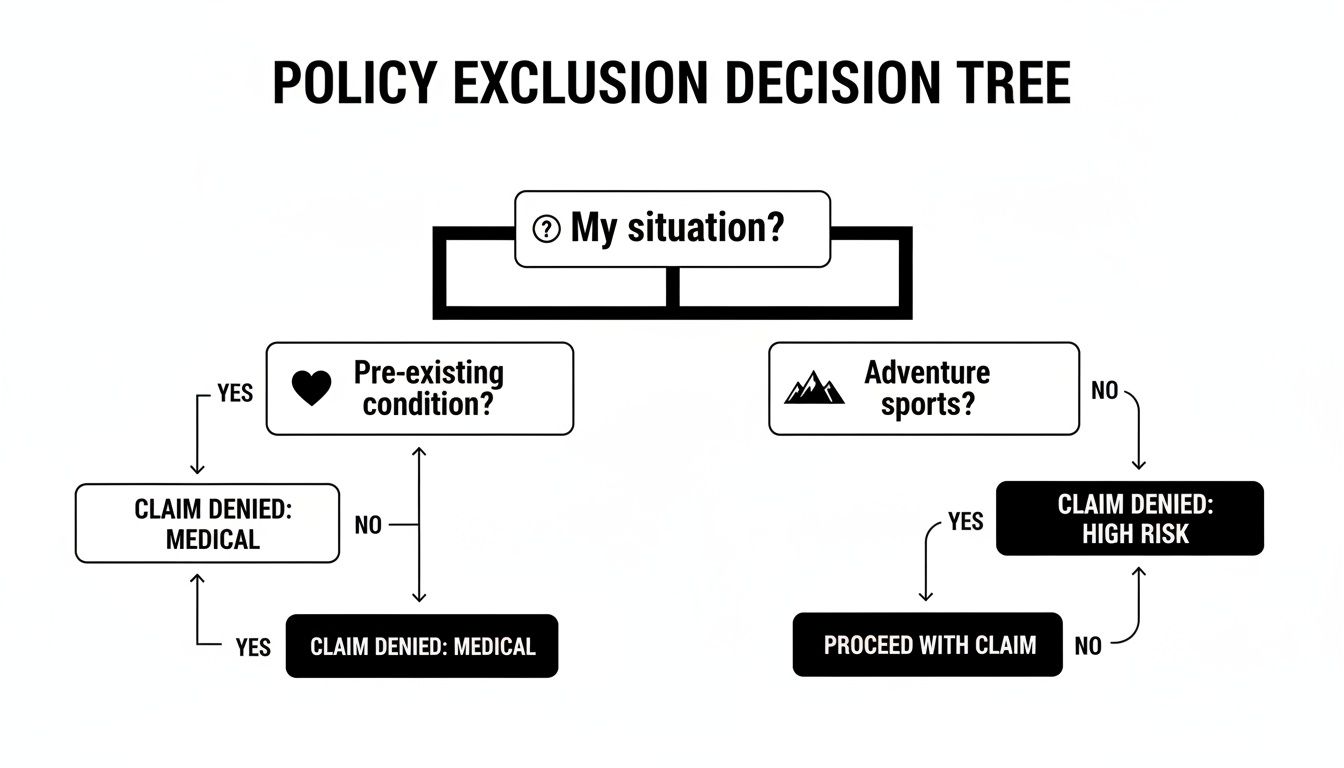
As you can see, things like pre-existing conditions or engaging in adventure sports without the right add-on are quick paths to a claim denial. This just reinforces how vital it is to choose a plan that actually matches your health and lifestyle.
Matching the Plan to the Person
The right choice always, always comes down to your specific situation. Let’s look at a couple of real-world examples.
-
The Digital Nomad: A 28-year-old developer is spending six months bouncing around Southeast Asia, working from various co-working spaces. She’s healthy, so her biggest worries are a sudden illness like dengue fever or a scooter accident. For her, a high-quality, short-term travel medical plan with a high emergency limit is a perfect fit.
-
The Retiree: A 65-year-old couple is moving permanently to Portugal. They need coverage that will manage their existing health conditions, cover routine doctor visits, and be there for potential major surgeries down the road. A comprehensive, long-term international health insurance plan is completely non-negotiable for them.
In the end, knowing what expat medical insurance covers starts with knowing what kind of traveler you are. Making the right choice between a temporary safety net and a long-term health partner is the single most important decision you’ll make to protect your new life abroad.
Filing a Claim and Getting Help When You Need It
Your expat medical insurance policy is more than just a piece of paper—it’s your lifeline when things go sideways. Knowing exactly what to do when a crisis hits can turn a frantic, stressful situation into a calm, manageable process. The secret is acting fast and having a clear game plan.
The very first thing you should do in an emergency, whether it’s a sudden illness or a serious accident, is call your insurer’s 24/7 assistance line. Think of this number as your direct link to a team whose entire job is to coordinate your care, from telling you which hospital to go to, to arranging direct payment so you aren’t stuck with massive out-of-pocket bills.
Your First Steps in an Emergency
A little prep work goes a long way. Before you ever need it, save your insurer’s emergency number in your phone. It’s also smart to keep both a digital and physical copy of your policy ID card with you at all times.
When you make that call, be ready with a few key details:
- Your Policy Number: This is how they’ll instantly pull up your file and see your coverage.
- Your Location: Be specific. Give them the name of the hospital or clinic you’re at.
- A Brief Description of the Situation: Just a clear, simple explanation of what happened and what kind of medical help you need.
Making this call is crucial. It officially opens your case and gets the assistance team working on your behalf immediately.
Gathering the Right Documents for a Smooth Claim
Once the immediate crisis is under control, your focus needs to shift to paperwork. An organized paper trail is the bedrock of a successful claim. Insurers need specific documents to process reimbursements, and something as simple as a missing receipt can cause major delays or even denials.
Keeping meticulous records isn’t just a good habit; it’s the single best thing you can do to ensure a fast and fair claims process. Each document is a piece of evidence that validates your claim and justifies your expenses.
The paperwork you’ll need depends on what happened. For medical issues, always ask for copies of doctor’s reports, hospital admission forms, and fully itemized bills. If your stuff gets stolen, a police report is non-negotiable.
Here’s a quick checklist of the essentials:
- Medical Claims: Official medical reports, receipts for all treatments, and any prescription records.
- Theft or Loss Claims: A police report filed within 24 hours, proof of ownership (like old receipts or photos), and repair estimates if something was damaged.
- Trip Interruption Claims: Receipts for any new flights, documents explaining why you had to return early (like a doctor’s note for a family emergency), and proof of your unused, non-refundable expenses.
When it comes to proving what you own, being prepared ahead of time is a game-changer. A good guide on creating a home inventory for insurance can be incredibly helpful for showing proof of ownership and value if you ever need to file a claim for lost or stolen items.
And if your claim is ever unfairly denied, don’t just give up. There are resources that can teach you about using AI to draft a medical insurance appeal letter to build a stronger case. By being organized and proactive, you put yourself in the best possible position to get the help you’re entitled to, right when you need it most.
Frequently Asked Questions About Expat Medical Insurance
Let’s cut through the noise. When you’re dealing with expat medical insurance, a handful of questions pop up time and time again. Getting these right isn’t just about ticking a box—it’s about making sure your policy actually works for you when you need it most.
Think of this as the essential cheat sheet for your global health protection. Knowing these answers helps you build a real safety net, not just a document full of confusing clauses.
Does Expat Medical Insurance Cover Pre-Existing Conditions?
Generally, no. Most standard travel plans will either flat-out exclude pre-existing conditions or use a “look-back” period to deny claims related to recent treatments. But this is where specialized expat health plans shine—they’re built to cover chronic conditions. The golden rule? Always declare your medical history upfront. It’s the only way to get the right policy and avoid the nightmare of a denied claim.
What Is the Difference Between Medical Coverage and Evacuation?
These two are often confused, but they serve very different purposes.
Medical coverage is what pays the bills for your actual treatment: think doctor’s fees, hospital stays, surgery, and medications.
Emergency medical evacuation, on the other hand, is your ticket to a better hospital. If you’re somewhere that can’t handle your serious injury or illness, this benefit pays to transport you to a facility that can. For any expat, having both is non-negotiable.
Can I Buy Expat Medical Insurance After I Have Already Moved Abroad?
Yes, you can. Many providers have plans designed specifically for people already living overseas. But there’s a catch: you’ll likely face a waiting period before certain benefits kick in, especially for illnesses. To avoid any gaps in coverage, it’s always smarter to secure your policy before you depart. That way, you’re protected from day one.
Does This Insurance Cover Routine Check Ups and Dental?
Your typical short-term travel insurance? Almost never. It’s designed for emergencies only, not for wellness visits or cleanings.
However, long-term international health insurance plans for expats are a different story. They often include add-ons for routine care, wellness check-ups, dental, and vision, creating a much more comprehensive package. You can customize the level of coverage to match your real-life health needs.
Your life abroad deserves protection you can count on. The experts at Expat Global Medical are here to help you find the perfect plan, offering personalized advice and access to world-class coverage. Get your free quote and secure your peace of mind today by visiting https://expatglobalmedical.com.