Traveling internationally gives retirees the freedom to explore new places, visit family, and spend more time abroad. But there is one detail that should never be overlooked when planning a trip: where your travel medical insurance actually provides coverage.
Many travelers assume that having travel insurance means they are covered anywhere in the world.
That is not always true.
Travel medical insurance policies usually have a defined area of coverage. Depending on the plan, coverage may be limited to certain countries or regions. Some policies offer worldwide protection, while others exclude specific countries or areas.
If you become sick or injured somewhere outside your policy’s covered area, your insurance company may not pay your medical expenses.
What Does “Area of Coverage” Mean?
Your insurance policy should state where you are covered.
For international health insurance, the area of coverage may include one country, a region, or worldwide coverage. Some plans may include the United States, while others specifically exclude it.
Travel medical insurance can work in a similar way.
The important point is that the country you are visiting must fall within the policy’s coverage area for the benefits to apply, subject to the policy’s terms and exclusions.
That is why checking your destination before you travel is so important.
What Happens If You Get Sick Outside the Coverage Area?
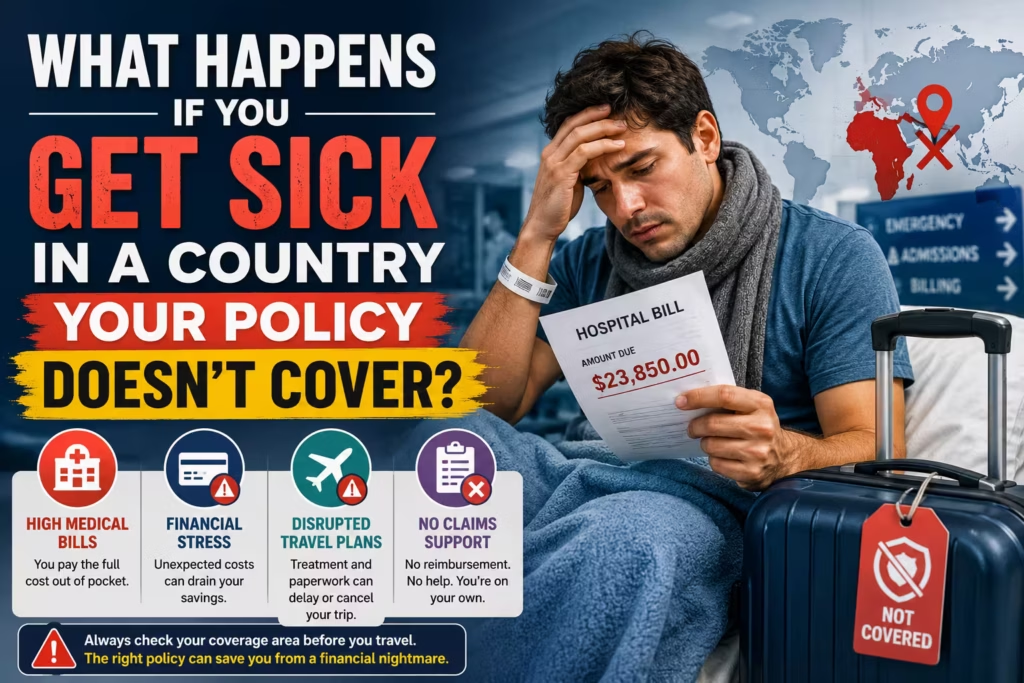
If you become sick in a country that your policy does not cover, the medical expenses may not be eligible for reimbursement.
You could be responsible for:
- Doctor visits
- Hospital treatment
- Surgery
- Diagnostic tests
- Prescription medication
- Ambulance transportation
- Emergency evacuation
- Other related medical expenses
The exact outcome depends on the wording of your policy.
Some policies have limited exceptions for emergencies in countries outside the normal coverage area. Others may provide no coverage at all.
You should never assume an emergency automatically makes an excluded country covered.
You May Have to Pay the Medical Bill Yourself
If your insurance does not cover the country where you are receiving treatment, you may have to pay the medical provider directly.
That can become expensive very quickly.
Government travel guidance warns travelers that emergency medical treatment and medical evacuation abroad can result in substantial costs when appropriate insurance is not in place. It also recommends checking that every country you intend to visit, including transit countries, is covered by your policy.
For retirees, this is especially important.
A medical emergency can already be stressful. Having to deal with a large unexpected bill at the same time can make the situation much worse.
What If It Is a Serious Emergency?
This is where things can become more complicated.
Suppose you are traveling in a country that is outside your normal area of coverage and suddenly require hospitalization.
You should contact the insurer’s emergency assistance team as soon as you are able.
The insurer may be able to determine whether an exception applies under your policy. If evacuation or transportation to another location is covered, the insurer may also coordinate the next step.
But do not assume the insurer will automatically pay simply because the situation is life-threatening.
The policy wording controls the claim.
Some insurance policies specifically state that treatment is covered only within the selected area of cover, while medical evacuation may apply when suitable treatment is not available locally and the benefit is included in the policy.
What If You Accidentally Enter a Non-Covered Country?
This can happen more easily than people realize.
You might add another destination to your vacation. You could take a cruise that stops in a country you did not originally plan to visit. Or you may cross a border during a road trip.
Even a short visit can matter.
The UK government’s travel insurance guidance specifically recommends checking that all destinations you plan to visit, including transit countries, are covered.
Before adding a country to your itinerary, check your insurance.
It is much easier to confirm coverage before you leave than to discover a problem after you need medical care.
What About Medical Evacuation?
Medical evacuation is another area where travelers need to read the policy carefully.
If you are seriously ill in a remote location, you may need transportation to a suitable medical facility.
But evacuation benefits are not necessarily available everywhere.
Some policies have specific geographical restrictions, exclusions, or requirements for evacuation. In some cases, the insurer’s assistance team must approve or coordinate the evacuation before expenses are incurred.
This is why having an emergency assistance number available while traveling is important.
Keep your policy information and emergency contact details with you.
Don’t Assume Your Regular Health Insurance Will Pay
Many retirees make the mistake of assuming their normal health insurance will take care of them overseas.
For American retirees, Medicare generally does not provide broad coverage for medical care outside the United States. There are limited exceptions, but Medicare should not be treated as worldwide health insurance.
Your domestic health plan may also have restrictions on international treatment.
Before traveling, ask your existing insurer exactly what happens if you become sick outside your home country.
Then compare that protection with what your travel medical insurance provides.
What If You Are Living Abroad?
There is another important distinction.
If you are simply visiting another country for a short trip, travel medical insurance may be appropriate.
If you are living abroad as an expatriate or retiree, you may need a different type of insurance.
Travel insurance is generally intended for temporary trips. It is not designed to replace comprehensive health insurance for someone who permanently lives overseas. Government travel guidance also recommends that people who live abroad consider their long-term health insurance arrangements rather than relying on ordinary travel insurance.
This is where international health insurance or expat medical insurance can become more appropriate.
These plans can provide longer-term medical protection based on your country of residence and selected area of coverage.
How Can You Avoid This Problem?
The easiest way to avoid an uncovered medical emergency is to check your policy before you travel.
Look specifically at:
- Your area of coverage
- Countries that are excluded
- Maximum trip duration
- Emergency medical benefits
- Medical evacuation benefits
- Pre-existing condition rules
- Travel warning exclusions
- Transit-country coverage
- Activities and sports exclusions
- Emergency assistance procedures
Do not rely only on the name of the insurance plan.
A policy called “Worldwide” may still have exclusions or conditions.
Read the actual coverage terms.
What Should You Do Before Leaving Home?
I recommend making a simple coverage check part of your travel preparation.
1. Check Every Destination
Make a list of every country you expect to visit.
Include countries where you may have a connection or transit stop.
Then confirm that each one falls within your policy’s coverage area.
2. Save the Emergency Assistance Number
Put your insurer’s emergency assistance number in your phone.
Also keep a copy of your policy details with your passport and travel documents.
3. Check Your Trip Length
Some policies have maximum trip durations.
This is especially important for retirees who prefer longer vacations.
An annual multi-trip policy, for example, may allow multiple trips but place a maximum number of days on each trip.
4. Ask About Evacuation
Find out whether emergency medical evacuation is included.
Also ask where you can be evacuated and who decides whether an evacuation is medically necessary.
5. Ask Before You Change Your Itinerary
If you decide to add another country to your trip, contact your insurer first.
Do not wait until after an emergency.
Can You Change Your Coverage?
Depending on the insurer and policy, you may be able to modify your coverage before traveling.
If your plans change, contact the insurance provider or broker and explain exactly where you will be traveling.
The insurer can tell you whether the new destination is covered and whether you need to make any changes to your policy.
This is one reason working with an international insurance specialist can be helpful.
Choosing Coverage That Matches Your Travel Plans
At ExpatGlobalMedical.com, travel medical insurance is available for both single trips and frequent international travelers. The company also offers international medical insurance, expat medical insurance, and emergency medical evacuation solutions.
The right choice depends on whether you are taking a short vacation, traveling several times a year, or actually living abroad.
For retirees, that distinction matters.
A person taking a three-week vacation through Europe may have very different insurance needs from someone spending six months each year in Costa Rica.
Your insurance should reflect how you actually travel.
Don’t Wait Until You Are Sick to Check Your Coverage
The worst time to discover that your destination is excluded from your insurance is when you are sitting in a hospital.
Before leaving, confirm where your policy applies.
If you are unsure about a country, ask.
If your retirement lifestyle includes frequent international travel, consider whether annual multi-trip insurance or international medical insurance may be a better fit.
And if you live abroad permanently, review your expat medical insurance rather than assuming travel insurance will provide everything you need.
A Final Word From John W. McGee
“International insurance works best when the coverage is planned before the emergency. Knowing where you are covered can be just as important as knowing what is covered.”
If you are unsure whether your current policy covers your next destination, refer to our chatbot for quick guidance and help identifying the questions you should ask about your coverage.
You can also contact ExpatGlobalMedical.com to review your international medical insurance and travel medical insurance options before your next trip.
Know your coverage before you go. It can make a major difference when you need medical care abroad.